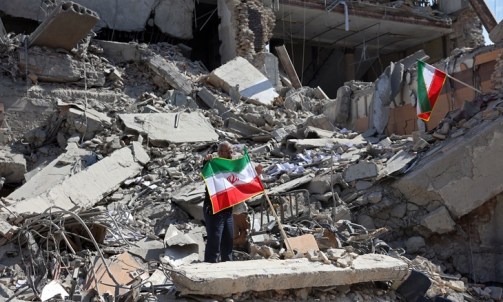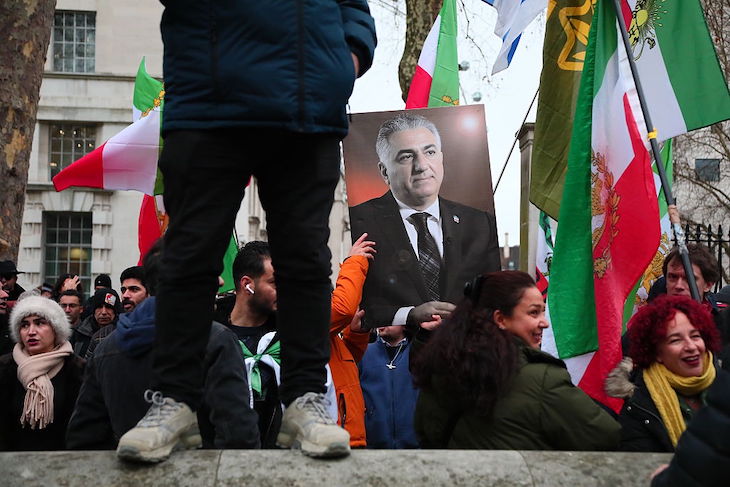
Earlier this week in Los Angeles – home to the largest Iranian community in the United States – thousands gathered in solidarity with protests unfolding in their homeland. Amid the sea of national flags and chants against the Islamic Republic, some demonstrators carried Lion and Sun banners and invoked a return to the pre-1979 monarchy, signalling a strand of sentiment that looks back to Iran’s last Shah. The rally took a darker turn when a truck drove into the crowd, underscoring the depth of division within the diaspora debate over Iran’s future.
For some Iranians, particularly in the diaspora, the monarchy represents a lost period of national pride and state capacity
Similar scenes have appeared elsewhere. In Kathmandu, thousands of supporters of Nepal’s former royal family have repeatedly taken to the streets, chanting slogans and calling for the restoration of the monarchy abolished in 2008. Amid political instability and ahead of elections, demonstrators have gathered around statues of past kings chanting ‘We love our king’ and ‘Bring back the king.’ The rallies show how demands for monarchical restoration have moved from private nostalgia into public mobilisation.
For much of the past century, politics appeared to have settled the question of kingship. Monarchy was treated as a spent institution, surviving at most as ceremony or relic. That assumption now looks less secure. Across the world, the language of crowns and kings has returned to public debate – not as costume drama, but as a way of grappling with power, legitimacy, and political order as confidence in republican institutions frays.
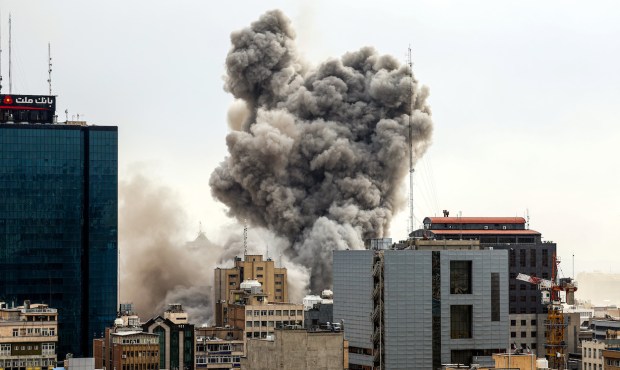
Iran is the clearest illustration. As the Islamic Republic faces its most serious legitimacy crisis in decades, the exiled crown prince Reza Pahlavi has re-entered political discussion. For some Iranians, particularly in the diaspora, the monarchy represents a lost period of national pride and state capacity. For others, it is less about restoring a crown than about identifying a transitional figure who stands outside the clerical system and above factional politics. Monarchism here functions as an ‘exit option’: a way of imagining regime change without immediate descent into chaos.
This is a familiar historical pattern. Monarchies resurface not because populations rediscover a taste for hereditary rule, but because existing systems lose credibility. In moments of breakdown, crowns offer what modern politics often struggles to provide: continuity without parties, symbolism without elections, authority without constant renegotiation.
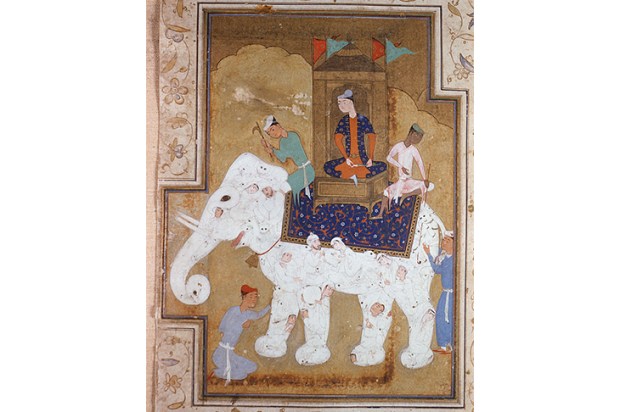
Crucially, the republic itself is not a timeless or inevitable form of political organisation. For most of recorded history, monarchy was the default structure of sovereignty. Republics existed, but they were rare, fragile, and often confined to city-states or mercantile elites – from ancient Athens to the Italian city-states and the Dutch Republic. Even the Roman Republic ultimately gave way to imperial rule once its institutions could no longer manage scale, inequality, and ambition.
The modern dominance of republics is a historical anomaly, largely concentrated in the twentieth century. Two world wars destroyed Europe’s dynasties; decolonisation then produced dozens of new states that almost automatically adopted republican constitutions. Yet ideology alone does not explain why republicanism became so prestigious. Performance mattered. From the late nineteenth century, and especially after 1945, the United States emerged as the most powerful state in history while presenting itself as a successful republic: wealthy, stable, technologically dynamic, and victorious in war. Republican government became associated not just with moral progress, but with strength.
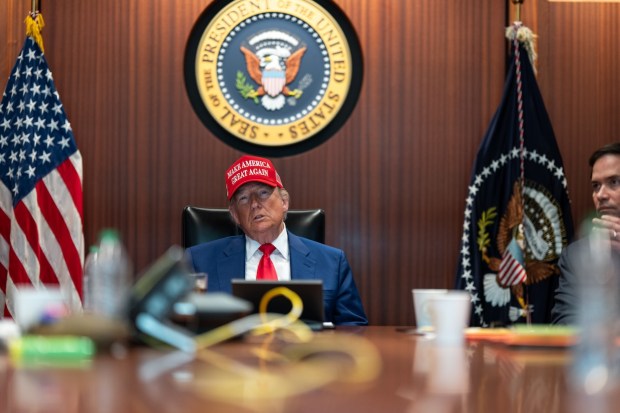
That association is now under strain. American politics has grown increasingly personalist, executive-centred, and theatrical. The rise of Donald Trump did not abolish republican institutions, but it unsettled their assumptions. Power was framed less as an office than as a personal mandate; loyalty became a political currency; constitutional restraint was openly mocked. The significance of the ‘No Kings’ marches lies here. Protesters were not claiming that the United States had become a monarchy. They were warning that it was beginning to resemble one in style and sensibility. For a political culture shaped by the anxieties of the Roman Republic, that resemblance – to Julius Caesar rather than to Cincinnatus – is troubling.
That anxiety resonates beyond America. In Russia, Vladimir Putin is routinely described, approvingly or critically, as a modern Tsar. The comparison is not literal, but it captures something real about how legitimacy is staged: permanence over alternation, ritual over procedure, national destiny embodied in a single figure. The result is what might be called a crowned republic: a state that retains republican forms while borrowing monarchical aesthetics and logic.
This phenomenon is not confined to Russia. Across much of the world, politics is drifting away from institutional competition and towards personal rule. Term limits weaken, courts are politicised, and succession becomes a risk rather than a routine. In such settings, monarchy returns less as a constitutional blueprint than as a political language. To some, it signals the dangers of unchecked power. To others, it offers a seductive contrast to the perceived chaos of republicanism: ceremony instead of campaigning, national splendour instead of partisan brawling, continuity rather than churn.
Precisely because of this, monarchy’s return is double-edged. The same symbol that appeals to those exhausted by dysfunctional politics galvanises those who fear the erosion of accountability. Kings reappear simultaneously as solutions and as warnings. Monarchists wave banners in Los Angeles; anti-monarchists chant in Washington. Both are responding to the same underlying condition: the weakening of institutional legitimacy.
Are we, then, witnessing a revival of kingship? Not in the narrow sense of crowns reliably returning to thrones. The evidence remains limited and uneven. But in the broader sense – monarchy as a live political category – the answer is yes. As faith in republican governance erodes, older forms of legitimacy regain emotional and symbolic power.
The deeper story is not nostalgia for palaces or pageantry, but uncertainty. Republics flourished because they delivered stability, growth, and victory. If they appear less capable of doing so in the decades ahead, the world may stop believing that the republic is the final form of political life. Kings return first in language, then in imagination. History suggests they rarely stop there.