
Keir Starmer has just made his 13th u-turn since taking the No. 10 keys. The government, this evening, decided that the digital ID scheme would no longer be compulsory.
The IDs were to be used to verify if job applicants had the right to work in the UK – something that is currently done using passports and National Insurance numbers. But, according to the Times, Starmer has now dropped the compulsory aspect of the scheme because of fears it was causing distrust in the principle of digital ID.
Under the changed plans there will be an entirely optional digital ID, or workers can use digital versions of existing documents – such as passports – to complete right-to-work checks. Those concerned about civil liberties and freedom from the digital state will be relieved, but the government never answered why a digital ID would stop people working here illegally when physical ID checks clearly don’t.
The original scheme was widely opposed, but not just by those you might expect.
Peter Thiel’s Palantir – a data and analytics company – in many ways makes the perfect bogeyman company that many might fear such a project could have been outsourced to. But as I revealed in my Reality Check newsletter last year, the company surprised many by announcing they were not interested in any compulsory scheme.
Louis Mosley, Palantir’s boss in Britain and Europe, later told Times Radio: ‘I want to say that we will not be participating. I have personal concerns about digital ID… On a technical level, there are other ways of addressing the challenge we have with engaging government services online… On a corporate level, Palantir have long had a policy that we will help democratic government to implement the policies they’ve been elected to deliver and that does mean that often we are involved in implementation of very controversial measures; however, digital ID was not one that was tested at the last election.’
Palantir has spent years trying to shed its caricatured reputation as an evil corporation bankrolled by a Bond-villain billionaire founder.
I wonder if that intervention was a factor in the Prime Minister’s decision this evening.
Behind the scenes, I heard there were more reasons behind Palantir’s decision than just democratic legitimacy, including straightforward PR. Palantir has spent years trying to shed its caricatured reputation as an evil corporation bankrolled by a Bond-villain billionaire founder. To take on a project that many would see as the most authoritarian step into cyberspace yet attempted by the British state would hardly help the cause.
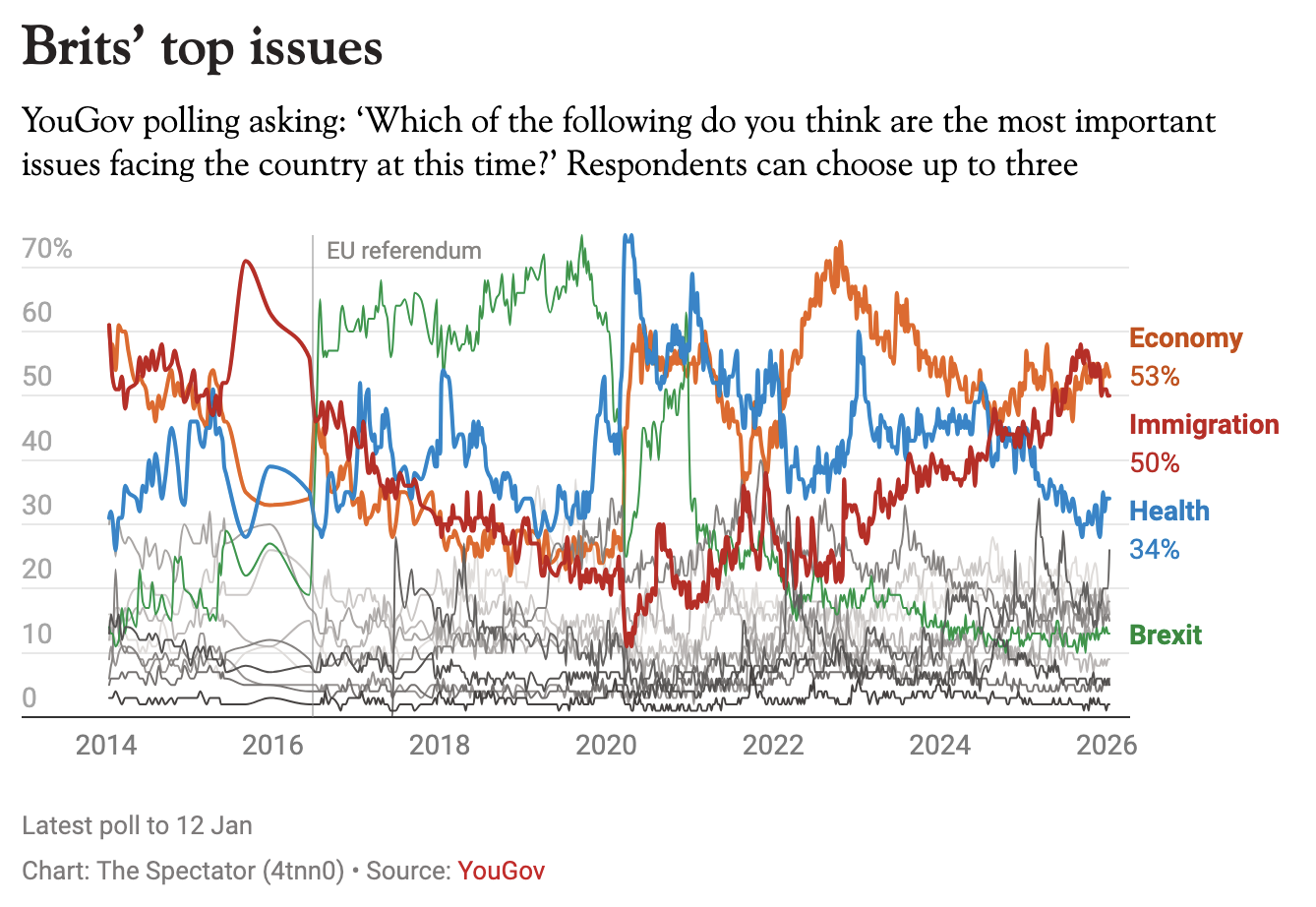
Back in Westminster, though, I wonder if the government is also taking advantage of the appearance that immigration is dropping down the salience list in voters’ minds. As I explained on last week’s episode of Reality Check, the latest visa and migration stats seem to suggest we may even hit net zero migration this year. Voters seem to have noticed, and whilst immigration is still the top issue for half of the respondents to YouGov’s issues tracker, it seems to be tumbling down from the near 60 per cent it registered in September.
Whatever the government’s reasons for this decision, though, Starmer can’t escape the fact he’s made yet another u-turn. And with reports suggesting there may be another one on trial by jury within days, it’s hard to escape the feeling that this is a government rapidly spinning out of control.