I hate to infringe on the sacred writing territory of Labor Dry, but desperate times call for shameless imitation.
There are many ways to explain Australia’s renewable energy policy. White papers. Modelling. Expert panels. Earnest panel discussions featuring men in navy suits. But honestly, the clearest and most accurate framework remains a single episode of The Simpsons – the one with the monorail.
You know the one.
If you replace Springfield with Canberra, solar panels with a monorail, and long-term planning with pure, weaponised vibes, you are basically there.
For those who somehow missed this foundational text: a smarmy salesman blows into town, dazzles everyone with a shiny, overhyped infrastructure project, pockets the money, and leaves behind a spectacularly useless mess that no one can quite explain or fix.
The episode was a warning. Australia appears to have watched it and said, ‘Yes, but what if we did that nationally?’
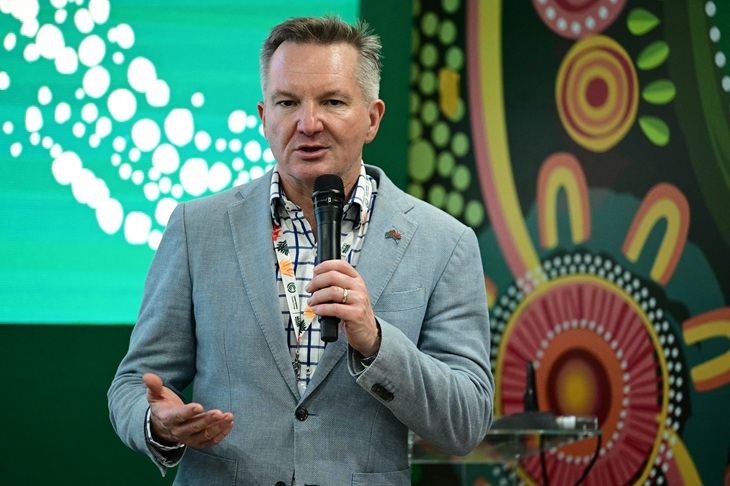
Picture Chris Bowen in a boater hat. Or Malcolm Turnbull in a red bow tie, grinning like a man who has just discovered a new market mechanism no one asked for.
In Australia’s case, there is not just one smarmy salesman but a whole chorus line of them. Yet the outcome is always the same.
Much like Springfield voters chanting ‘Monorail! Monorail!’, Australian politicians chant ‘Renewables! Hydrogen! Batteries! Transmission!’ while asking precisely zero follow-up questions.
How much will it cost? Where will it go? Who pays when it blows out by 300 per cent?
Shhh. Don’t ruin the song.
Then there’s the timeline optimism. In The Simpsons episode, the monorail is built in days and fails immediately. In Australia, renewable projects take years, fail more discreetly.
Every delay is met with fresh confidence that the next announcement will fix everything. This time it will be different.
This time the modelling is better. This time the press release has more verbs. It never works, but hope springs eternal. Mostly because admitting failure would require someone to take responsibility.
Which brings us to the real masterstroke: accountability. When something goes wrong, nobody is responsible because everyone was responsible. Federal government? State government? Market operator? Private sector? Consultants? Much like Springfield after the crash, everyone shrugs, quietly exits the scene, and waits for the next shiny solution to roll into town.
The only difference is Springfield lost a town budget windfall. Australia is gambling its economic future.