In the wake of a tragedy it is only fitting that public figures issue words of condolence. But there’s a vast difference between making a statement that conveys condemnation and anger, sentiments that most ordinary people have felt after the attack on Bondi Beach yesterday, and proffering bland, evasive platitudes that ignore the grave problems that face us – in this case, anti-Semitism and Islamist terror.
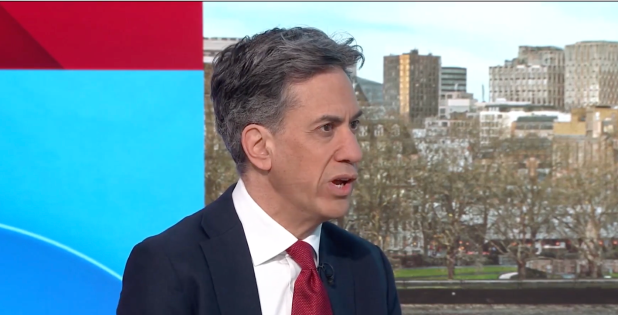
With every attack carried out by individuals beholden to an extreme interpretation of Islam, responses of the latter kind arrive with grim predictability. The reaction to the Sydney atrocity has proved no exception. Speaking to GB News last night, Lola McEvoy, Labour MP for Darlington since last year, said that at ‘the core of a lot of the problems that we have’ is ‘this narrative of who we’re against and how much we want to divide each other and how much we want to attack each other.’ She elaborated that ‘we have more in common than divides us’, that we need to ‘celebrate difference’.
If these words sound familiar it’s because we’ve heard this kind of tepid equivocation ever since the destruction of the World Trade Center nearly 25 years ago. The stock response of politicians and commentators such as the MP for Darlington has been to try not to blame the people who have actually committed atrocities in New York, London, Manchester, Paris, Nice, Madrid, Barcelona, Brussels, Istanbul, Tunisia, India and elsewhere.
After the killings at an Ariana Grande concert at the Manchester Arena in 2017 we witnessed a spectacle of vigils, prayers, candles and appeals that we ‘don’t look back an anger’. But there was anger, even if expressing it wasn’t the polite thing to do. Similarly, after the attack on a synagogue in Manchester again this October, we were treated ad nauseam to that abominable cliché, ‘diversity is our strength’, a refrain that grows more unsupportable and mendacious with every year that passes.
After that synagogue attack, the Mayor of Newham reminded us that, ‘Our diversity is our strength, but it needs our active protection and care,’ while the Mayor of Hounslow echoed this insipid sentiment. ‘I am incredibly proud to lead a borough as diverse as Hounslow: our strength lies in the fact that we live, work and grow side by side, with respect, understanding and unity.’
Hoping that people of different beliefs and backgrounds will live in harmony is all very well, but our fractured society won’t be mended by trite, performative utterances. Clinging to the notion that ‘people are good’ may well be a nice ideal, but carrying on with a bien-pensant mindset won’t cut it in a world full of deranged and genuinely awful individuals. Indeed, the French have an even better word to describe a worldview possessed by people like McEvoy, angélisme, meaning ‘naive optimism’ or a delusional belief in the inherent goodness and pure intentions of human beings.
Fear of opprobrium allowed the grooming gangs scandal to continue with impunity for so long
Yet it’s not just naivety that causes such people to respond so vacuously. Their use of euphemism, passive verb construction (‘this tragedy happened’) and their propensity to change the subject in order not to have to mention Islam, points to another universal, eternal human failing: cowardice. They will resort to banalities, or protest that Islam is a ‘religion of peace’, because they don’t want to appear uncaring or lose face by seeming to be racist. Labour MPs in marginal seats have the added incentive of not wanting to alienate Muslim voters.
We in Britain have learnt the hard way the consequences of such cowardice, of what happens when people won’t speak out for fear of being tarnished as racist. It was this fear of opprobrium from colleagues and the public that allowed the grooming gangs scandal to continue with impunity for so long. It’s the same timidity in the face of Islamism and anti-Semitism that has permitted even more heinous crimes to happen, not least in Australia, where three synagogues have been attacked in the past two years, kosher delicatessens have recently been set alight, and the country has experienced a 316 per cent rise in anti-Semitic incidents in the year to October last year.
These were all warnings that sometimes diversity is not our strength. It will never make for an appealing mantra, but it increasingly transpires that diversity has become our undoing.