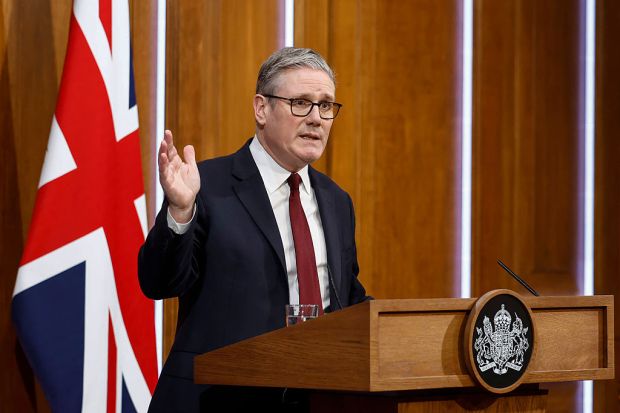

Today’s liaison committee meeting was not one for the history books. It was a fairly lacklustre affair, with some of the questions asked being so technical that they bordered on the soporific. The likes of Helen Hayes and Bill Esterson sounded more like attendees at a conference panel than the respective chairs of the Education and Energy Security select committees. ‘In Demark, people grow up to be told that a “good Dane is a green Dane” – do we need something similar here?’ was one such lowlight from Esterson. Yet despite such underarm bowling, today’s session did teach us three things.
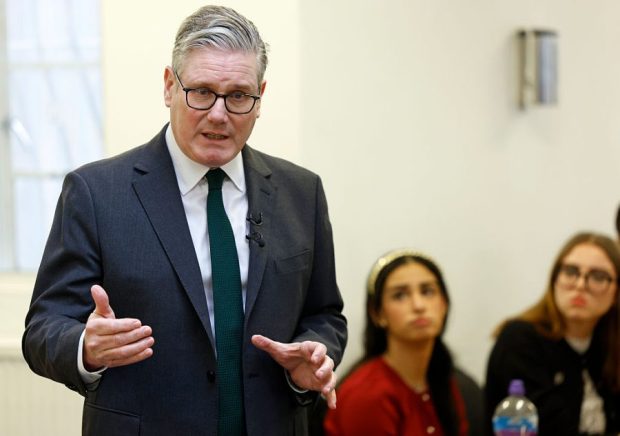
The first is the gap between Starmer’s stated and revealed preferences. In one quite remarkable exchange, he was asked by Ruth Cadbury about what he had found ‘most difficult’ in delivering his ‘Plan for Change’. ‘Speed and ability to get things done,’ he replied instantly. ‘We’ve got so many checks and balances and consultations and regulations and arms-length bodies… Every time I go to pull a lever, there are a whole bunch of regulations, consultations, arms-length bodies.’ Yet it is Starmer’s own government that has set up more than two dozen quangos, enhanced red tape across a swathe of areas and established four consultations on welfare alone. Meg Hillier’s wry intervention ought to have told Starmer the implausibility of his answer.
This showed just how much Starmer’s authority has drained away in the past year
It was a habit that the PM demonstrated in other answers too. Alberto Costa, one of the few Tories in attendance, opted to lob a few googlies by grilling Starmer on standards. One such question was about the number of political appointees to the House of Lords – something which Labour pledged to reduce in their manifesto. Starmer brushed it aside. He suggested that his party’s mission to reduce the size of the Lords is ‘ongoing’ by citing the removal of the hereditary peers. However, as the Electoral Reform Society notes, as prime minister, Starmer has already created 96 peers – more than the outgoing 92 hereditaries. It may be right, as Starmer argued, to create more Labour peers to ‘rebalance’ the Upper House – but on his watch, membership numbers have only increased.
A second revelation from Starmer’s appearance was where his attention is actually focused on. His two most enjoyable exchanges were when he was asked about the abolition of jury trials – a debate on which he can claim genuine expertise – and his summary on the situation in Ukraine. But on other matters, he clearly was far less aware of what his government is actually doing. Karen Bradley, the Home Affairs chair, asked about the violence against women and girls (VAWG) strategy, noting that delays were impacting service provision: ‘The government said it would come out before the summer, then it was going to be in September.’ Starmer’s answers here were unconvincing and short of detail – despite this being a long-running and very vocal debate in the sector.
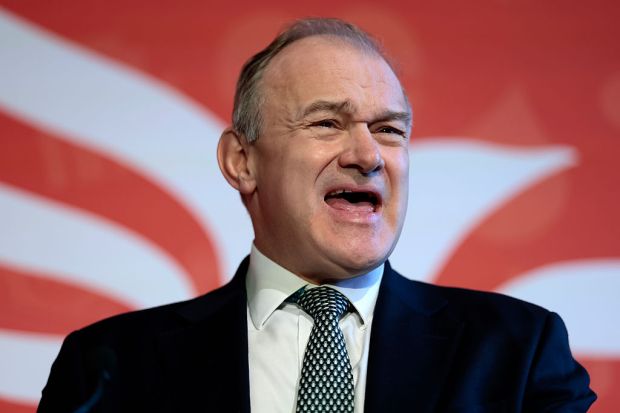
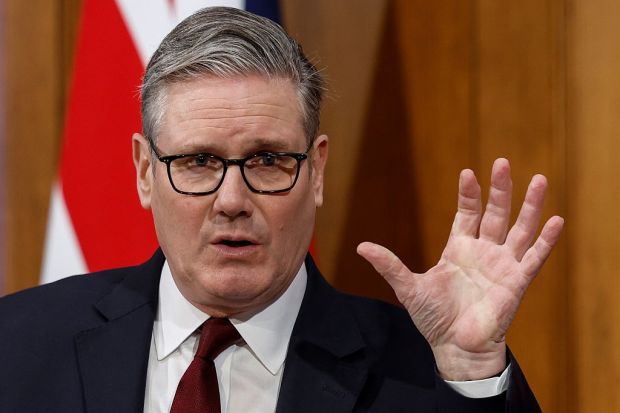
Finally, the liaison committee showed just how much Starmer’s authority has drained away in the past year. In his first appearance before this panel, twelve months ago, the PM was relaxed and unabashed. Yet today there was a sting when Alistair Carmichael grilled him – again – on the family farm tax. The senior Lib Dem MP pointed to the number of Labour MPs against him on this issue. ‘I do listen to party colleagues all the time,’ said Starmer, coldly. It was an uneasy moment which highlighted the uncertainty of the PM’s long-term political fate. Asked about the resident doctors’ strike, Starmer gave himself a ‘ten out of ten’ for how ‘gutted he was’. ‘I’d appeal to the doctors themselves to push back against the BMA,’ he said – a plea which is likely to fall on deaf ears.
Perhaps the most telling reflection of this political weakness came when Starmer was asked by Costa about special advisers briefing about party political matters. ‘Can you confirm that Labour party leadership speculation is a purely party political matter?’ ‘No, I’m not sure I can,’ said Starmer, adding with a laugh, ‘It seems to be pretty rife.’ Uneasy, unsure but forced to make light of it – that question and answer was the moment which summed up Starmer’s position. With the mercy of Christmas recess now looming, he will be forced to hope for new tidings in the new year.