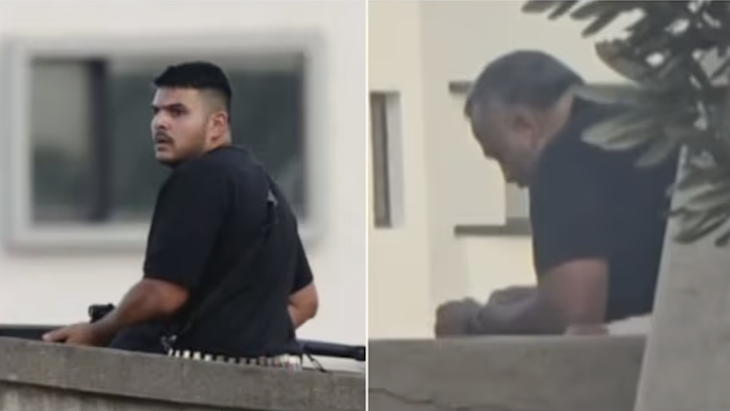
The sun had barely set over Sydney’s Bondi Beach, when horror unfolded at the Hanukkah celebration. A father and son, armed with licensed firearms, opened fire on a crowd of hundreds gathered for the Jewish holiday, killing at least 15 people and injuring more than 40 others. The perpetrators have been identified as Sajid Akram, 50, who was killed by police at the scene, and his 24-year-old son Naveed Akram, who remains in a critical condition in hospital after being shot by police.
The father-son dynamic here is no coincidence; it speaks to how hatred is often inherited
The attack is Australia’s deadliest mass shooting in nearly three decades, a stark anomaly in a nation with stringent gun laws. Yet beyond the immediate calls for tighter controls –worthy as they are – the Bondi tragedy exposes a deeper, more insidious threat: the familial roots of extremism. The father-son dynamic here is no coincidence; it speaks to how hatred is often inherited, nurtured in the quiet corners of home life, and passed down like a poisoned heirloom.
As someone whose own father, Seán O’Callaghan, plunged fully into the abyss of extremism before clawing his way out, I find this aspect profoundly unsettling.
Seán grew up in a staunch republican household in Tralee, County Kerry, where his father – my grandfather – was interned at the Curragh Camp during World War II for IRA activities. From an early age, Seán was steeped in a culture of resentment; his grandmother once told him, at around the age of ten, that if he ever shot a policeman, ‘Be sure and dig him up and shoot him again…you can never trust a policeman.’ Such sayings weren’t just mere quips; they were the bedrock of a worldview that normalised violence.
Seán didn’t skirt the edge; he crossed it entirely. Embedded in the Provisional IRA, he planted bombs, robbed banks, and even took lives in a world of clandestine operations and ideological fervour.
But ultimately, he rejected it, becoming an informer who helped avert bombings and saved untold lives. His decision broke a toxic cycle that could have ensnared me. What if he hadn’t? What if the ‘banter’ around the dinner table had normalised violence, turning resentment into action?
In families like the Akrams’, extremism doesn’t erupt from nowhere. It simmers in subtle influences: everyday conversations laced with grievance, cultural narratives that glorify past ‘struggles,’ or ideological grooming that warps young minds.
In Irish homes during the Troubles, rebel songs like ‘Four Green Fields’ or tales of ‘the old Brigade’ weren’t just folklore; they were seeds of radicalisation, romanticising bloodshed and fostering a mindset impervious to reason.
As Conor Cruise O’Brien observed, such myths create spectral ghosts – figures like Padraig Pearse or Bobby Sands – who haunt the present, demanding violent homage at the expense of innocents.
Sean O’Casey captured it poignantly in The Shadow of a Gunman: ‘It’s not the gunmen who are dying for Ireland; it’s the people. Isn’t it time the gunmen lived for Ireland?’
My father chose to live for Ireland, and in doing so he modelled the courage to defy inherited hatred. But in too many households, the opposite occurs. Recruiters – often parents or elders – shape the next generation, exploiting vulnerabilities like boredom, frustration, or a young person’s search for identity.
In Bondi, as in pub bombings or sectarian clashes, killers aren’t born; they’re bred
This generational transmission isn’t limited to one ideology; it spans ethno-nationalism, sectarianism, or extreme interpretations of religion. In Northern Ireland, lingering obsessions with historical grievances have led to tragic outcomes, including elevated youth suicide rates among those burdened by intergenerational trauma.
Young people, bombarded with tales of ‘the cause,’ internalise a toxic legacy that can manifest in self-destruction or outward violence.
The Bondi attack, amid a tripling of antisemitic incidents in Australia over the past year, underscores this peril. Hatred toward Jewish communities didn’t materialise overnight; it was likely cultivated in private, perhaps through online echo chambers amplified by family discussions – or even exposure to mass globalised ‘intifada’ rallies, often criticised as platforms for antisemitic rhetoric.
In the Akrams’ case, one must question the part played by such events, where chants like ‘Globalise the Intifada’ may have been translated by the father into literal bullets, striking Jewish bodies –including those of a ten-year-old and an actual Holocaust survivor.
This is where policy must evolve. Programmes like the UK’s Prevent initiative, which aims to stop radicalisation before it takes hold, are a start. But they often overlook the home as ground zero. We need a sharper focus on identifying familial recruiters: those who, through ‘small talk’ or cultural indoctrination, groom vulnerable youth.
Early intervention – community education, anonymous reporting lines, and support for at-risk families – could disrupt these cycles. Breaking the silence isn’t just a moral imperative; it’s a practical one.
As my father’s life showed, one person’s defiance can avert catastrophe. We are plagued by the curse of ‘history according to my da’. It’s a mindset that fosters dangerous myths and demands bloody retribution.
In Bondi, as in pub bombings or sectarian clashes, killers aren’t born; they’re bred. To honour the victims – not by dwelling on the horror, but by preventing its recurrence – we must confront these domestic origins. Tighten gun laws, yes, but also dismantle the ideological inheritances that arm minds before hands. Only then can we hope to spare future generations from such senseless loss.