Iran is experiencing one of its deadliest waves of executions since the 1979 revolution. A tactic once used to instil fear has now become central to the regime’s effort to stay in power, as its legitimacy erodes and public frustration intensifies.
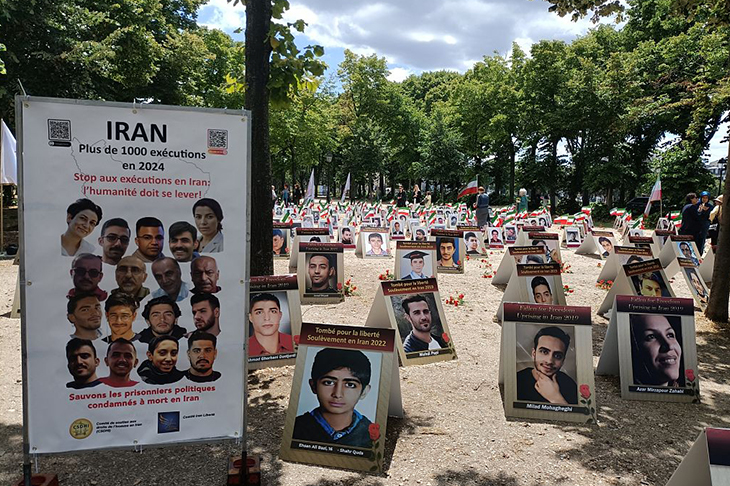
Between March and November 2025, more than 1,470 people were executed. Among them were women, ethnic minorities, political detainees and individuals charged with drug offences or ‘espionage’. Human rights groups have issued warnings, yet the international response has been muted.
Executions are no longer discreet or infrequent. The regime has revived public hangings, staging them as spectacles intended to terrorise communities and reaffirm state dominance.
Trials conducted by the Revolutionary Courts violate due process. Mostly held behind closed doors, they are often concluded within minutes. Defendants cannot choose their own counsel and judges are carefully selected for their loyalty. Former detainees recount beatings, electric shocks, sexual violence, threats against relatives and long periods of isolation used to extract confessions. Although numerous prisoners later retract their statements, courts frequently accept them as the basis for conviction.
Iran’s judiciary functions as an arm of the security apparatus, wielding broad accusations such as ‘waging war against God’ and ‘corruption on earth’ to criminalise virtually any form of dissent. Chanting a slogan, handing out flyers, or criticising officials online can be framed as a capital offence.
Women are among the most vulnerable. Iran executes more women than any other country. Many have killed abusive husbands in acts of self-defence after years of oppression, violence and isolation. Some were forced into marriage at 13, or younger, with the permission of a male guardian and a judge. Courts refuse to recognise marital rape or prolonged domestic abuse as mitigating factors. Under Islamic retribution law, families of murdered husbands can demand execution or exorbitant ‘blood money’ as financial compensation, leaving the widows trapped for years under constant threat of death.
Ethnic minorities are disproportionately targeted. Although Baluchs make up only five-to-six per cent of Iran’s population, they account for at least 20 per cent of recorded executions in recent years. Kurds and Ahwazi Arabs face similarly harsh repression. Iran’s ethnic mosaic that includes Azeris, Kurds, Baluchs, Arabs, Turkmen, Tabari, Lurs and Gilaks is nowhere reflected in political representation, cultural recognition, or equitable access to resources.
Despite living in regions that contain Iran’s richest oil, gas, and mineral reserves, minority communities frequently endure poverty, environmental degradation and chronic state neglect. Their marginalisation is structural, embedded in both law and policy, and directly linked to the regime’s model of centralised clerical control.
Political prisoners on death row include dissidents from ethnic minority groups, journalists, labour organisers, students, or women’s rights defenders. Among these detainees are activists who were arrested during the 2022 ‘Woman, Life, Freedom’ uprising. Some have been detained not for violent acts but for peaceful activism, organising protests or challenging gender restrictions.
Many executed prisoners come from impoverished regions where addiction is widespread, and despair pushes people towards the drug trade. Illiteracy, discrimination and economic vulnerability make them easier targets for a state wishing to project authority.
Minors are not exempt from the death penalty. Although Iran has ratified the Convention on the Rights of the Child, it continues to sentence individuals to death for crimes allegedly committed before the age of 18. Many juvenile offenders come from minority communities or families affected by poverty, addiction, or domestic violence. Many are beaten into signing confessions, then left to languish in prison until they are old enough for the state to perform the execution.
This current execution surge coincides with severe national instability. The June 2025 ‘12-Day War’ destabilised an already fragile political landscape and heightened the leadership’s anxiety about renewed unrest. Meanwhile, the economy is collapsing under corruption, sanctions and long-term mismanagement.
Inflation is devastating households, power and water systems fail repeatedly, youth unemployment is soaring, and public trust in clerical rule has fallen to its lowest point since the Revolution.
Despite intensifying repression, Iranians continue to resist. Women openly defy the state’s most symbolic tool of control: compulsory hijab. Across Iran’s cities, unveiled women walk the streets with extraordinary courage despite increased surveillance, automated fines and threats of arrest. Their daily defiance has become a quiet but potent referendum on the regime’s authority.
At the same time, public anger is growing over the government’s decision to prioritise nuclear and ballistic missile expansion and aggressive foreign policy while neglecting urgent domestic needs. Rather than repairing a collapsing economy and deteriorating infrastructure, the state funnels resources into surrogate warfare.
Iran exports its ideology through a vast system of proxy forces operating across the Middle East and even into Latin America and Australia. Its backing of Yemen’s Houthis has fuelled drone and missile strikes on commercial ships in the Red Sea, and Iranian drones used by Russia have attacked civilian infrastructure in Ukraine.
Proxy conflicts extend Iran’s influence without direct military confrontation, yet they syphon resources from a population already crushed by economic hardship.
Within its borders, Iran is ruled as a police state, enforced through relentless surveillance and informers. Political dissent is systematically criminalised, revealing a regime that prioritises its own survival over the rights and safety of its citizens.
Leaning ever more heavily on violence to stay in power, the government has weaponised the courts. Executions serve to project a strength that the regime cannot claim through lawful rule.
As Iran’s leadership grows more insecure, global dangers escalate. A government executing citizens at record rates while accelerating towards nuclear capability poses not only a domestic crisis but also a regional and international threat. The prospect of a ballistic missile carrying a nuclear warhead transferred or launched by a rogue state casts a shadow far beyond Iran’s borders.
The Islamic Republic’s current wave of executions serves the twin aims of punishment and deterrence, intended to extinguish even the possibility of rebellion.
It is governance sustained by terror, a despotic theocracy clinging to power at the cost of its own people.
The question is not whether the regime will continue executing its citizens with impunity. The real question is whether the world will continue to let it.
Got something to add? Join the discussion and comment below.
You might disagree with half of it, but you’ll enjoy reading all of it. Try your first month for free, then just $2 a week for the remainder of your first year.