I’m a glass-half-full kind of person. That doesn’t mean I always have half a glass of something in my hand; well, not until the bar opens at our place. But I am an optimist by temperament.
It’s just that 2025 has tested my sanguine nature. The policy catastrophes, both federal and state, are so numerous and sizeable that it’s hard to know where to begin.
If that’s not depressing enough, the reaction of most of the mainstream media to these cataclysms is totally bizarre. It ranges from complete indifference to regurgitating the self-serving but highly misleading media releases of government ministers. There is so little analysis, so little curiosity, so little legitimate cynicism.
One of the most depressing developments overseen by our dear friend, B1, Climate Change and Energy Minister, Chris Bowen, relates to the net zero transformation, or should that be the NET ZERO TRANSFORMATION of the economy?
I’m not sure I can remember a political figure who is so driven by fanaticism and fervour. Given the practical bent of his portfolio responsibilities, you might think he would downplay the politics from time to time and concentrate on practicalities.
His determined rejection of nuclear power is pure politics, for instance. He simply refuses to see what is happening overseas – the massive resurgence in the nuclear power industry for domestic purposes. Gosh, there is even a group within Cop – B1’s favourite international cartel of green activists – that has pledged to triple the amount of energy generated from nuclear power by 2050.
Let’s be clear here: being practical about the electricity grid necessarily involves having a Plan B, a set of contingencies that can be called on should the features of the preferred strategy not fall into place in a timely fashion. In other words, what happens when the shit hits the fan. (Readers, excuse me, it’s been a long and frustrating year.) The need for alternative pathways is apparent to everyone apart from B1.
Just think about the current situation. Massive subsidies are required to induce investment in renewable energy through the Capacity Investment Scheme. The ultimate cost of the scheme is not known, but we are talking billions of dollars.
But massive subsidies are also required to induce three large coal fired plants – Eraring, Yallourn and Loy Yang A – to keep operating so the grid can generate reliable electrons.
Subsidies are also required to entice home-owning households to install solar panels on their rooftops, and now batteries. Again, we are talking billions of dollars, and this includes subsidies from state and territory governments.
And let’s not forget the electricity rebates – yep, subsidies – that have been handed over to households and small businesses because electricity bills have soared. This is notwithstanding the exhortation of B1 and Jimbo and Albo that ‘renewables are the cheapest form of electricity’.
And now there is a need for massive subsidies to keep many of our energy-intensive operations like smelters and refineries in business. These big carbon-emitters are being taxed through B1’s ramped-up Safeguard Mechanism while being bailed out by the federal and state governments to the tune of hundreds of millions of dollars – each. Go figure.
You could say that it’s raining subsidies – men are so yesterday. Once upon a time, private investment and market forces produced affordable and reliable electricity while businesses were able to make a profit without government assistance. It is now an expensive and potentially catastrophic pickle we are in.
Even the climate-obsessed folk down at the Australian Energy Market Operator (Aemo) – OK, all the staff at the multitude of energy-related agencies are climate-obsessed – now worry whether the grid can sustain the closure of the largest generator of electricity in New South Wales, the Eraring plant. It’s going to be a close call, and close calls are never recommended when it comes to operating an electricity grid.
The head of Aemo, Daniel Westerman – shall we call him Wally – is hoping that the combination of synchronous condensers, some additional gas generation, plus renewables and batteries will be enough.
Mind you, these condensers cost serious money and merely mimic the ancillary functions that coal-fired plants traditionally performed for voltage and frequency control of the grid – for free.
Consumers will be hit through their bills for the investment in these condensers.
No sensible analyst is now predicting that electricity bills will come down in the next several years, even the next decade. It’s quite hilarious to look back at the 2022 pledge of Labor and the clearly defective forecasts that were made based on ‘the most comprehensive modelling ever done for any policy by an opposition in Australia’s history since Federation’. Albo might care to eat his words, but he won’t.
The world’s best modeller told us that wholesale electricity prices were going to fall from $62 per megawatt hour in 2022 to $51/MWh in 2025. This would result in a reduction of $275 in the electricity bill of the average household.
According to the latest figures (for the third quarter of 2025), the average wholesale price of electricity ranged from $80/MWh in Queensland to $124/MWh in South Australia. The forecast of $51 is looking way out, to be kind.
Of course, developments in Australia’s energy market over the course of this year are but one example of many depressing policy outcomes. Indeed, it’s hard to think of any area that cheers me up.
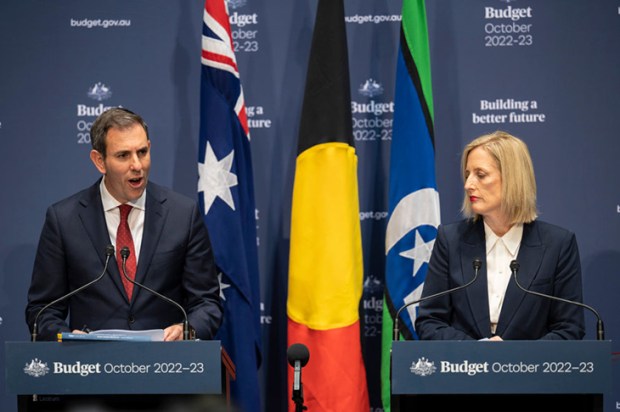
Jimbo has been spending like there’s no tomorrow and inflation has taken off again. The three cuts to interest rates that happened during the year may be as good as it gets for mortgage-holders. Indeed, there is a distinct possibility that interest rates could start heading north again next year.
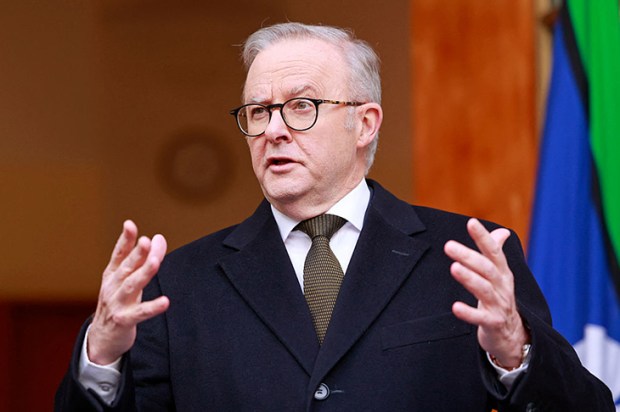
In the meantime, the newly married Albo will be celebrating Christmas and the New Year by congratulating himself on a very successful year, politically speaking. A thumping electoral victory in May, an opposition at sixes and sevens about everything, and the amendments to the Environment Protection and Biodiversity Conservation Act have passed, courtesy of the Greens.
They might be like a dog’s breakfast but at least they were done. Albo will be cheering. The fact that they are hostile to any further development of the gas industry, which is critical for the operation of the east coast electricity grid, will be seen as a mere trifle.
I’m now wondering whether I need to keep my half-full glass a bit topped up. But turning to the demon drink might dull my will to fight stupid policies, replete with their inefficiencies, waste and ineffectiveness.
So, let’s toast to 2026 and keep fighting the good fight. I know Speccie readers have the resolve to do so. I’m happy to join in.
Got something to add? Join the discussion and comment below.
You might disagree with half of it, but you’ll enjoy reading all of it. Try your first month for free, then just $2 a week for the remainder of your first year.