Australians are living in a time of genuine civic peril.
Since 9/11, successive governments have pursued an administrative model of managed fragmentation: demographic expansion without integration, diversity without shared obligation, and conflict management without moral clarity.
A cohesive society insists on common civic norms. It expects newcomers to enter a shared moral and legal framework. It speaks plainly about threats to that framework and enforces its boundaries with confidence. Australia has done none of this. Instead, it has expanded differences while dissolving the expectation of assimilation, then relied on language management and bureaucratic control to suppress the tensions that inevitably follow.
This failure explains much of what we are now witnessing.
When ideological violence occurs, the state refuses to name it honestly. Not because facts are unavailable, but because clarity would expose the absence of a shared civic core. To name ideology would be to admit that parallel moral worlds have been allowed to form without integration or restraint. It would be to concede that the model itself has failed.
Language is softened. Motive is abstracted. Responsibility is diffused.
The Prime Minister’s description of Islamist violence as a ‘radical perversion’ of a belief system was not an explanation. It was an evasion. It preserved political comfort while denying the public clarity. This pattern is now familiar. When belief is involved, the language collapses into reassurance. When reassurance fails, attention shifts elsewhere.
That shift is the real danger.
When a state refuses to name the source of violence, it does not leave a vacuum. It fills it. And the substitute target is almost always internal. Speech, commentary, dissent, and the insistence on clarity become the new problem to be managed.
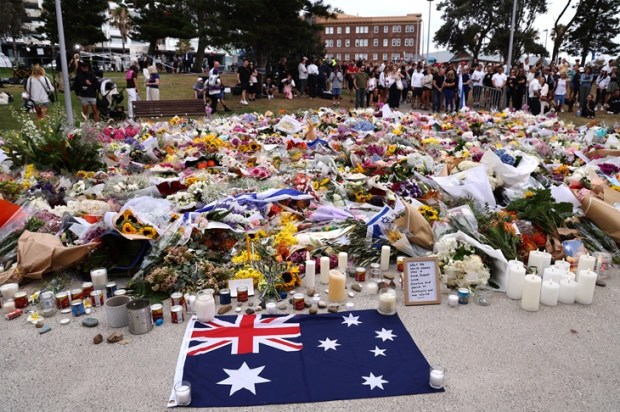
We can already see this mechanism activating. Public events quietly cancelled. Christmas celebrations diminished. New Year’s Eve fireworks shelved. Not because of explicit threats, but because uncertainty itself has become justification enough.
Normal public life is treated as a liability rather than a good to be defended.
Alongside this retreat comes a familiar vocabulary of enforcement. Ministers announce crackdowns on ‘hate’, ‘antisemitism’, and ‘harmful speech’ without offering stable legal definitions. Online platforms are flagged for intervention without clarity about intent, proportionality, or due process. The words sound protective, but they function as instruments of discretion.
When speech is punished while ideology is sanitised, the inversion is complete. Notably, those cheating this on in the UK are the managerial and administrative classes.
Australia should not assume it is immune. Our administrative and managerial class is fluent in the same moral grammar. We see it in the eagerness to malign dissenting figures as racists while refusing to confront ideological violence honestly. We hear it when senior reporters at the ABC wrongly claim Islamic terror attacks have ‘nothing to do with religion’, as though repetition could substitute for explanation.
When the enemy who commits violence is not named, the enemy being prepared is domestic.
Labor’s Andrew Leigh announced on X that he was tightening laws for ‘tackling hate and antisemitism online’, and ‘cracking down on hate and antisemitism’. If you do not understand the threat this presents to ordinary Australians, then you are just not paying attention.
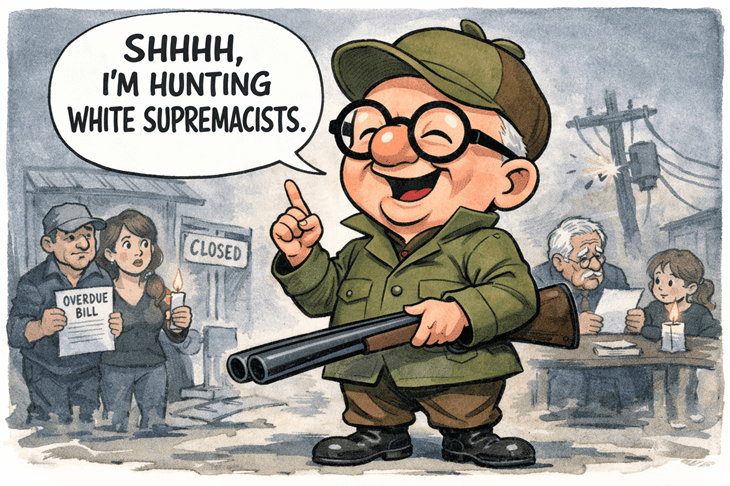
‘Hate speech’ becomes whatever those in power decide it is. Speech they dislike. Speech that disrupts their narratives. Speech that insists on clarity in a system built on avoidance. This is not the protection of minorities. It is the protection of authority.
Australia lacks recall elections, binding petitions, and meaningful mechanisms of direct democratic correction. That leaves only one tool available to ordinary citizens: persistent, recorded dissent. Writing to representatives. Writing to public broadcasters. Writing even when the replies are formulaic, evasive, or contemptuous.
Yes, it often feels futile. The system is designed to absorb and neutralise complaints. But silence is worse. Silence is interpreted as consent. Silence allows managerial language to harden into law.
We cannot allow the state to believe Australians accept censorship in exchange for comfort, or ambiguity in exchange for safety. A society that refuses to name its threats will eventually redefine its citizens as the threat.
This is not a moment for reassurance. It is a moment for clarity, restraint, and the reassertion of a shared civic framework. Not later. Now.