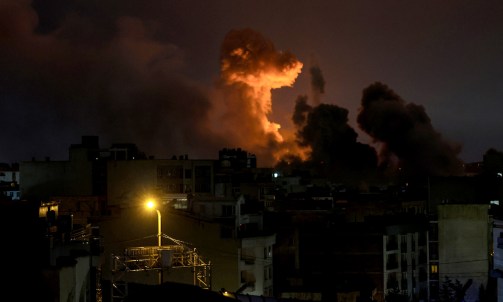
The proposition sounds almost absurd at first hearing. Australia, our vast island-continent anchored firmly in the Indo-Pacific, dispatching forces to defend European soil against Russian aggression… Yet history suggests we dismiss such scenarios at our peril. Australians have form when it comes to fighting other people’s wars on distant continents.
The Anzus Question
The immediate legal and strategic reality is straightforward: Australia has no treaty obligation to defend Europe. Anzus binds Canberra to Washington, not to Nato. The North Atlantic Treaty’s Article 5 mutual defence clause extends no further south than the Tropic of Cancer. Australia could, in theory, watch a European conflagration from the safety of geographic irrelevance.
But treaties tell only part of the story. Australia’s strategic culture has never been one of splendid isolation. From Gallipoli to the Western Front, from Tobruk to Korea, from Vietnam to Afghanistan, Australian governments have consistently calculated that fighting alongside great-power allies – even in conflicts peripheral to direct national interest – purchases insurance for the day when Australia itself needs help.
The Indo-Pacific Complication
Here lies the genuine strategic tension. A Russia-Europe war would not occur in isolation. The critical variable is China’s posture. Should Beijing view a European conflict as an opportunity to press its advantages in the Taiwan Strait or the South China Sea, Australia would face an agonising choice: contribute to European defence and risk leaving the Indo-Pacific exposed, or orchestrate resources for the contingency that matters most to Australian survival.
The Albanese government’s defence strategic review and Aukus investment suggest where priorities actually lie. The acquisition of nuclear-powered submarines, the northern basing initiatives, the expanded exercises with Japan and the Philippines – all point toward preparing for Indo-Pacific contingencies, not European ones.
What Contribution Could Australia Make?
Assuming Australian political will existed, what could Canberra actually offer? The Australian Defence Force is small – around 60,000 active personnel – and configured for regional operations rather than large-scale conventional warfare in the European theatre. Unlike the world wars, Australia could not raise mass armies through conscription; the political appetite for such measures has long vanished.
More plausibly, Australia might contribute niche capabilities: special forces, cyber and electronic warfare expertise, intelligence sharing through Five Eyes, and perhaps air-to-air refuelling or surveillance assets. The precedent of Australian E-7A Wedgetails and potentially KC-30A tankers supporting Nato operations provides a template. Symbolic contributions – demonstrating alliance solidarity without major combat commitment – represent the most likely form of Australian involvement.
The Economic Dimension
War between Russia and Nato would trigger economic shockwaves that Australia could not escape regardless of military involvement. Energy markets, already strained, would convulse. Supply chains would fracture further. The pressure on commodity prices – Australia being a major exporter of LNG, coal, iron ore, and critical minerals – would be immense and unpredictable.
Australian policymakers would need to navigate demands from European allies seeking increased energy exports against domestic political pressures and existing Asian supply commitments. Economics, not expeditionary warfare, may prove the arena where Australia’s involvement in a European war becomes most consequential.
The Domestic Political Calculus
No Australian government would commit forces to European combat without overwhelming public support. The memory of Iraq – where Australia joined a coalition of the willing based on contested intelligence – lingers. The Afghanistan withdrawal, with its chaotic conclusion and questions about what two decades of sacrifice achieved, further complicates any case for distant military adventures.
A government seeking parliamentary and public endorsement would need to demonstrate that Australian security was genuinely, not merely rhetorically, at stake. The argument that autocratic victory anywhere emboldens autocrats everywhere contains truth but may prove insufficiently concrete for a war-weary electorate.
The Verdict
Australia would likely involve itself in a Russia-Europe war, but involvement would be calibrated, limited, and heavily conditioned by Indo-Pacific circumstances. Full-scale combat deployment appears improbable absent direct attacks on Australian personnel or territory. Intelligence cooperation, economic measures, and modest niche military contributions represent the probable ceiling of Australian engagement.
The deeper question such a conflict would force upon Australia concerns the sustainability of its traditional strategic posture: relying on great and powerful friends while maintaining only modest independent military capability. Should America find itself stretched between European and Asian theatres simultaneously, Australia might discover that the insurance premiums paid through decades of alliance loyalty purchase rather less coverage than assumed.
In the end, geography may prove more powerful than sentiment. Australia’s strategic future lies in its own region. A European war would test Australian alliance commitments, but it would also clarify, perhaps painfully, where Australian interests truly reside.