Christmas is one time of the year where it is okay to let nostalgia off the chain.
I like to think of my annual bout not as a soppy sentimentality but as constructive reflection.
After all, Socrates said, ‘The unexamined life is not worth living.’
Thoughts harken back to childhood Christmases at my grandparents’ Queensland farm in a little district called Merlewood, eight miles from Murgon on the road to Gayndah.
I love to get lost in memories of my boy self descending the back landing steps of the farmhouse on stilts on those warm nights.
I’d look up at the stars and drink the smell of softwood vine scrub mingled with Rhodes grass.
I would imagine the night the angels appeared to shepherds in the Judean hills. I never saw angles, just stars shining brighter than they did in Toowoomba where I lived.
My grandparents’ brothers and sisters, their spouses, my uncles and aunties and assorted family friends would be singing Christmas carols and yarning, their voices spilling into the dark.
My grandfather’s siblings, all born before, during, or soon after the first world war, grew up on that farm which was carved from the scrub in the early 20th Century by my great-grandfather Henry William Shelton and his brother, John.
There were no bulldozers, just axes, human heft, and horse flesh.
Those were tough times. Children died after eating unripe grapes, men had fingers blown off by dynamite in well-sinking accidents and 21-year-old Will Shelton was killed at Gallipoli on April 25, 1915, his body never found.
Before he left for the Dardanelles, he planted the Moreton Bay fig by the house which provided shade for the family on Christmas Day.
It was from there we waited our turn at tennis on the rough ant bed court fenced with chicken wire.
My grandfather and his generation are all gone now but in the 1970s and 1980s I had a living link to people who spent their first years without cars and electricity.
They knew the meaning of Christmas, who the Christ child was and lived with certainties kids these days could only dream of.
Christmas Day was fun but chaotic. Way too many people gathered under the house sitting at trestle tables, dogs jostling our legs and the smell of a piggery built way too close wafting through the slats.
There were flies. It was hot but no one had heard of climate change, it was just the Queensland summer.
Apart from romanticising my childhood Christmases, I make a point each year of re-reading the Christmas story recorded in the Bible’s Gospel of Luke.
It’s the most comprehensive account.
Greg Sheridan in his latest book How Christians Can Succeed Today laments that Christmas movies ‘bathed in sentimentality … almost never mention the birth of Jesus’.
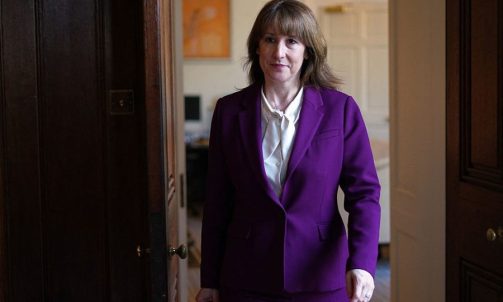
It’s why I read the Bible at Christmas. Luke tells Christmas the full story, not Clover Moore’s Christless version in Martin Place.
A medical doctor, he was not one of Jesus’ disciples, but he knew the eyewitnesses to Jesus’ life and ministry.
His account relies heavily on Mark, a teenager who travelled with Jesus and knew his mother, Mary.
Luke tells the backstory of the Jewish priest Zechariah and his wife Elizabeth, who after an angelic visitation, conceived John the Baptist.
The pregnant young Mary, whose finance, Joseph, had also been visited by an angel, visited Elizabeth. Her baby, John the Baptist, leapt in Elizabeth’s womb in the presence of the unborn Messiah.
John went on to fulfil the words of Isaiah, prophesied and written down 800 years earlier about a voice crying in the wilderness ‘prepare the way of the Lord’.
And that’s what John did before Herod cut off his head.
Luke reveals the fulfilment of what Isaiah was on about and what Handel later immortalised in the greatest music ever written: ‘unto us a child is born’.
The location – Bethlehem – was also foretold by Isaiah. You can’t make this stuff up, even though some people say it was.
Shepherds watching their flocks by night, seated on the ground, were the first to hear the good news with yet more angels appearing and proclaiming peace on Earth and goodwill towards all.
These were foreign concepts in the ancient world where life was brutish and short.
Goodwill towards others regardless of class or sex was foreign to pagan thinking.
It’s the holy night and the haunting carol by that name that gets me.
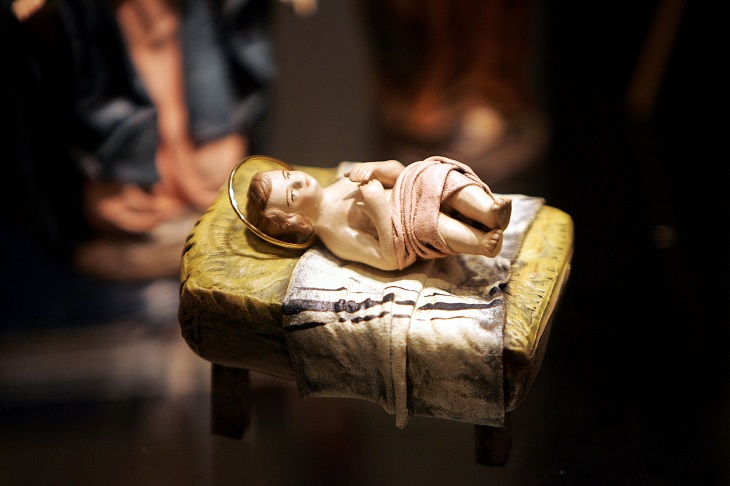
The birth of Jesus amongst cattle in a stable ushered in a quiet revolution which changed the world.
It’s why I still like to walk around in the dark on Christmas Eve.
‘Truly he taught us to love one another,’ angelic choristers intone through my Bose sound bar.
The West has made a good attempt, compared to what life was like BC (stands for Before Christ, before the woke mind virus erased Jesus in favour of BCE – Before the Contemporary Era).
But if we are honest we will admit we all struggle to live up to the Christmas ideal. Loving one another is hard.
I’ll never have another Christmas at the farm. It’s been sold because, like many family farms, it can no longer do what it did 120 years ago and support a family.
This Christmas Eve I’ll be at home at our small apartment in Sydney, a million miles from Murgon.
In Sydney, the city lights wash away the stars in the bright sky.
But I’ll stroll out on my little balcony and stare at the lights of Barangaroo in the far distance and meditate on the holy night Luke describes.
My grandfather’s generation did well but we’ve lost our way.
Last Christmas my wife and I sat down and watched How to Make Gravy – the Australian Christmas classic based on the song by Paul Kelly.
It’s a tale of family dysfunction but also redemption. Goodwill and peace win out. They learn to love one another.
What embodies more what Luke is trying to get across? Deep down we all yearn for what Christmas and the promise of the Christ child is about.
I’ve put How to Make Gravy on my Spotify playlist this Christmas and Luke of course remains on my reading list.
It’s important to celebrate the birth of Jesus each year and resolve to try and live up to what he taught us through his arrival that holy night.
Nostalgia doesn’t have to be an indulgence. It can help us live an examined life.
Merry Christmas.