Scotland have qualified for the World Cup for the first time in 28 years. I can hardly believe that I have just written that sentence, so fantastical did this eventuality appear at times, and how specialised in failure Scotland’s once proud national team had become. But it is true. I’ve checked the score, and pinched myself several times.
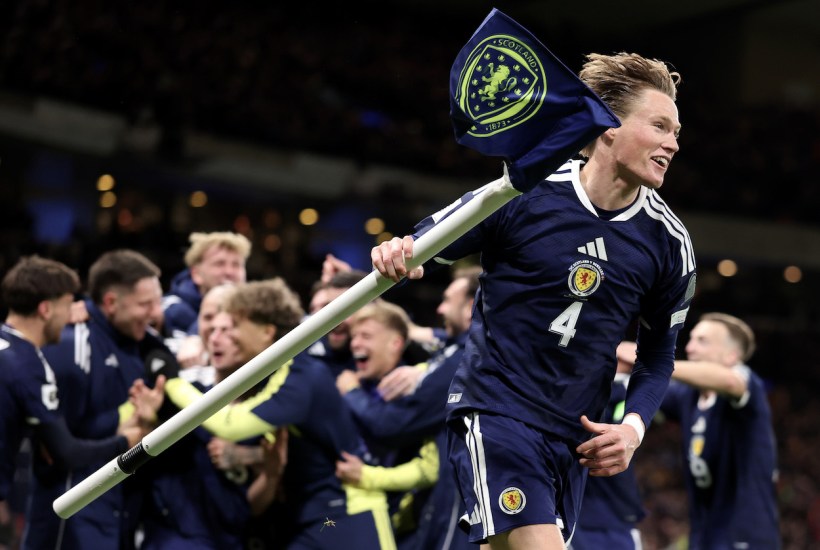
We beat Denmark 4-2 last night (the classic World Cup scoreline) in what may well be the greatest Scotland international match ever played. As someone who was there in France 10,000 days ago the last time we qualified, it was a euphoric occasion and one that underscored that the true heart of football beats far more passionately now for the international game.
Last night’s match will surely become one of those ‘I was there’ games, with far more than the official attendance of 50,000 claiming to have been present. I absolutely wasn’t there. I watched the game in a drab business hotel outside Tokyo awaking at 4:50 a.m., switching on my computer and still groggy from sleep immediately witnessing a move that was reminiscent of precisely nothing in Scottish football history, a wonder goal from Scott McTominay. It belonged in Nou Camp, Bernabeu or Maracana, not a rainy Hampden on a Tuesday night. Was I perhaps still dreaming?
What followed was glorious, but also in the maddening and marvellous way in which football often mirrors life more than a little unjust. Scotland were embarrassingly poor for much of the game. Scotland striker John McGinn said as much in a candid comment right after the game: ‘I thought we were pretty rubbish to be honest, but who cares?’ An in-match post on the Tartan Army website was pithier: ‘We are absolutely honking.’
But yes, who does care? Football is about stories and this was a damned good story, as was the Republic of Ireland’s sensational last second winner in Budapest, which only sent them into the play-offs but was celebrated as if it were a tournament decider and rendered the commentators giddy with excitement. The Scotland game may have produced similar raptures, but unfortunately I only had Japanese commentary and ‘Sukoterando katanakereba narimasen’ (Scotland must win) in a slightly more emphatic monotone than usual was as enthused as it got.
The post match scenes were unlike anything I’ve ever seen at a Scotland match and the interviews pre and post match, which I read about, were clearly of a pitch and a poignancy rarely heard in sport. Scotland’s manager Steve Clarke, the subject of much criticism, was apparently Churchillian in his address to the troops, which several of the players credited with the inspiring the gutsiness of the display. Scotland’s captain Andy Robertson, classy as always, movingly referenced his friend Diogo Jota, killed in July in a car accident, and reminisced about how they had talked dreamily of playing in a World Cup one day (Joto missed Qatar through injury).
I’d argue only international football, and perhaps only the World Cup, can produce this depth of feeling. Despite Fifa’s best efforts to ruin the finals by playing them in multiple, sometimes unsuitable countries, constantly expanding the number of finalists and tinkering with formats, it remains irresistible. Unlike the Premier League and Champions League, which are becoming effectively closed shops, the World Cup offers a chance of at least a qualified glory for a far greater percentage of entrants.
The quadrennial nature of the tournament is precious and must be cherished. The insatiably avaricious Fifa once toyed with the idea of making the World Cup a biannual event but thankfully, for once, were dissuaded. There is a ‘now or never’ intensity that makes the World Cup viscerally compelling. Players from outside the elite group of countries know they may only get one shot at appearing, and it may all come down to a few frantic moments at the end of one match in their long careers. Robertson 31, no longer a regular at Liverpool, must have known this was probably his last chance.
I remember when it was predicted that club football would consume the international game
All of this adds meaning, as does the truly representational nature of international sport. You can actually take pride in it. Premier League ‘clubs’ are really just hugely expensively assembled cohorts of transient superstars. Liverpool spent half a billion pounds in the summer on new acquisitions and currently regularly field just one British player in their line-up. Their manager is Dutch, their owners are American, their sponsors are from Germany. Any meaningful connection between the players on the pitch and the city in which they ply their trade is tenuous if not entirely illusory.
FIFA don’t seem to realise this, don’t understand the reason for their great asset’s success. It tried to replicate the World Cup’s great attraction, and soaring revenues, with a club version in the summer. It wasn’t a complete flop but tickets at $15 (£12) a go and coverage on Channel 5 tell their own story. Looking forward to the next one? Me neither?
Those with long footballing memories will remember when it was predicted that the club game would eventually consume the international version. Players would prioritise their highly remunerated day jobs and snub the international game, which wouldn’t be able to compete with the financial and marketing muscle of the superclubs. But with the Premier League bubble possibly about to burst (TV revenues have dipped), the Swiss-style Champions League a bore, and many of Europe’s top clubs facing bankruptcy, you have to wonder, given the thrilling culmination of the World Cup qualifiers, that perhaps one day the opposite might happen.