The NSW energy debate has drifted further from reality with each passing year.
Politicians chase targets, oppositions trade slogans, and households are left to absorb rising bills and worsening uncertainty. While both sides compete to sound greener than the other, families and businesses are bracing for yet another year of record power prices and anxiety about what happens when the state’s remaining coal plants finally shut.
If the NSW Liberals want to lead again, they must abandon the symbolic politics of the past decade and return to engineering, economics and common sense.
The state still needs clear emissions trajectories, but another aspirational date carved in political sandstone will solve nothing. Australians care less about climate theatre and more about whether they can afford to heat their homes and keep their businesses running.
The shift away from substance began under the Coalition itself.
Matt Kean’s 2020 Electricity Infrastructure Roadmap was sold as a technocratic blueprint, but it in fact locked the party into an ideological experiment detached from physical and commercial reality. The NSW Liberals believed they could leapfrog the world with a near renewables-only system, but what he delivered was the most expensive transition plan in the country, built on heroic assumptions about transmission, storage, and community acceptance that have never been achieved anywhere.
The roadmap squeezed coal out of the market, erased the business case for gas, and poured billions into renewable zones without ever addressing who would pay when costs inevitably spiralled.
Transmission was treated as a blank cheque. Storage was assumed to arrive at industrial scale on an ideological schedule rather than an engineering one. And regional communities were expected to host industrial corridors of turbines and poles with minimal consultation.
The result was predictable: rising prices, deteriorating reliability, and a Liberal Party trapped defending a model it never seriously debated.
The consequences are now unavoidable. The Central West Orana Renewable Energy Zone has blown out from a forecast $650 million in AEMO’s 2020 plan to roughly $5.5 billion today, an almost eight-fold increase. The Minns government, which inherited this framework, has refused to adapt it to the real world. Delays, grid-connection bottlenecks and rising social resistance threaten delivery and investor confidence. Communities once promised prosperity now face compulsory acquisitions, biodiversity damage, and a loss of trust.
Meanwhile, the Australian Energy Regulator’s Default Market Offer will lift bills by another 8.3 to 9.7 per cent from 1 July, on top of roughly 25 per cent cumulative increases over the last two years. The slogan ‘cheap renewables’ has not survived contact with the electricity bill.
Eraring’s extension to 2027 was the clearest admission yet that the transition is off track. The government’s deal with Origin Energy, worth up to $225 million a year in potential loss cover, was not a visionary step forward but an expensive patch over a widening reliability gap. AEMO’s latest Electricity Statement of Opportunities formally requested a reliability instrument for 2027-28, bureaucratic language for saying the lights may go out without urgent action.
The deeper structural issues are even more significant. Renewable penetration has reached a point where marginal revenues collapse to zero or even negative for long periods of the day. That is an economic reality, not a political opinion, and it destroys the business case for the very thermal generators the grid still relies on. Coal units were never designed to ramp up and down to follow wind and solar; the forced cycling increases mechanical stress, drives up maintenance costs and accelerates closures. No operator will invest hundreds of millions to extend an aging plant under these conditions unless the government subsidises them heavily, as we now see with Eraring.
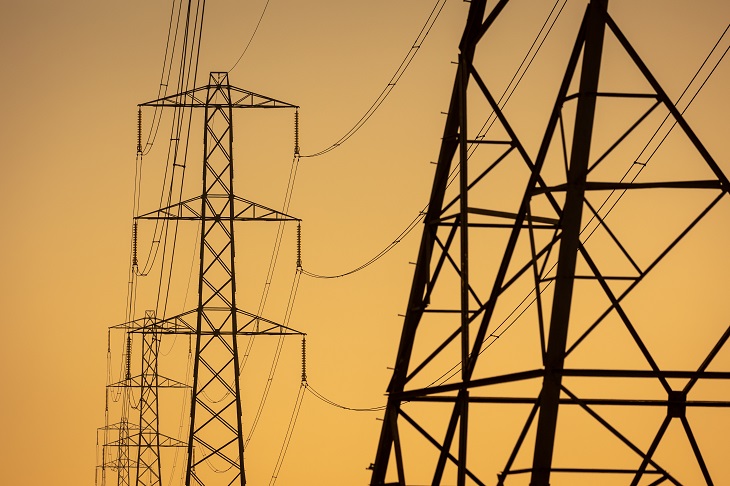
On top of this, AEMO’s increasingly transmission-heavy design bakes enormous fixed costs into every customer’s bill. Vast new lines into remote renewable zones may look elegant in planning diagrams, but every kilometre becomes a permanent network charge paid by households and industry. This structural cost burden undermines dispatchable generation and guarantees higher bills for decades.
NSW need only look south to understand where ideological transitions lead. Victoria closed coal early without replacement. Wholesale prices surged 65 per cent between 2021 and 2023, the highest increase in any National Electricity Market region. AEMO has repeatedly warned of reliability shortfalls from 2026. The state now depends heavily on imports from NSW and South Australia, making it the most vulnerable grid in the country.
The Andrews and Allan governments responded by reviving the State Electricity Commission, but so far, it has produced more announcements than electricity. Its flagship investment, a minority stake in a 250-megawatt wind farm, offsets barely a month of Yallourn’s output. Now, Victoria is considering capacity payments for gas, the same mechanism it once denounced. It is the clearest case study in what happens when ambition outruns engineering: blackouts, bailouts and rising bills.
Inside the NSW Liberal Party, the energy debate has become a proxy for internal identity rather than a serious conversation about how to fix the system. Shadow Minister James Griffin is right to call for ambitious but practical policies grounded in affordability and reliability, including a rational discussion about nuclear energy. Opposition Leader Mark Speakman’s refusal to recommit to a fixed 2050 target was a rare moment of honesty about uncertainty in technology, cost and sequencing.
But the cultural challenge is real. Parts of the party remain attached to Kean-era symbolism, while others want to retreat entirely into nostalgia for coal. Neither path reflects the world as it is. The Nationals have already abandoned the 2050 net-zero commitment and now openly support coal. Regional MPs such as Wendy Tuckerman have accused their metropolitan colleagues of underestimating the social cost of renewable zones and transmission lines slicing through prime farmland.
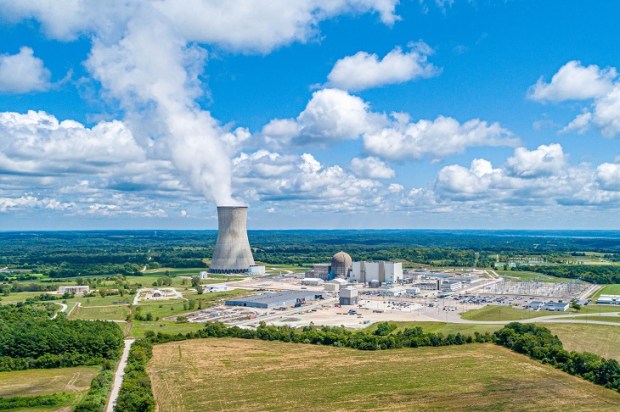
Despite these tensions, the Liberals have a rare opportunity to reclaim the pragmatic centre. That means clear, measurable outcomes: reliability within AEMO’s standard, bill impact within AER’s price bands, and emissions reductions tracked annually with full transparency. It also means acknowledging that no transition is credible without firm, dispatchable, zero-emission power and lifting the outdated nuclear ban so pre-feasibility work can begin. Nuclear remains the only technology capable of replacing coal’s reliability profile without requiring hundreds of billions in new transmission.
Gas should play a bridging role. Narrabri can support industrial feedstock and reliability, but every public dollar must be tied to megawatts delivered and connection dates kept. Environmental claims must be backed by data: hectares disturbed, offsets delivered, and local procurement tracked on a publicly accessible platform.
A transition grounded in engineering rather than ideology would give the Liberals a coherent centre-right narrative: ambition without theatrics, technology without taboos, reform without chaos. It would bridge Griffin’s environmental credibility, Speakman’s legal pragmatism and the conservatives’ fiscal discipline into a single, deliverable framework.
It also offers a clear contrast with Labor. Chris Minns is managing an inherited framework that does not work, extending coal, delaying firming and banning nuclear while insisting the roadmap remains credible. Victoria demonstrates where this ends: blackouts, bailouts and spiralling costs.
When NSW households open their next electricity bill, they will not reward symbolism. They will reward whoever can keep the lights on at the lowest cost while protecting jobs and landscapes. The Liberals can deliver those solutions if they stop arguing over calendars and start governing for customers.