Since 2015, when an anaemic majority of Liberal MPs replaced Tony Abbott with Malcolm Turnbull, the establishment figures across the political spectrum have pursued the ideology of Net Zero carbon emissions, which includes closing down domestic coal use.
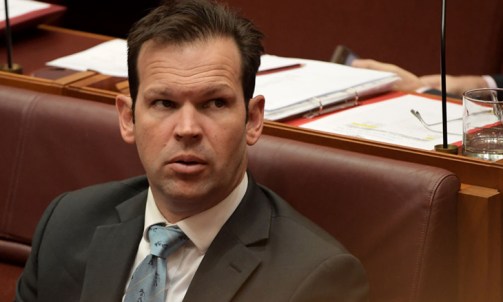
The battle for a rational energy policy was left to the minor parties – with Malcolm Roberts the most prominent – along with those peripheral to Coalition leadership, including Matt Canavan, Barnaby Joyce, and Alex Antic.
The ructions underway within Australia regarding climate policy have stemmed from a growing awareness of a voter backlash against Net Zero. The overwhelming government and subsidy-seeker propaganda was being undermined by the increasingly evident higher power prices and their corollary, de-industrialisation.
Signs of this are in the public polls where both Redbridge and Roy Morgan, while showing the ALP/Greens at 46-47 per cent, had One Nation doubling its support to 18 per cent (Redbridge) and 14 per cent (Roy Morgan).
The consequence can be seen across both business and politics.
The business community has been on board, vocally and monetarily, with Net Zero. Many business leaders were caught up with the ideology, others saw the glimmer of subsidies and others simply wanted to avoid political punishment. Add to this, the Business Council’s craven surrender to the Net Zero dogma.
Even coal miners, the Net Zero advocates’ bullseye, far from contesting it, were on board. Unlike the renewables industry, they provided no meaningful funding to those campaigning against Net Zero and indeed were reconciled to its triumph. For example, they were often heard declaring their intention to help customers meet decarbonisation goals.
Signs of a change within the business community were evident in recent Parliamentary hearings. The ANZ bank’s CEO said ‘the medicine (of moving to net zero) could kill the patient’. Their head of Corporate Affairs went further in proclaiming a pride in fossil fuel lending. But, confirming Berkshire Hathaway’s adage, ‘Buy a business so good an idiot could run it, because one day an idiot will,’ NAB’s CEO while decrying the ‘vilification of gas’ said his bank will not finance gas, ‘because we’ve committed to Australia’s commitment to Net Zero’.
It is politicians’ self-interest antennas that are most attuned to the changing national vibe. With the remarkable growth of Reform in the UK (now firmly leading the opinion polls) the surging support for One Nation has struck terror in the minds of the Coalition politicians, while leaving Labor concerned about whether the Green preferences on which they depend are being devalued.
These developments spawned the change of policy in Canberra. However, they have merely led the newly elected Jess Wilson to be more careful in supporting green energy. And, now that we have a change in the NSW Liberal Party leadership from Mark Speakman to Kellie Sloane, this would only be shuffling the climate worrier pack, while David Crisafulli in Queensland, conscious of having no Brisbane seats and taking the view that rejecting Net Zero would make these harder to win, has not welcomed the change in Canberra.
Support for jettisoning Net Zero is strongest in rural Australia. This reflects the costs of the policy being felt hardest outside of the urban areas.
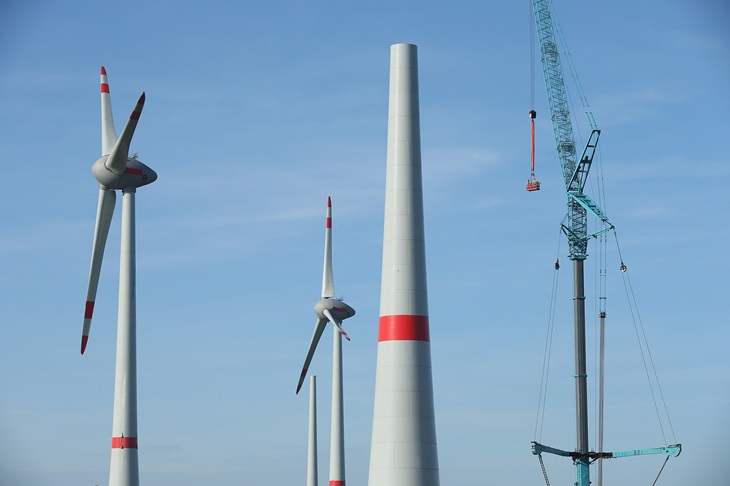
The despoilation of the countryside with windmills solar facilities and the massive increase in transmission lines necessary to service them is one obvious reason for this.
Another is that the costs of Net Zero are imposed most forcefully in rural Australia. As Matt Canavan has noted, Australia’s claimed contribution to combating climate change is a lowering of CO2 emission by 160 million tonnes a year, with 150 million of these due to preventing agricultural production. Thus, in addition to the annual $16 billion a year in governments regulations and taxes to promote Net Zero, some 7.2 million hectares have been withdrawn from agricultural use (without any compensation to the landowners). At between $1,528-$9,600/ha that’s $11-69 billion in costs to the landowners, with the nation deliberately reducing its capacity to grow food and other rural produce.
Political change is evident but the majority in the Coalition seeking to overturn the renewable subsidies and the focus on climate change is less than overwhelming.
Moreover, the necessary policy challenges are enormous. We have had three decades of increasingly tighter controls on commercially provided energy (coal and gas) with increasing subsidies and other favours to unreliable and high-cost wind and solar. Unravelling these policies will have genuine adverse consequences on those who have made decisions and incurred costs on the basis of government favours. And, as all politicians know, unravelling a favour means taking away a vested interest, the resistance to which is far stronger than the pressure to introduce the favour in the first place.