On Sunday, November 3, 2025, around 50 people gathered on the lawns outside the ACT Legislative Assembly for a rally hosted by ACT Right to Life.
The event coincided with the day the ACT’s Voluntary Assisted Dying (VAD) laws officially came into effect.
While the atmosphere was peaceful and respectful, there was a shared sense of unease among attendees about what these new laws mean for the territory’s moral and medical future.
The rally was chaired by John Kennedy, who leads ACT Right to Life and I also addressed the crowd. Both of us spoke about the value of life, the importance of protecting the vulnerable, and the troubling implications of the ACT government’s decision to legalise assisted dying. Canberra’s Anglican Bishop, Mark Short, was also in attendance, standing alongside other members of the Christian community to witness the event and show solidarity with those advocating for the sanctity of human life.
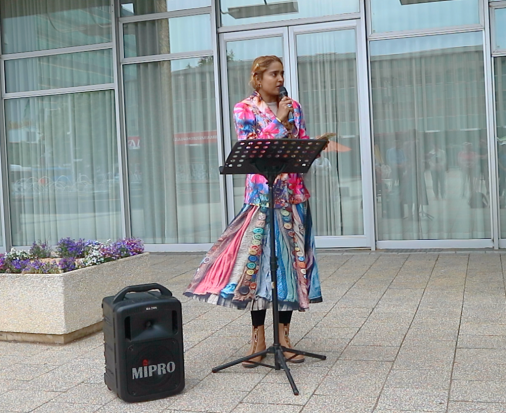
Although no politicians made an appearance, some local media outlets attended to conduct interviews and hear the perspective of everyday citizens.
Attendees shared heartfelt stories and concerns, particularly about the pressures that could fall upon the elderly, the disabled, and the terminally ill once euthanasia becomes an accepted norm. Many expressed disappointment that the government has moved so swiftly to expand such laws without adequately consulting or protecting those whose conscience or faith prevents them from participating.
In my speech, I drew attention to the experience of other countries that have legalised assisted dying, including the Netherlands and Belgium. In those nations, what began as a narrow framework for the terminally ill has gradually widened to include people with depression, dementia, and even minors.
Reports from these countries have shown a steady increase in deaths by assisted means, and in some cases, evidence of individuals being euthanised without explicit consent.
One of the strongest messages from the rally was about the impact on medical professionals. Doctors, nurses, and aged-care workers of faith, especially those within Christian traditions, now face an increasingly hostile environment if they object to participating in assisted dying. Under the ACT framework, conscientious objection rights are limited, and practitioners may face professional consequences if they refuse to refer patients to VAD providers.
The rally also revisited the ongoing concern about the future of faith-based health institutions in the ACT, particularly following the controversial government takeover of Calvary Public Hospital in 2023. Calvary, a Catholic institution, was known for its commitment to life-affirming care and refusal to offer abortion or euthanasia services. Its forced acquisition by the ACT Government was seen by many as a warning sign of the state’s growing intolerance toward religious ethics in healthcare. Several speakers suggested that with the introduction of VAD laws, the government may increasingly marginalise Catholic and Christian-run facilities that choose not to provide assisted dying services.
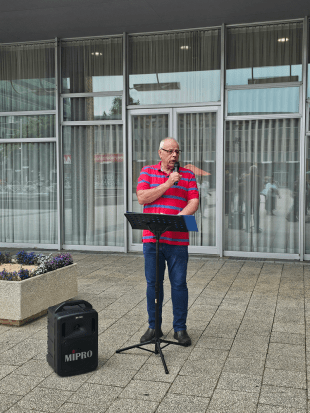
Another key theme throughout the rally was the need for genuine investment in palliative care. Rather than expanding access to assisted death, participants urged the government to improve access to pain management, mental health support, and holistic care for those facing terminal illness. In media interviews with Catholic Voice, John Kennedy stated, ‘It’s no good for Catholics or Christians to sit on their hands.’ I also urged people to continue to speak up, especially to medical staff and politicians, because although the new laws have come into effect, it is still perfectly legal to question them and push back.
Mark Short’s presence at the event underscored the moral seriousness of the issue. His attendance spoke volumes about the Church’s continuing commitment to uphold the dignity of human life. For many believers, his presence was a source of comfort and moral encouragement amid the growing cultural and legal pressures facing Christians in the public square.
The rally concluded with a prayer for policymakers, medical professionals, and those nearing the end of life. Attendees were reminded that compassion and courage are both essential in confronting this moment. While the passage of the VAD laws represents a significant cultural shift, ACT Right to Life and its supporters vowed to continue advocating for alternatives grounded in respect for life, conscience, and care.
For now, the challenge remains for the ACT government – and for all Australians – to decide what kind of society we wish to become: one that chooses care, or one that chooses convenience, to the detriment of society’s most innocent and vulnerable.