In 1897, in response to a newspaper report that he had died, American writer Mark Twain said, ‘The report of my death was an exaggeration…’ He lived another 13 years.
The widespread view that coal will soon be dead may also be an exaggeration.
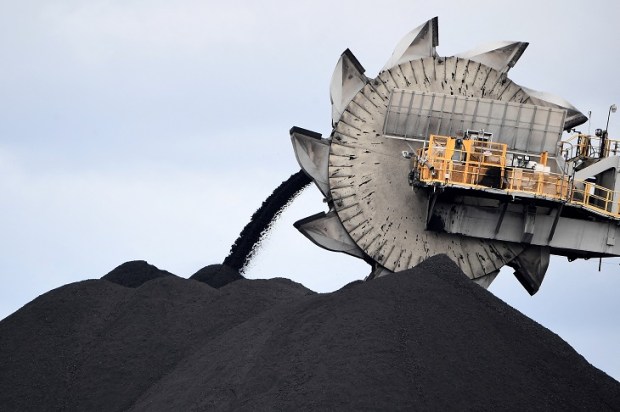
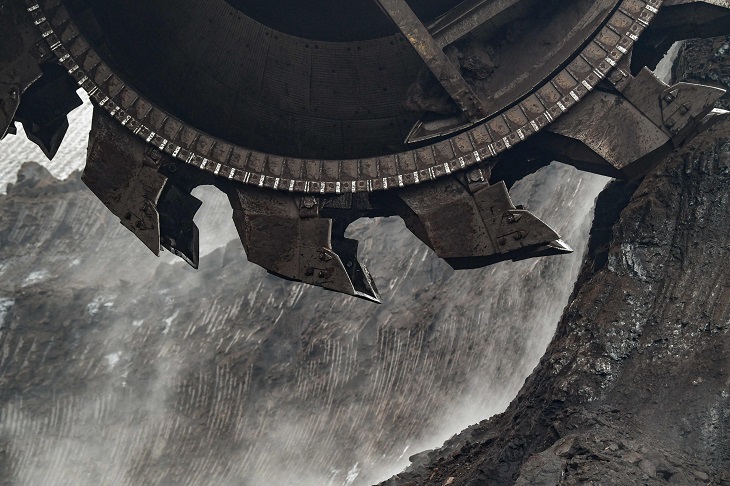
This article focuses on thermal coal, which is used for electricity production and makes up over 85 per cent of global coal production. (The other form of coal, metallurgical coal, is used for steel production.)
The winds of change are blowing in the world’s coal industry, opening the door for the Liberals to embrace coal, not ignore it as they have tried to do for the past decade.
Asia, where coal is dominant
Asia produces over 80 per cent of the world’s thermal coal. China, followed by India and Indonesia, are the main producers. Asia also consumes over 80 per cent of the world’s thermal coal.
By country, the share of coal in electricity production is:
60 per cent plus: Mongolia, India, Indonesia
40-50 per cent: Taiwan, Laos
50-60 per cent: China, Vietnam, Philippines
30-40 per cent: Japan, South Korea, Cambodia
Why such reliance on coal-fired electricity in Asia? Because:
- most Asian countries are strongly committed to economic growth
- central to economic growth is cheap, reliable electricity
- central to cheap, reliable electricity in most of Asia is coal
As in the rest of the world, the use of renewables in Asia has increased over the past 20 years. However, the share of renewables is still relatively small, amounting to 15 per cent or less of electricity generation, excluding China, where renewables amount to 20 per cent. The strong growth of renewables in China has helped it become the world’s leading producer of wind turbines and solar panels.
Electricity availability is still limited in much of Asia. For example, the average Australian consumes around six times the electricity consumed by the average Indonesian or Indian – and the average American consumes around seven times.
Developing Asian countries are keen to reduce these gaps. This requires coal and, to an extent in some countries, natural gas and nuclear energy.
What about renewables?
As stated by Yemi Osinbajo, a former Nigerian Vice President, ‘No one in the world has been able to industrialise using renewable energy.’
Or in the words of Canadian-Czech scientist, Vaclav Smil, ‘Fossil fuels are the most important factor in explaining the advance of modern civilisation.’
United States, where thermal coal is becoming more important
In the year 2000, some 50 per cent of electricity in the US came from coal. The figure is now 15 per cent.
This decline is partly explained by the doubling of natural-gas production since 2000. But also important has been the opposition to coal from the Obama and Biden administrations (2009-17 and 2021-25).
The Trump administration is reversing this opposition, by halting the retirement of coal-fired plants, encouraging the construction of new ones, and abolishing regulations favouring renewables. In addition, it is opening up discussion of climate science, challenging the view that greenhouse gas emissions are the driver (not just one cause) of global warming.
US electricity demand barely grew in the two decades up to 2020, but has grown steadily since and is expected to grow by over 2 per cent per year in coming years, boosted by demand from new artificial intelligence (AI) data centres.
These centres will require reliable electricity, to come in part from thermal coal (the latter mainly sourced from the northwestern states of Wyoming and Montana).
The Trump administration’s support for coal and a re-examination of climate science represent a major turnaround in prevailing attitudes on these two issues. This turnaround is likely to change US energy policy significantly and encourage a re-thinking on coal in other countries.
Europe: where discussion of thermal coal is emerging
Thermal coal used to be important in Europe. However, wind and solar energy are now much more important, forming nearly 35 per cent of Europe’s electricity production in 2024.
The main drivers of wind and solar energy in Europe are Denmark, Germany, the Netherlands, Belgium, UK, Ireland, Spain, and Italy. These countries have among the highest electricity prices in the world.
This is leading to questions being asked in Europe about the economic and security risks of renewables, the latter particularly following the electricity blackouts in Spain and Portugal in late April 2025.
- German Chancellor, Friedrich Merz, recently said, ‘Germany should consider a pause on shutting down its remaining coal power plants until new gas-fired stations are ready to replace them.’ (Bloomberg, 11 September 2025)
- Italian Prime Minister Giorgia Meloni warned in May that ‘rigid green policies could devastate Europe’s industrial base’. (Reuters, 17 May 2025)
- UK opposition leader, Kemi Badenoch, says that Net Zero greenhouse-gas emissions cannot be achieved by 2050 ‘without a serious drop in our living standards or by bankrupting us’. (BBC, 18 March 2025)
- UK energy consultant, Kathryn Porter, says that the UK may face an ‘unpalatable’ option, namely, ‘a return to coal’. (Spiked, 10 September 2025)
In short, challenges are emerging within Europe to its strong commitment to wind and solar power.
Australia: time to wake up?
The Federal government aims to increase the share of wind and solar energy in electricity production from around 35 per cent at present to 75 per cent by 2030 and to 90 per cent by 2035.
Why such drastic action? Because the government believes that fossil fuels, particularly coal, threaten the world’s climate and that Australia should play a part in reducing this threat.
The view that fossil fuels are the main cause of current global warming is contested. As US scientist Judith Curry says, ‘The climate system is way more complex than just something that you can tune with a carbon-dioxide control knob.’
But even if fossil fuels are the main cause of current warming, the proposed cure (reaching Net Zero emissions) is highly likely to be much worse than the supposed disease (current global warming).
Wind and solar energy: wrong way, go back
The Liberals should have no faith in wind and solar energy, the chosen path to Net Zero emissions. This path is awash with problems.
The first problem is that wind and solar energy cannot produce reliable electricity. Batteries are useful in providing stability for a few hours, but not for weeks, as may be required to overcome wind and solar droughts.
The second problem is that electricity based on wind and solar energy is expensive. As discussed, this is in the case of Europe. It also applies in Australia: up to the early 2000s, electricity prices in Australia were low by world standards; after 20 years of increasing dependence on renewables, they are now high.
Why is this so? As explained simply by US energy analyst, Alex Epstein: ‘Customers end up paying for two systems – a conventional one for reliability plus a growing intermittent system.’ One reliable system is enough; the second system is an unnecessary, additional expense.
The third problem is that we depend almost entirely on China for solar panels and wind turbines.
On economic grounds, such dependence is not wise. Nor is it wise on security grounds. For example, as reported by Reuters in May this year, energy officials in the US are concerned by unexplained communications equipment allegedly found in Chinese devices that form part of the US grid.
As one energy official alleges: ‘That effectively means there is a built-in way to destroy the grid.’ If this is true of the US, could also be true of Australia.
In short, the Liberals should discard wind and solar energy from their thinking. And discard from their thinking the concept of Net Zero greenhouse-gas emissions. Achieving this target by 2050 would be financially impossible, may be technically impossible, would seriously damage our economy, and would entail serious energy-security risks.
Natural gas and nuclear power: good medium-term, but not short-term prospects
Nor should the Liberals have faith – at least in the short-term – in natural gas.
Natural gas has always been more expensive than coal for electricity in the eastern states. Its main role historically has been to cater for periods of peak demand.
In addition, natural gas is in short supply in the eastern states.
Bass Strait production is declining. In Victoria, Labor has effectively banned since 2014 onshore natural-gas developments here. NSW has suffered similarly from partial bans on natural-gas developments and serious permitting delays.
And the Albanese government’s imposition of a price cap on natural gas in late 2022 has seriously discouraged natural-gas developments in the eastern states.
Nor is nuclear power a short-term answer – it will play no significant part in Australia before the 2040s.
Coal: by far the best short-term answer
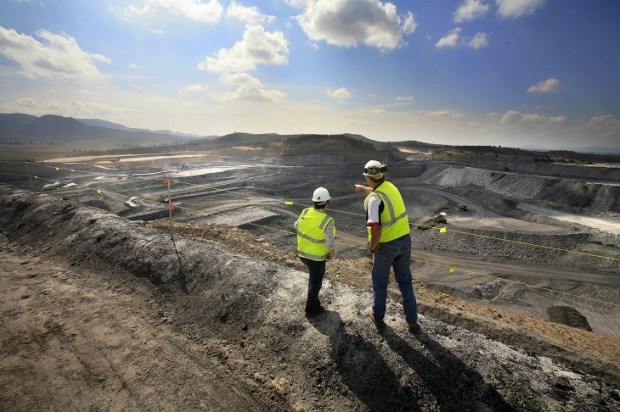
The Liberals should unashamedly embrace coal as Australia’s best approach for at least the next 20 years.
The Liberal-National Party government in Queensland has made clear that coal-fired electricity will continue in that state until at least the mid-2040s.
The Federal Liberals should adopt the same policy for the country as a whole – meaning, in effect, the other two main coal states, Victoria and NSW.
Coal supplies nearly 60 per cent of electricity in Victoria and NSW.
Coal used to provide over 80 per cent of Australia’s electricity, proving a model of reliable, low-cost electricity. Technically, we could easily return to this position.
However, this requires a turnaround in the Liberals’ attitude to coal, from a position of ambivalence to one of active promotion.
Victoria currently has three coal-fired plants: Yallourn, Loy Yang B, and Loy Yang A.
However, the Yallourn plant is on its last legs and the owner of Loy Yang A (AGL) is keen to reduce its coal production, not increase it. Victoria is ill-placed to meet the steady growth in electricity demand expected in the 2030s.
As a result, without a new plant, Victoria faces the serious risk of a break-down in its electricity supply.
The situation in NSW is not much better, with the Liddell coal-fired plant closing in 2023 and Eraring (the largest in the state) due to close in 2029.
What should the Liberals do?
Put coal at the forefront of its energy policy, starting by organising studies of new coal-fired plants, one in Victoria and one in NSW, to be in operation by the early 2030s.
Presenting this policy will require political courage. And courage in relation to Victoria in particular. Victoria is critical because of the fragile state of its electricity sector and because it is the next major state to face an election (due in November 2026).
As noted by journalist Robert Gottliebsen in The Australian last month, ‘…according to opinion polls, the Victorian community’s dislike of the current ALP government is widespread, but if an election was held tomorrow, the ALP would be returned because too many in the electorate have no faith in the Liberal alternative.’
Resorting faith in the Liberal alternative requires presenting a coherent energy policy, based on coal. Differences over energy policy have more than anything weakened the party over the past 10 years.
Losing the next election in Victoria would be a bitter blow for the Liberals, almost guaranteeing its demise at the next Federal election.
Winning it would turn the Liberals’ fortunes around, making possible something that currently looks impossible – a Coalition win at the next Federal election in 2028.
Sources of statistical information in this presentation include Statistical Review of World Energy 2025; International Energy Agency; US Geological Service; Office of the Chief Economist, Canberra; Statista; and Worldometer.