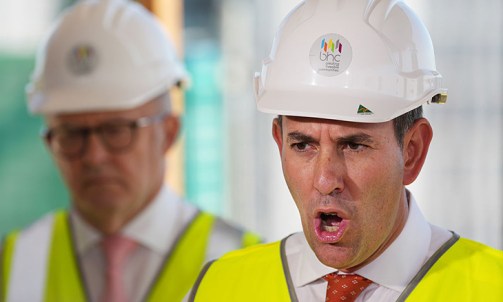
Western Australia’s Education Minister, Sabine Winton, claimed that the record number of teachers leaving the profession is due in part to graduates who are ‘particular’ about their working arrangements and ‘fussier’ about their work than older teachers.
It seems strange that the Minister would blame the exodus of older teachers on the alleged fussiness of younger ones.
Research, which was kindly supported by the Mannkal Economic Education Foundation, highlights the real causes, which include inadequate teacher training.
Up to half of new teachers leave within five years after graduation.
10-20 per cent of education graduates never enter the classroom.
This high attrition is caused not by teacher ‘fussiness’ but by frequent failures in teacher training, declining entry standards, inadequate preparation for real-world challenges, and broader policy failures in higher education.
To be clear, not all teacher training programs are inadequate. Some are excellent, but too many fail to prepare graduates for the profession. They leave graduates prone to burnout, disillusionment, and without the skills they need to succeed.
We would expect that teaching graduates should be ‘classroom ready’ and prepared to meet the needs of Australian students. However, repeated studies confirm that graduates often feel unprepared and that they lack the confidence to teach effectively.
Personal accounts from new teachers confirm these studies – they complain about gaps in practical skills, classroom management, and subject expertise. Being underprepared leaves new teachers overwhelmed in the classroom, where they feel thrown into high-stakes environments without the support they need.
Parents entrust their children to these teachers with high expectations, but the resulting stress and self-doubt contribute significantly to early departures.
The former Education Minister, Alan Tudge, observed that Australian teaching graduates ‘don’t feel well prepared when they enter the classroom’. This contrasts sharply with Singapore, where recruits from the top 10 per cent of applicants are trained rigorously to be classroom ready from day one.
The high attrition rate can be linked to poor foundational skills, as shown by results for the Literacy and Numeracy Test for Initial Teacher Education Students (LANTITE), which was introduced to ensure that teachers rank in the top 30 per cent of the population for literacy and numeracy basics.
However, LANTITE revealed that many education students attended university for years without achieving essential literacy and numeracy levels. Recent figures show that about 10 per cent of prospective teachers failed the test, while 84 per cent passed both components on the first try, with others requiring up to five attempts and, after repeated failures, around 91 per cent failed to meet the standards.
It became clear that many students were entering teacher training courses at universities without foundational literacy and numeracy skills. The response of responsible universities has been to administer the test in the first year of study, with a view to remedying students’ lack of literacy and numeracy skills. However, the government’s typically bureaucratic solution was, from 2025, to allow unlimited attempts at the test.
Problems in teacher training have been exacerbated by an influx of low-achieving students into teaching degrees.
To give a broad overview, between 2006 and 2015, the proportion of education students with below-average ATARs surged from 25 per cent to 42 per cent. Some universities made entrance offers to students with ATARs as low as 0-19, and in 2018, institutions accepted entrants with scores of 22.
Some universities have claimed equity concerns or extenuating circumstances. Critics have countered that financial incentives drive this, with those universities prioritising enrolment for funding.
Education degrees now have the second-highest dropout rates in Australia, with clear links to low ATARs: universities admitting such students see the highest attrition.
Federal data from 2021 showed over 7,000 sub-50 ATAR students accepted nationwide, with half expected to fail their degrees. These students enter with ‘poor academic preparation’, as noted by one professor, facing financial burdens from fees even if they drop out. For those who graduate, the transition to teaching amplifies their struggles, leading to quick exits as they grapple with demands beyond their training.
Instead of being a sign of fussiness, as claimed by the WA Minister, record attrition levels are a sign of deep and systemic problems. Older teachers are dropping out because of impossible conditions placed on them by governments that are more concerned with statistics than education.
Younger teachers are dropping out because of inadequate preparation, low entry barriers admitting underprepared students, foundational skill deficiencies, and policy-driven dilution of quality.
Addressing these problems requires urgent overhaul to ensure graduates are truly classroom-ready, stemming the tide of attrition and restoring excellence to Australia’s education system.