If you’ve noticed more AI-generated videos clogging your feeds lately, you’re not imagining things.
For the past few years, AI-generated ‘slop’ – digital content with no real meaning – has been little more than a nuisance.
But after this month’s release of Sora 2, OpenAI’s new text-to-video platform that allows anyone to conjure up hyper-realistic clips from a few lines of text, my view has shifted from ‘AI slop is dumb’ to ‘this will become a problem for society’.
Sora-made videos have flooded social media, but despite the glossy realism, it’s still nutritionally deficient, ultra-processed AI slop, and we’re the pigs at the trough.
Sora is engineered to be addictive, tapping straight into our dopamine pleasure centres.
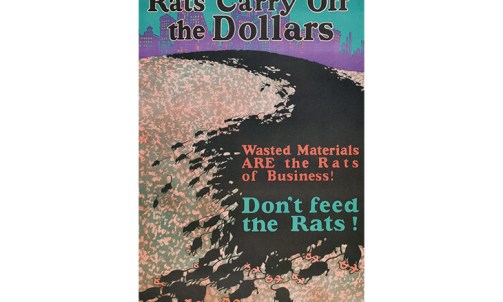
It reminds me of the experiments in the 1970s in which scientists connected electrodes to the pleasure centres of rats’ brains. The rats pressed the button until they died of exhaustion.
Sora more closely resembles Soma, the happiness-inducing drug that serves as a tool to control the population in Aldous Huxley’s A Brave New World.
When I was a kid, my parents told me watching too much of the ‘idiot box’ would give me square eyes.
But if I were a parent today, I would be warning my children that consuming too much AI slop would warp your perception of reality, rot your brain, and make you feel depressed and lonely.
Science-fiction writer and tech journalist Cory Doctorow describes this decay of online platforms as ‘enshittification’.
Enshittification begins with platforms offering us a useful service, before eventually exploiting their users for advertisers, and finally exploiting even the advertisers to maximise profit.
Though Doctorow coined the term in 2022, before ChatGPT’s release, it remains the best way to describe the trajectory of AI-generated content, with Sora’s slop marking a new stage in that decline: the slopification.
Some analysts estimate AI now generates half of all online articles, and by 2026, as much as 90 per cent of online content will be AI slop.
In October, ChatGPT marked its third anniversary by hitting 800 million users, making it the fastest-adopted technology in history.
The world has enormous problems with basic things like food production, waste management, and environmental protection, yet we’re letting a small band of condescending egomaniacs direct an enormous proportion of the world’s valuable capital into ventures that are completely unnecessary.
The vast computing resources needed to run AI are expected to transform our environment into wastelands of data centres. The energy needed to run these centres is already sending power bills soaring in the United States.
Some of the largest players in the tech sphere envision a world in which they know everything about you and have an AI slop generator that feeds you nothing but perfectly curated ads for your tastes and personality.
These are the same people who created the dopamine-addictive social-media tools they ban their own children from using, furthering the rapid enshittification of entire generations, all while pretending to ‘connect’ them.
They envision a future that is less The Matrix or The Terminator than WALL-E style existence as brain-dead passive consumers, who own nothing and exist solely off Altman’s chillingly positive delusions of utopia.
Sora is yet another example of the tech oligarchs manufacturing supply despite there being no demand. They appear to monopolise as much of your time as possible, serving as many ads as possible, and in the process destroying once great tools for social interaction.
What problem are they solving? Its creations are hollow.
Videos of historical figures wrestling or Michael Jackson stealing fried chicken were funny maybe once. What purpose do these videos serve for humanity?
Michael Jackson is stealing fried chicken ? pic.twitter.com/2tFNsYz07A
— Dr. Clown, PhD (@DrClownPhD) October 6, 2025
AI-generated videos of cute animals are meaningless because they’re the result of a probabilistic model. There’s no emotion, no true inspiration, no passion.
Why would I want to watch a show generated by an AI? An AI telling a joke carries no comedic value in the same way a forgery of the Mona Lisa doesn’t provide the pleasure of viewing the real thing.
OpenAI is now also reportedly exploring AI music generation. But if music were written by AI instead of a real artist, it would have no emotional weight. AI doesn’t know pain, or joy. Art is purposeful precisely because it was created by a person, with intent, imperfection, and lived experience.
Humans need creativity for purpose; without it we go crazy. As we’re already seeing, social media and ChatGPT are leaving people lonely, lost, and increasingly isolated.
Social media was once about having an authentic voice. A generation of YouTubers, activists, podcasters, influencers, and writers I grew up with steered the cultural ‘vibes’. But as the slop grows exponentially, social media is becoming so flooded that real content is lost in the churn.
Facebook is now a wasteland of marketplace scams and boomers yelling at clouds. Every second post in my Instagram feed is an ad. Reddit is the only platform left that still feels like the ‘old internet’.
Last week one of the AI CEOs said any jobs eliminated by AI ‘probably weren’t real work anyway’ revealing that tech narcissism knows no bounds. They even compared building AI to building the atomic bomb.
ChatGPT often refuses to discuss controversial ideas, insidiously policing the thoughts one can have.
Research shows Large Language Models (LLMs) are also making moral judgements. For example, ChatGPT has been allegedly shown to value the lives of identity groups differently.
What kind of entity are we offloading our humanity to?
AI has been found to encourage and abet suicides or become some people’s sole companions. One in seven adult Australians could imagine falling in love with an AI chatbot.
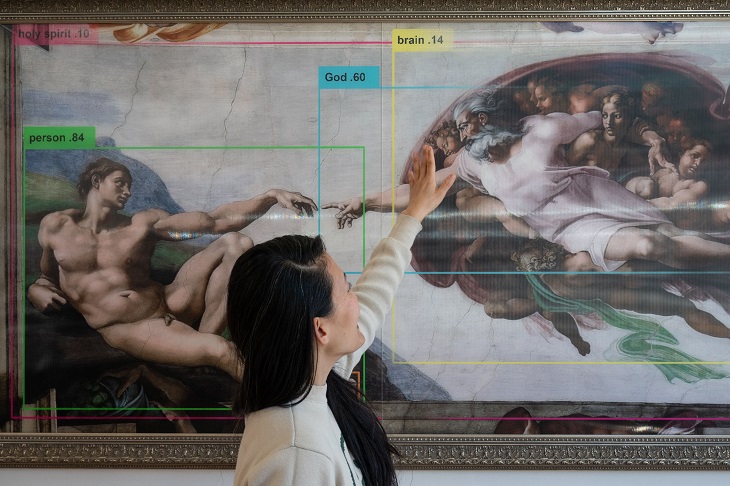
Others seek counselling from it. Where once people turned to religion and God to answer their questions, now they are turning to Sam Altman.
I’ve written before about how AI reduces our capacity to think critically, but has anyone considered how people will find meaning in life if AI is taking all the jobs, not just the menial data processing ones? If our labour is replaced, will we be missed?
Call me an AI-Luddite, but every vision of the future coming from Silicon Valley is one where humans are reduced to entitled, purposeless creatures, lacking meaning and fulfilment.
Analysis shows the share of people reflexively opening the apps to fill up spare time keeps rising, reflecting a broader pernicious shift from mindful to mindless brain-rotting doomscrolling.
These are the people I worry about, the ones at risk of turning into the dopamine addicted rats, rotting their brains to become sub-human beings.
Sora’s success relies on gambling that people will prefer distorted imagination more than reality. For now, the jury is out, but social media has already undergone a warped evolution from a place where people swapped updates with friends and family, to one with less human-to-human interaction and more passive consumption.
If you ask me, AI’s threat to humanity is not external, from unleashing a nuclear Armageddon or pandemic, but from within, first by destroying our economies, then by eroding the experience of humanity.
The slopification of everything isn’t just changing what we consume, it’s changing what we are.