The decline of manufacturing across Western nations has been a slow-motion collapse, decades in the making.
Australia is no exception.
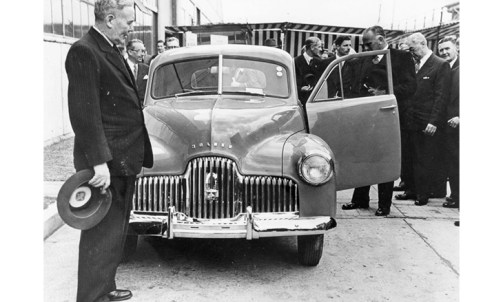
While once a country that built its own cars, ships, and heavy machinery, we now import what we once proudly produced. The reasons are not difficult. They are the cumulative effect of policy decisions that have eroded competitiveness, increased costs and undermined enterprise.
This decline has exposed a tension on the centre-right.
Some argue that protectionism is the only way to preserve what remains of our industrial base. Others point out that intervention distorts markets, stifles innovation, and merely delays the inevitable.
Both instincts arise from legitimate concerns.
The question is how to reconcile them in a world where strategic and economic realities have changed.
In reality, Australian manufacturing has been undermined not by the free market, but by the absence of one. Over-regulation has made it nearly impossible to compete. Industrial relations laws are bureaucratic, uncompetitive, and out of balance.
Employers face a labyrinth of compliance obligations that discourage hiring new workers. Excessive red tape means that every decision, from hiring to rostering to restructuring, carries disproportionate risk and cost.
Compounding this has been a national obsession with Net Zero targets that have driven up energy prices while delivering negligible environmental benefits. Reliable, affordable energy is the lifeblood of industry. Yet in pursuit of symbolic emissions reductions, we have destroyed the systems that supplied it. The result has been predictable: higher costs, shuttered factories, and the offshoring of jobs to countries with lower standards and higher emissions. It is both economically and environmentally perverse.
Before any serious discussion of reindustrialisation can begin, these structural issues must be addressed. Manufacturing will not return while energy is expensive and unpredictable, or while employers are punished for creating jobs.
We must renew our commitment to small government, market freedom, and regulatory restraint.
Yet even with sound domestic policy, Western nations face a fundamental problem of cost asymmetry. Labour, compliance, and energy will almost always be more expensive in open, democratic societies. We cannot compete with authoritarian states for cheap labour or environmental disregard.
Australia cannot afford to abandon the principle of free trade. But neither can we operate on the naïve assumption that all countries share the same rules, values, or intentions. When authoritarian regimes use trade as a weapon, our response cannot be to hope that the invisible hand will correct the imbalance. Strategic vulnerability is not a price worth paying for ideological purity.
Instead, we must champion a new formal alliance among democratic, industrialised nations. The purpose of such an alliance would be to create a framework for cooperation between like-minded countries to secure access to strategically vital materials, energy, and technologies. Within this alliance, nations would coordinate to source, refine, and trade these goods among themselves, while collectively restricting the purchase of such materials from states who wish us harm.
Importantly, this alliance would not resemble the European Union. There would be no single market, no supranational bureaucracy, and no surrender of sovereignty. Each nation would retain full control over its own economic policy. I am proposing a coalition of cooperation, not integration; a strategic arrangement among free nations to ensure that no member is dependent on authoritarian powers for critical or strategic resources.
This is not a return to crude protectionism. It is the construction of a broader, rules-based network among nations that share common values and mutual security interests. It would ensure that Western economies remain interdependent enough to sustain prosperity, yet independent enough to defend themselves.
Australia, though small in population, possesses vast reserves of the minerals and energy resources critical to advanced manufacturing, lithium, rare earths, and uranium among them. We can and should be a cornerstone of this democratic supply chain. That will require a decisive turn away from policies that have treated resource development as a liability, and a re-commitment to using our natural wealth as a strategic strength.
The lesson of recent decades is unmistakable: nations that lose the capacity to make things soon lose the ability to sustain themselves. Rebuilding industrial strength is not an exercise in nostalgia; it is an act of sovereignty. Economic independence underpins national security just as surely as military strength does.
Renewal will not come through government command, but through the restoration of conditions in which enterprise can flourish, stable energy, flexible labour markets, and confidence in private initiative. A free economy, disciplined government, and cooperation among fellow democracies are the foundations upon which genuine resilience can be rebuilt.
If we return to market principles at home and forge strategic partnerships abroad, Australia need not resign itself to decline. We can once again become a mining and manufacturing powerhouse.
Leah Blyth, Senator for South Australia
Shadow Assistant Minister for Stronger Families and Stronger Communities