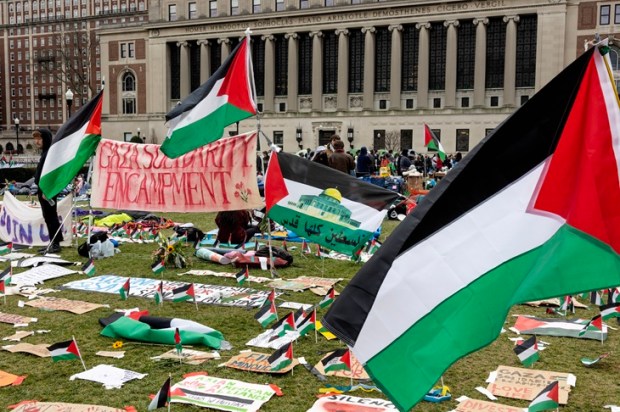
Last week, protestors in the United States staged numerous ‘King/Dictator Trump’ demonstrations.
The protestors claim that President Trump is a dictator keen to overthrow American democracy and take away people’s rights and freedoms. These unrests coincide with a prolonged and ongoing federal government shutdown that is reshaping daily life for millions of federal employees, accelerating deployments of National Guard and federal agents to multiple cities, and intensifying clashes with sanctuary jurisdictions in Democratic-run states. It is already the third-longest shutdown in American history.
⚠️ Trump thinks his rule is absolute, but in America, we don’t do “kings.” ⚠️
Since the inauguration, the Trump administration and its enablers have operated as though they have a mandate—but they don’t, and never did. They are going to extremes to empower the Trump… pic.twitter.com/XTzD7WMLmt
— No Kings Here (@Stop_Project25) October 5, 2025
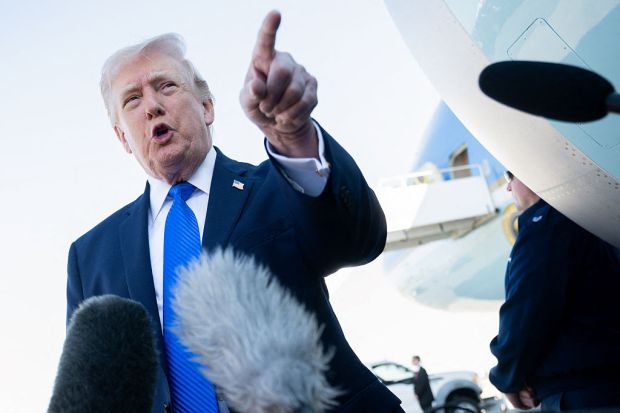
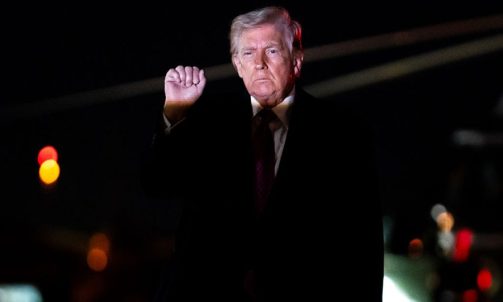
The characterisation of President Donald Trump as a ‘King/Dictator’ aims at provoking the American President and creating a victimhood culture to justify further conflict.
Although the protests are very real and cause widespread damage, it is, however, delusional to think that they are a coordinated effort to start a new civil war and to bring down President Trump. Nevertheless, conspiracy commentators link these protests to the so-called ‘Podesta Plan’, a widely debunked theory and baseless speculation alleging a coordinated plan to cement civic unrest.
Caused by the shutdown, millions of federal employees are furloughed or working unpaid as essential staff. Essential personnel continue operations in agencies such as the Transportation Security Administration (TSA), the Environmental Protection Agency (EPA), the United States Department of Agriculture (USDA), and the US Department of Housing and Urban Development (HUD). Services like Social Security and Medicare continue to be offered for now under contingency rules, while paycheques are delayed until funding is restored. The loss of regular income is producing immediate financial strain for lower-paid employees, disrupting recruitment pipelines, and lowering morale across long-term civil service careers. Agencies that run programs relied on by millions, such as health, benefits, research and conservation, are scaling back operations, closing public sites, or pausing discretionary services. Legal disagreement over whether the 2019 law guaranteeing retroactive pay for furloughed employees requires explicit appropriations has added uncertainty to when, and if, back pay will be disbursed for some categories of workers.
To further complicate the complex situation, the administration has moved to deploy National Guard units and federal task forces to cities including Portland, Chicago, Memphis, and other cities, justifying the deployments as support for public safety and federal law enforcement operations. Some governors and local officials have consented to National Guard missions under state control, while federal attempts to federalise troops without state approval have met judicial challenges and legal scrutiny.
What President Trump has accomplished in the first nine months of this administration is nothing short of extraordinary. @POTUS Trump and @Sec_Noem are fulfilling the promise to Make America Safe Again.
Since January, DHS law enforcement has arrested more than 480,000 illegal… pic.twitter.com/5ajGr1PbtY
— Homeland Security (@DHSgov) October 20, 2025
Courts have intervened in at least two states to block or limit unilateral federal intervention and federalisation of National Guard units, citing statutory and constitutional concerns. Deployments under state authority, such as in Memphis, have proceeded with gubernatorial support and multiagency task forces to curb crime and facilitate immigration enforcement. The resulting patchwork of chain of command arrangements has heightened tensions between federal actors and municipal leaders and complicated oversight of operations in civilian areas.
Sanctuary jurisdictions in Democratic-run cities and states have become focal points for escalated immigration enforcement. Federal agencies, including ICE and other task forces, have increased operations in several large cities, prompting accusations from local officials that raids are aggressive, uncoordinated, and damaging to community trust. Mayors and governors in sanctuary jurisdictions have filed or threatened legal challenges in response to federal pressure and funding threats.
The enforcement activities of ICE have changed the daily routines of immigrant communities, whose members are inclined to avoid public services. School attendance and clinic visits have declined in some neighbourhoods, and local legal aid groups experience increased demand for their services. City and state leaders defending sanctuary policies argue that cooperation with federal immigration enforcement would undermine policing effectiveness by eroding trust with these immigrant communities.
It is under these circumstances that a set of online outlets and partisan sites have circulated narratives that senior Democratic operatives planned or are executing orchestrated unrest aimed at provoking civil conflict, sometimes labelled the ‘Podesta Plan’. But investigations and mainstream reporting have found no credible evidence of a deliberate Democratic blueprint to provoke civil war. The label remains a conspiratorial, partisan talking point rather than a verifiable factual framework.
The discredited ‘Podesta Plan’ utilises the same emotions that drive modern political emergency narratives.
The key parallels include scenarios featuring plans for rapid responses to destabilising political events, drawing on legal interpretations, and targeted public messaging. Both exploit unclear boundaries between federal and state authority, between law enforcement and military roles, between emergency powers and ordinary governance, to justify extraordinary measures. They use public fear as a tool: portraying opponents as threats to public order or national security to rally supporters and justify intervention. Both depend on a coalition of actors, local officials, federal agencies, allied media outlets, and sympathetic private actors, rather than a single command chain.
Partisans on both sides are responsible for nurturing the superficial similarities between the present mix of shutdown, troop movements, federal enforcement efforts, and the dystopian and discredited Podesta narrative. In focusing on these similarities, partisans fail to acknowledge that a better explanation for current events is policy conflict, legal ambiguity over federal versus state authority, and political leadership surrounding appropriations, rather than a centrally orchestrated plan to trigger civil conflict.
The government shutdown is producing clear, verifiable harms to public servants and to the functioning of federal programs. National Guard movements and intensified federal enforcement in sanctuary cities are concrete policy choices that raise legal and civil-liberties questions. In seeking to explain these choices by blaming the so-called ‘Podesta Plan’ is to conflate documented administrative actions with a debunked conspiracy narrative and disguises the institutional efforts that would reduce harm: restoring appropriations, clarifying command authorities, and protecting civil liberties through judicial and congressional oversight. Restoring clearer legal boundaries around the federal use of National Guard forces, and addressing immigration enforcement through transparent rules would undoubtedly reduce the political and civic escalation now on display.
The present crisis is a product of legislative failure, executive overreach, and deepening political polarisation. The shutdown reflects Congress’s inability to pass a budget, while troop deployments and immigration enforcement highlight the erosion of cooperative federalism. The danger lies not in a secret plan, but in an inability to confront the present dysfunction and erosion of democratic norms.