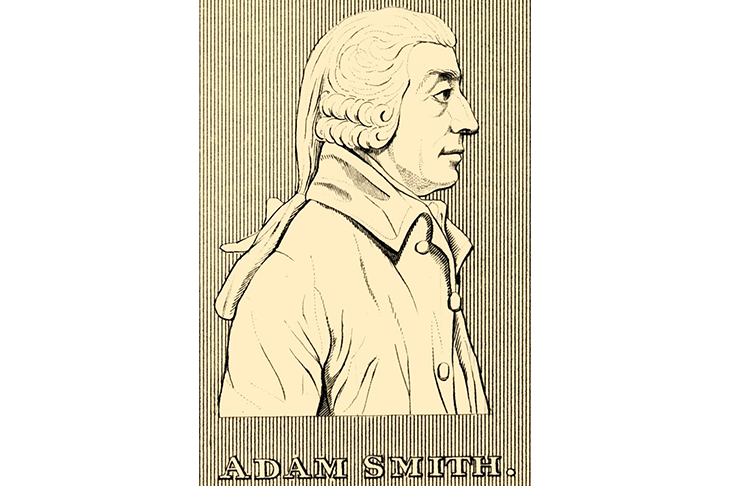
UK philosopher Adam Smith (1723-1790) only once used the term ‘invisible hand’ in the five books that comprise The Wealth of Nations. In chapter two of book four, he referred to how people were ‘led by an invisible hand’ to produce outcomes that were best for society.
Austrian economist Joseph Schumpeter (1883-1950), in his book of 1942 Capitalism, socialism and democracy, wrote ‘creative destruction is the essential fact of capitalism’. By this, he meant natural selection was intrinsic to capitalism.
The US is the advanced country that most adheres to these greatest insights into ‘laissez faire’ capitalism. Since forever, the US has hosted unbridled capitalism that led to innovation, risk-taking and wealth creation.
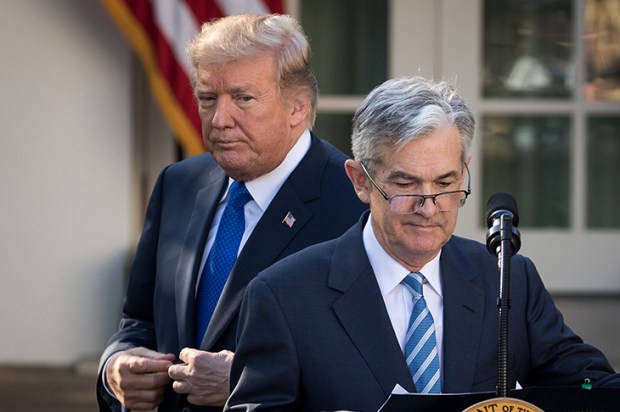
But that’s changing. President Donald Trump is reaching into the private sector in novel ways. Prime example: Washington in August converted US$11 billion in government support into a 9.9-per-cent stake in the loss-making chipmaker Intel.
Another example is how Trump extracted from Apple a pledge of another US$100 million of investment in the US to avoid steep tariffs on foreign-made iPhones.
For another, US Steel had to surrender to Trump a perpetual ‘golden share’ – veto power in certain areas – to allow the company’s sale to Nippon Steel. These conditions include a government veto over plant closures or shifting US jobs abroad. In a similar shakedown, Trump dropped a national security ban to allow Advanced Micro Devices and Nvidia to sell advanced microchips to China for a revenue cut of 15 per cent.
Then there’s how the Department of War (formerly Defense) spent US$400 million to buy 15 per cent, and thus become the top shareholder, of rare-earth-metals producer MP Materials, whose output is used in weapons. Other cases of Trump’s meddling with the private sector extend to plans to force lower prices on US pharmaceuticals and calls for US companies to absorb the costs of tariffs.
These and similar decisions follow the executive order Trump signed in February for the creation of a US sovereign wealth fund, where government stakes in private businesses could be held. Treasury Secretary Scott Bessent in August said private-sector investment promised in trade agreements with the EU (US$600 billion), Japan (US$550 billion) and Korea (US$350 billion) will flow into this fund, where investment decisions will be ‘largely at the President’s discretion’.
Trump’s moves, which smack of discredited Chinese industrial planning, European dirigisme and Latin American ‘strongman capitalism’, have merit. Most benefits are tied to securing US jobs and producing essentials linked to national security.
The Intel deal flows from how microchips are a battleground in the Chinese-US tussle for supremacy. Government ownership injects confidence Intel can revamp its US production of chips and reduce the US’s reliance on Taiwan-based companies. An official stake should lower capital costs.
But Trump’s forays into the private sector pose risks too. The overarching one is the shift will lead to the misallocation of resources as politicians and ministries make investment decisions with private capital and taxpayer money that might be more productive elsewhere.
Even without a board seat (as with Intel), Washington as a shareholder could influence decisions on capital returns, factory closures or investments, mergers and acquisitions, and where companies can sell. Among other risks, governments generally protect their monopolies and are tempted to throw more taxpayer money at failing businesses rather see them collapse – many doubt Intel, which lost US$19 billion last fiscal year, can be competitive again.
Another area of concern is harm to existing shareholders, even though Intel and MP Materials stocks surged before Washington swooped. Intel warned of such dangers in a filing to the stock exchange that said a government shareholder can complicate export sales (due to the implicit subsidy), dilute existing shareholders and limit its ability to secure government grants.
The Intel stake likely heralds similar deals. Commerce Secretary Howard Lutnick in August said the government might buy stakes in companies such as Lockheed Martin that so relies on military contracts it’s ‘basically an arm of the US government’.
Another problem is the political risks. While socialist Senator Bernie Sanders approved, Republicans criticised Trump’s interference in corporate America because it goes against the party’s ideology. The question arises: what happens after Trump? The President’s critics say he has no strategy towards overseeing corporate America; it’s opportunistic deal-making.
Concerns that Trump’s influence over corporate America could turn self-seeking were intensified by revelations the White House has a spreadsheet that rates 533 businesses and trade bodies on their support for the administration’s policies.
A further worry is Trump’s sovereign wealth fund. Such funds are usually funded by governments with budget surpluses from the tax proceeds of selling resources. Washington, however, runs budget deficits so the fund would essentially be established through debt. Money is unlikely to come from abroad. The EU, Japan and Korea governments have no power over private investment, nor can they direct where it heads. Another risk is future (Democrat) administrations are sure to use the fund in ways Republicans oppose.
Other dangers are that sovereign wealth funds are prone to cronyism and corruption. Former Malaysian prime minister Najib Razak in 2020 went to jail for his role in the misappropriation of US$4.5 billion from that country’s sovereign wealth fund. As for performance, most sovereign wealth funds prove to be duds.
Trump is changing the foundation of US capitalism and exerting personal control while testing legal and other constraints on presidential power. Does anyone think the US government is so adept at its traditional roles that it should control more US wealth? Or that Trump is the best person to oversee state-run capitalism?
Governments, to be clear, have a role to play in the private sector; to build infrastructure, ensure fair competition and protect consumers, to name some. Washington has long intervened in the private sector, to mixed results. In 1932 and 1933, the Reconstruction Finance Corporation served as the Federal Reserve’s emergency lending arm and later bought shares in agricultural, bank and railroad companies. During the global financial crisis, Barack Obama rescued automakers and banks. But they were emergencies, while other instances of government intervention are usually due to market failures. In many ways, Trump’s incursions into the private sector are minor and the country’s comparative economic advantages are intact. But the shift clashes with US traditions and carries risks.
No matter. Expect more of Trump’s visible hand and the resultant uncreative destruction.
Got something to add? Join the discussion and comment below.
You might disagree with half of it, but you’ll enjoy reading all of it. Try your first month for free, then just $2 a week for the remainder of your first year.