Among the disgraceful comments made by left-wing politicians and social activists after the assassination of Charlie Kirk is the claim that he espoused hatred and, hence, was a ‘racist’ who had it coming to him.
The criticism comes as Kirk’s family and admirers mourns his killing, contrasting starkly with the tone adopted by some left-wing politicians, Australia’s included. For example, one MP has been caught out liking a social post that said: ‘Am I happy that someone shot him in the neck in broad daylight? No.’ But also, ‘Is violence sometimes necessary? Yes.’
In Australia, the term ‘racism’ is sometimes used to describe the views of people who express opinions different to those held by the illiberal elites. It is not unusual for critics of government policies or priorities, such as Net Zero initiatives, Aboriginal Treaty-making, or immigration matters, to be smeared with this invective.
For example, the incessant demonisation of the now demoted former Shadow Minister of Defence, Jacinta Nampijinpa Price, exemplifies this ominous trend. As is well-known, she criticised the government for politicising immigration policies for potential electoral gain and, in the process, she clumsily referred to the demonstrable increased recruitment of Indian immigrants.
The opprobrium and venom directed at Price by Australia’s legacy media, left-wing commentators, and government apparatchiks was unrelenting and crushingly cruel. She was demonised for ‘hurting’ the sensitivities of an entire ethnic group and, predictably, she was accused of racism.
On last Sunday’s Insiders program on the ABC, a journalist branded Price’s comments as divisive and racist and, moreover, she described her as a political simpleton and populist. In this opinion piece, we do not propose to argue that Price’s comment was not racist (it was not) because such arguments would merely repeat what has already been canvassed sufficiently in the media, except to say that Price’s comment was an honest assessment of Australia’s current immigration policies and a concern that these policies are being subverted for political gain. Her detractors’ accusations are dithyrambic ramblings of people who are prepared to use the claims of ‘racism’ indiscriminately and deceptively to smear the character of a hard-working and diligent politician.
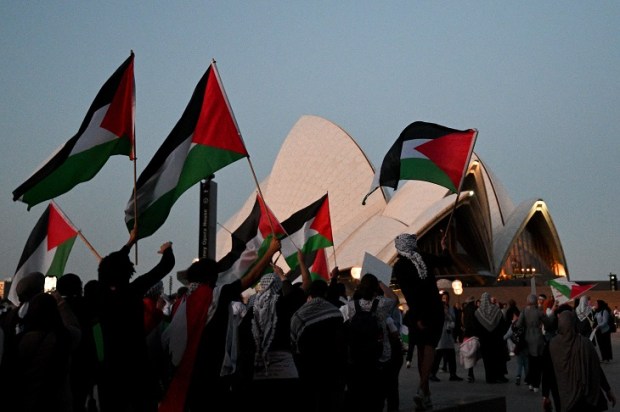
The thousands of people who participated in the anti-immigration protests (which, incidentally, are not directed against immigration, but against the level of immigration) is also evidence of this trend to label protesters ‘racist’. And the farcical debate as to whether it is allowable to have the Australian flag draped around the shoulders of Senators in the Senate on Flag Day, and whether the flag is a ‘prop’, takes this disturbing mania to an absurd level, nurtured by the comments of a Greens Senator who said that, if the Australian flag is allowed, he will come to the Senate draped in a Palestinian flag.
One would expect these examples of racism to be the subject of a fictional novel but, alas, it is the brutal reality of present-day Australia. The conclusion is that the sobriquet of ‘racist’ and its noun, ‘racism’ are overused and abused words in the English language. It now means that if you do not agree with the trendy left-wing rhetoric, then you are a racist.
From a commonsense point of view, supported by sound intellectual reflection, various points about these claims of racism should be made. Specifically, these claims are problematic for at least two reasons.
First, it involves a spectacular example of stereotyping because, in attributing the claim of racism to all people who disagree with the current fads, it assumes their possession of vile characteristics which they may not have and may never have had. It is akin to calling all left-wing people ‘evil’ even if occasionally some of them are decent enough to be involved in respectful and robust debates on societal issues.
Second, the condemnation by government ministers of those who participated in the anti-immigration protests as ‘racists’ involves a violation of the government’s implementation of the ‘neutrality principle’, which should be relied upon to allow all protests to proceed, including pro-Palestine and anti-immigration protests, provided they are peaceful.
Yet, the government pretends to implement the neutrality principle: it appointed an envoy to author a report on antisemitism, and it felt the need to also appoint an envoy to write a report on Islamophobia; this report and its 54 recommendations were released last week.
We are not here addressing the issue of the assumed moral equivalence of these ideologies; instead, we want to point out that, in commissioning a report on Islamophobia, the very policy of neutrality itself becomes an odious example of racism because it effectively diminishes at least one group whose activities in the public forum are disregarded by the government that accords moral equivalence to these ideologies. In doing so, the government may be motivated by a desire to create safe spaces for all groups in society. But in the process, it demonises one group at the expense of the other. The reality is that there are no safe spaces if an environment is created that shrinks people’s mind into believing that all groups are equally blameless.
Ironically, it seems that the ruling class considers the practice of racism in Australia to be a one-way road, meaning that only white people can be racist, and no white person can ever become a victim of racism.
This form of racial prejudice against the majority white Australian population, which obviously constitutes itself a form of racism, is vividly manifested in the document Racism. It Stops With Me. Published by the Australian Human Rights Commission (AHRC), this notorious document absurdly states on page 14 that a white person can never be a victim of racism. ‘Can white people experience racism?’ such document asks rhetorically. It provides the following answer:
Whilst white people can experience multiple forms of discrimination or prejudice based on gender, sexual orientation, ability, age, or class, they cannot experience racism … claims of anti-white racism ignore the fact that racism relies on societal power, which in systems of white supremacy prioritise whiteness. They also overlook the fact that in an unequal society, some communities will require special measures to produce equitable outcomes.
In addition to revealing why the Australian Human Rights Commission should be abolished as a matter of urgency, because it certainly is not interested in the protection of fundamental human rights for all, such a statement also helps to explain the comfort and confidence of certain leaders of minority groups in treating the nation’s majority ethnic group in a deeply racist and demeaning manner.
Having arrived in Australia, a predominantly ethnically white society with a rich Christian heritage, many Muslims escaping from oppressive theocratic regimes regrettably tend to develop ideological aggression toward the majority white population that so generously received them, not so often as refugees from their own native Muslim-majority countries. Such people aspire to take revenge against the perceived sins of all white Australians, ‘for some fault so heinous that a visceral hatred for the ethnic majority is developed’.
Evidence of this fact is found in a document issued by the Australian Muslim Community and entitled Christchurch and Islamophobia. Published on 25 March 2019, this document accuses all white Australians regardless of their country of origin and/or cultural background of bearing collective guilt for the ‘systematic massacre’ of Aborigines in the past.
All white people as an ethnic group, such document goes on to state, are collectively accountable for ‘white supremacist violence on this continent for over two centuries’. This remarkably racist document has been signed by more than 450 Muslim leaders and organisations, including presidents, both past and present, of the Islamic Council of Victoria.
The traditional meaning of the noun ‘racism’ should be restored to ensure respectful, but vigorous, debates about important societal issues. ‘Racism’ involves the distribution of benefits and burdens based on one’s race or ethnicity. It is about preferring or punishing people merely because they have a characteristic over which they have no control. As such, ‘racism’ is incompatible with the principle of equal citizenship.
However, it is important to consider that practices that distort the application of this principle have infested the political lexicon used in Australia. Examples include the establishment of decision-making treaty commissions with Aboriginal groups, or the creation of a State Voice, which could override the results of the Voice referendum, and the ubiquitous Welcome to Country rituals, the overuse of which has reduced them to irrelevant and even annoying inconveniences.
There is only one sound solution to this dreadful state of affairs: resist the use of a noun that only creates division and misery in Australia and unnecessarily demonises well-meaning citizens, especially when they happen to belong to the nation’s majority ethnic group.
Gabriël A. Moens AM is an emeritus professor of law at the University of Queensland and served as pro vice-chancellor and dean at Murdoch University.
Augusto Zimmermann is foundation dean and professor of law at Alphacrucis University College. He served as associate dean at Murdoch University. He is also a former commissioner with the Law Reform Commission of Western Australia.
Zimmermann & Moens are the authors of The Unlucky Country (Locke Press, 2024).