The Business Council of Australia has put a number on the cost of our energy future. If we cut emissions by half by 2035: $210-300 billion. Push it to 60 per cent: nearly half a trillion. At 70 per cent, the bill is up to $530 billion.
These numbers are dramatic, but the real story is not in the maths. It’s in what the report leaves out. It speaks the language of boardrooms and billion-dollar projects, without asking the obvious questions: Who ultimately pays, who actually benefits, and who is left behind?
A debate for the big end of town
The modelling leans on the Safeguard Mechanism – iron ore mines, LNG plants, utilities, and global tech firms. Naturally, the ‘solutions’ revolve around approvals, supply chains, and skilled workforces.
That is fine for companies that can tap global capital. But what about the café in Parramatta trying to keep the lights on? Or the family in Western Sydney opening yet another $500 quarterly bill?
For small businesses and households, there is no plan. Only higher costs, passed on by companies that pocket subsidies and shift the burden downstream.
This is the blind spot in our debate. We speak of ‘net zero’ as if it is a contest between big corporations and governments. But the people who pay the bills – the café owner, the family, the farmer – are left out of the story.
Energy affordability is already under strain. Families are making sacrifices on essentials to keep the lights on. Small businesses are closing under the combined weight of wages, rent, and energy bills. Yet our national conversation continues to orbit around corporate capital flows and global competitiveness, as if ordinary Australians are spectators rather than participants.
The environment as collateral
Equally troubling is the absence of nature itself from this debate. In Canberra, ‘streamlining’ approvals has become the mantra. The EPBC Act is being rewritten to fast-track projects. The Productivity Commission warns that regulatory bottlenecks must be removed. Industry lobbyists dismiss environmental law as ‘green tape’.
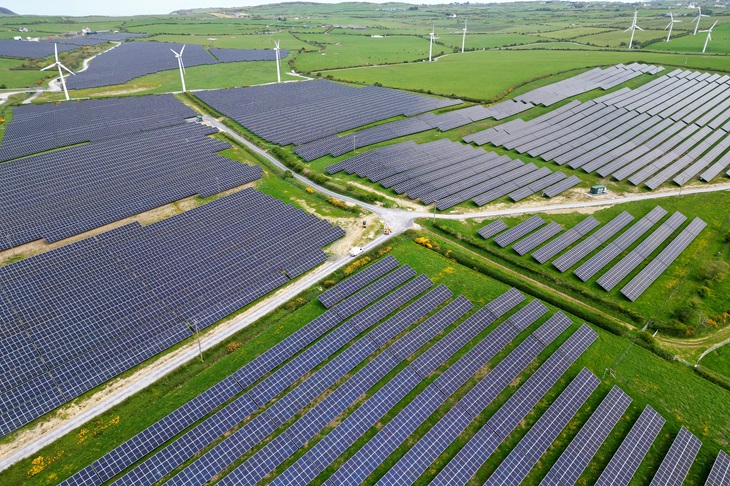
In reality, this means rivers, farmland, forests, and Indigenous heritage risk being bulldozed to save a few months on a project timeline. Communities are already facing the consequences: transmission lines cutting through farmland with little consultation, regional landscapes dominated by industrial-scale wind and solar, and traditional owners marginalised in decisions that affect their land.
This approach is reckless. When corners are cut, social licence is eroded. Communities resist. Projects are delayed by court cases and protests. Costs climb, and trust evaporates. Rather than speeding the transition, it slows.
Environmental safeguards are not barriers to climate action; they are part of it. Remove them and we are not solving the problem – we are merely exchanging one form of environmental damage for another.
Other countries are not blind to these dilemmas, and many are at least attempting to balance ambition with fairness and environmental integrity.
In the United States, the Inflation Reduction Act ties billions of dollars of clean-energy investment to community benefit agreements, domestic manufacturing, and stronger protections for workers. In Europe, the €55 billion Just Transition Mechanism provides direct support to the regions and small enterprises most exposed to change, without weakening environmental standards. In Brazil, climate policy is tied explicitly to small farmers and rural livelihoods, recognising that resilience depends on both ecosystems and people.
None of these models is perfect, but they share one essential principle: climate policy cannot endure unless it rests on fairness and integrity. Without those foundations, it will collapse under its own weight.
Australia’s dangerous drift
The direction of Australia’s transition has become increasingly risky. The BCA itself admits that it has not modelled the impact on GDP or considered what higher taxes might mean for households. If Australians were told their tax rates could rise by four to twenty cents in the dollar to cover transition costs, how many would sign on?
Meanwhile, households are already cutting groceries to keep the power on, and small businesses are closing under the combined pressures of rent, wages, and energy bills. Yet the national conversation continues to revolve almost entirely around ‘foreign capital’ and ‘competitiveness’, treating ordinary Australians as bystanders.
In this framing, energy affordability is treated as collateral damage and environmental protection as an expendable luxury. That is a perilous path for the country to follow.
A fairer balance
We need a different lens. The question is not simply how much the transition will cost, but how we protect those most vulnerable to it and how we ensure the benefits are shared fairly. That means asking:
- How do we shield households from ever-rising energy bills?
- How do we give small businesses affordable access to clean technologies?
- How do we design subsidies that deliver genuine community benefit rather than corporate windfalls?
- How do we ensure decarbonisation strengthens, rather than weakens, environmental safeguards?
Unless we answer these, the transition will fail – not only failing families and small businesses but failing the environment as well. Climate policy without social licence, and without integrity, cannot last.
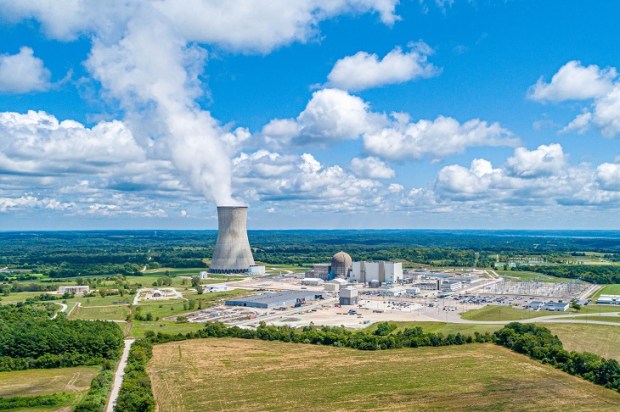
Australia has the resources to do this properly. We are not locked into a false contest of ‘renewables versus fossil fuels’. Our strength lies in diversity: abundant sun and wind, uranium for a responsible nuclear industry, the capacity to expand sustainable biofuels and advanced agriculture, cleaner LNG, and a critical minerals sector that can support both our economy and our allies.
A pragmatic mix of these options would make us more secure, less dependent on China, and more resilient at home. But that requires honesty and long-term vision, not slogans designed for short-term politics.
The Venetian lesson
Centuries ago, Venetian traders faced a dilemma familiar to us now: how to balance the costs of today with the returns of tomorrow. In 1494, friar Luca Pacioli set out the principles of double-entry bookkeeping, giving merchants a way to record both sides of the ledger. It allowed them to recognise that a ship might leave port empty but return laden with goods, and to pay the crew even during long voyages when the profits were still over the horizon.
Our current debate has lost that discipline. The focus is on the upfront bill, not the returns. Lower import costs, stronger national resilience, healthier communities, and thriving ecosystems are ignored. Government doubles down on fast-tracking approvals while undermining the very safeguards that secure long-term value.
It is shallow accounting. A vessel that sails two days out of five cannot be compared to one that sails nineteen out of twenty, yet that is exactly how we compare energy technologies today: glossing over the duplication of grid infrastructure, the loss of land, or the need to replace batteries every fifteen years.
The Venetians invented the balance sheet to avoid such folly, and we would do well to learn from them. Until we weigh cost against return, affordability against fairness, and short-term expense against long-term resilience, Australia’s energy transition will remain unbalanced. And in that imbalance, families, small businesses, and the environment, the very things we claim to protect, will be left behind.