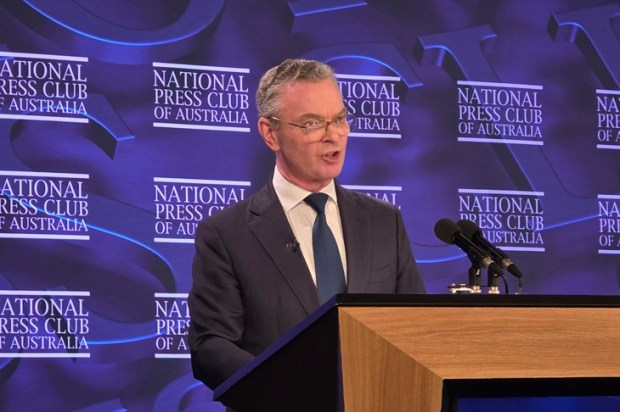
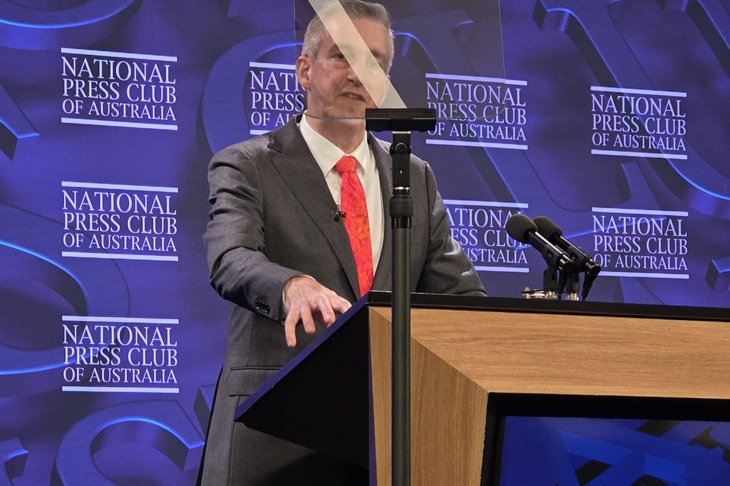
There was much to agree with in Paul Schroder’s address to the National Press Club today. As CEO of AustralianSuper – the behemoth managing over $300 billion for more than three million members – Schroder delivered a rousing call for reform in our superannuation system. He decried the outdated structures of 1992 that have not kept pace with societal shifts, urging a streamlined approach where Australians can seamlessly toggle between saving and spending in retirement. He rightly lambasted the red tape that treats retirement like applying for a gym membership:
‘Currently, the system requires members to open a separate account… How stupid is that?’
I couldn’t agree more with Schroder on several fronts. Our super system, born in the Hawke-Keating era, has indeed become a clunky relic in a world of gig economies, longer lifespans, and fluid careers.
He wisely warned against treating super as a ‘piggybank’ for political pet projects, insisting it ‘cannot – and should not – be used to solve every complex national problem’.
Government interference in investment decisions would be a ‘disaster’ for members, he argued, and here Schroder hits the nail on the head. Super funds must remain independent, focused on delivering returns to everyday Australians rather than bending to Canberra’s whims. His vision of super as an ‘engine room’ for national prosperity – investing in housing, energy transitions, and infrastructure on a risk-adjusted basis – is at least workable, provided it’s not dictated from above.
Yet, for all his talk of modernisation and adapting to ‘changes in society’, Schroder’s address curiously sidestepped the most glaring anachronism in the room: AustralianSuper’s own governance structure.
During the Q&A, I put it to him directly. How does he square the fund’s equal representation from unions and employers with today’s reality, where union membership has plummeted from 40 per cent in 1992 to a mere 13 per cent? Does this not embed an inherent union bias, potentially prioritising union (and therefore Albanese government) agendas over the diverse interests of modern workers? And will AustralianSuper update its board to reflect the very societal evolution he’s demanding from government?
Schroder’s response, while polite, danced around the issue without committing to change. But let’s call it what it is: this ‘equal’ representation is anything but in 2025. With unions representing a shrinking sliver of the workforce – largely confined to public sectors and legacy industries – the board’s composition harks back to a bygone era of industrial militancy. Australian workers today are entrepreneurs, freelancers, and small-business owners, not the unionised masses of yesteryear. Why should a fund stewarding the retirement savings of millions be beholden to a governance model that amplifies the voice of what is now a minority?
This isn’t about bashing unions, it’s about fairness and relevance. Schroder himself acknowledges the system’s inequities, particularly for women, gig workers, and marginalised groups. But how can a board skewed towards union priorities truly champion these diverse interests? We’ve seen the risks from ideological investments in ‘ethical’ causes that underperform, to a reluctance to embrace market-driven reforms that might ruffle union feathers. If super is to be the apolitical powerhouse Schroder envisions – free from government meddling – then it should also shed own outdated biases.
The irony is palpable. AustralianSuper calls on government to ‘rip off that red tape’ and integrate super with the age pension for a seamless future. It envisions bold investments in AI, quantum computing, and infrastructure, echoing the ambition of post-war mobilisation. Yet it stops short of applying the same logic to its internal workings. If the 1992 system hasn’t kept up, as claimed, then neither has the union-employer duopoly on boards.
The Hayne Royal Commission criticised super funds generally for prioritising profits over members’ interests, such as charging fees without providing services, poor handling of multiple accounts, and opaque payments to unions or related entities.
I argue that like any aspect of economic life in an egalitarian liberal democracy, it really does matter how people are appointed to boards, especially given the scale of capital that is under the control of super funds in Australia. So far, the issue of inherent biases in a system where unions hold disproportionate influence relative to modern workforce demographics has been overlooked.
Indeed, modern governance should reflect the fund’s membership. Perhaps independent directors, member-elected representatives, or proportional input based on actual workforce demographics?
AustralianSuper’s $40 billion earmarked for local investments is commendable, but without governance reform, how can we ensure it is deployed without union-tinted glasses?
Schroder is right, super isn’t a piggybank for politicians. But nor should it be a slush fund for union agendas. If we’re to reimagine prosperity, as he urges, let’s start by modernising the boards that control $4.3 trillion of Australian’s hopes and dreams for the future. Otherwise, the ‘engine room’ risks becoming a rusty old union hall, out of touch with the Australia it claims to serve.
Dr Michael de Percy @FlaneurPolitiq is the Spectator Australia’s Canberra Press Gallery Correspondent. If you would like to support his writing, or read more of Michael, please visit his website.