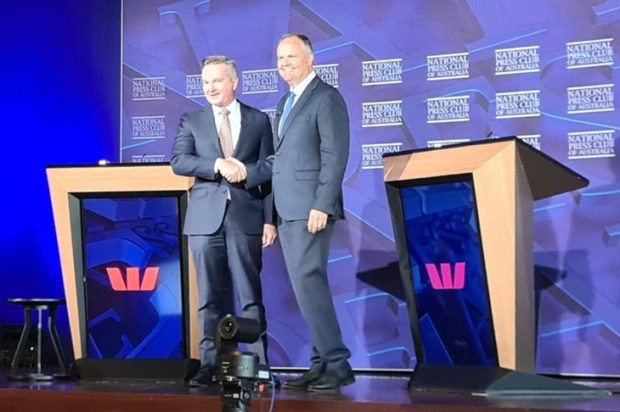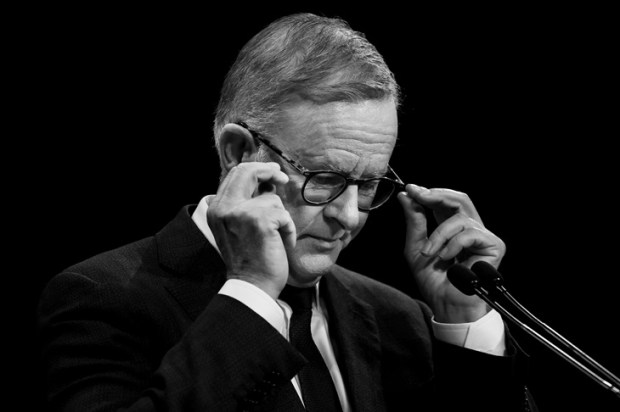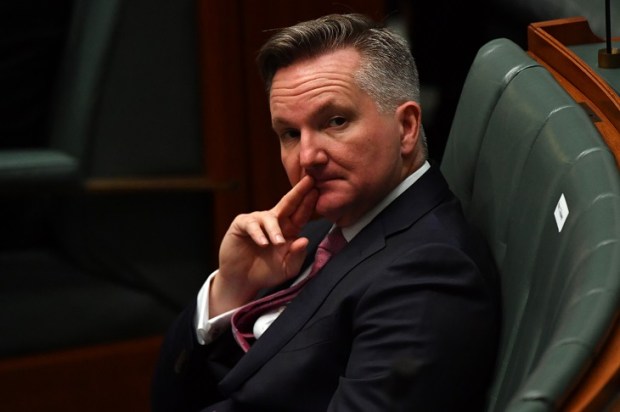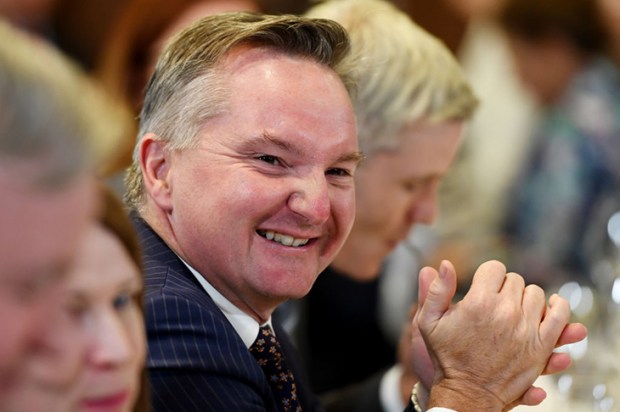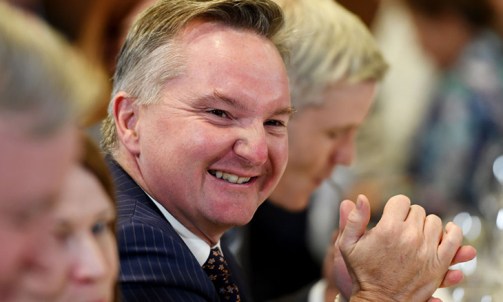
From the National Press Club: Picture this. A room full of journalists, some scribbling notes, others stifling yawns, as John Grimes, CEO of the Smart Energy Council, takes the stage. His speech is less a policy address and more a love letter to the Labor Party, complete with effusive praise for the ‘highly effective’ Minister for Climate Change and Energy, Chris Bowen.
The air is thick with partisanship, and one can almost hear the faint strains of a Labor campaign jingle in the background. It’s a performance so one-sided that even the most ardent Labor supporters are blushing.
That’s what happened today.
Not everyone in the room was swept away by Grimes’ enthusiasm. One journalist, perhaps less enchanted by the rhetoric, pointed out the elephant in the room. Grimes had nothing negative to say about Labor’s energy policies. The CEO’s response was telling – he bristled, as if criticism was an alien concept in his renewable energy utopia.
When the journalist pressed further, suggesting he might have ‘been asleep’ during any critical remarks, Grimes appealed to the chair, Greg Jennett, to halt the line of questioning. It was a moment that revealed a troubling expectation of a sympathetic audience, unprepared for the fourth estate doing its job.
This exchange underscores a broader issue in Australia’s energy policy debate where there is a disconnect between the rosy promises of renewable energy advocates and the lived experiences of everyday Australians.
Grimes’ unwavering support for Labor’s energy future, coupled with his discomfort over renewable energy scrutiny, raises questions about the Smart Energy Council’s advocacy. Is it a genuine push for sustainable energy?
Grimes commented:
‘And I want to take the opportunity to give a big shout out to Minister for Climate Change and Energy, Chris Bowen – a highly effective minister – he makes up his own mind – but arguably the most effective minister in cabinet for his portfolio…’
And in regard to Albo:
‘Good on him. Good on Labor. And good on the Greens – and the Teal independents. And those in the Coalition who backed Net Zero and renewables.’
This was from the same person who said that China ‘plays as a team’ (individuals have no choice there) whereas:
‘Australia spends all of our time trying to tear each other apart. That is no way to compete for Team Australia.’
Such praise set the tone for Grimes’ speech.
Consider the situation where I live in regional NSW, the Upper Lachlan. Often dubbed the wind farm capital of Australia, where over 340 wind turbines (53 per cent of the NSW total) dot the landscape as far as the eye can see. One might reasonably expect that such an abundance of ‘free’ energy from the wind would translate into lower electricity bills for local residents. Yet, the reality is far different.
Over the past few years, energy prices have reportedly surged by some 40 per cent, with an additional 9 per cent increase in July 2025 alone. How are the people of the Upper Lachlan supposed to believe the promise of affordable renewable energy when their bills tell a story of escalating costs?
This paradox is not unique to the Upper Lachlan. Across Australia, the narrative that renewable energy will deliver cheaper electricity is being challenged by persistent price hikes. According to the Australian Energy Regulator, electricity prices are set to rise by up to 9.7 per cent from July 2025 in the regions in NSW, South Australia, and south-east Queensland.
These increases, driven by rising wholesale and network costs, stand in stark contrast to the rhetoric that sun and wind are free resources.
When I confronted Grimes with the reality of rising prices in renewable-heavy regions, he proposed subsidies for areas like the Upper Lachlan that are ‘doing the heavy lifting’ in renewable energy production. He suggested a discount in the power bills for residents in such areas.
This might prove popular, and, on the surface, it sounds like a fair deal to reward those who live among the turbines. But dig a little deeper, and the risks become apparent. What Grimes calls a solution could easily spiral into ‘subsidy creep’, where every region, from those with solar farms to those merely near a transmission line, demands their own discount. The result would be a bureaucratic quagmire and even higher costs for everyone.
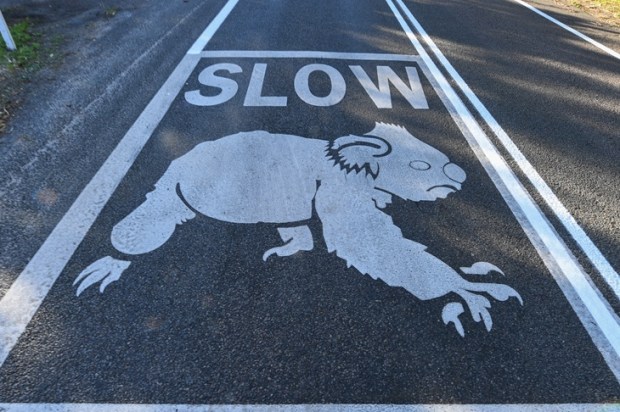
This brings to mind a classic tale from policy circles about perverse outcomes. In a developing nation plagued by snake bites, the government offered a bounty for every snake head brought in, hoping to reduce the snake population. Instead, enterprising individuals began breeding snakes to claim the bounty, leading to more snakes and more bites. The moral? Well-intentioned policies can backfire spectacularly.
A similar dynamic is at play in Australia’s renewable energy landscape. Take household solar, for instance. Initially, Australians were encouraged to install solar panels with the promise of earning money by feeding excess electricity back into the grid. It was sold as a win-win – save the planet and your wallet.
But as more households adopted solar, the grid became oversaturated during peak production times, particularly midday when the sun is brightest. Now, instead of being paid for their excess energy, some homeowners are being charged for feeding it back into the grid. It’s as if the government said, ‘Thanks for the snakes, but now you have to pay us to take them away.’
Further, the initial capital outlay for solar panels and batteries, combined with these unexpected charges, has left some environmentally conscious Australians worse off than if they had stuck with traditional grid electricity.
The rhetoric that renewable energy is ‘free’ because it comes from the sun and wind ignores the substantial costs of harnessing, storing, and distributing that energy. Infrastructure like wind turbines, solar farms, and batteries doesn’t come cheap, nor does the complex task of integrating intermittent renewable sources into a reliable grid (let alone recycling the panels, batteries, and turbines).
The reality is that Australians are feeling the pinch as energy bills continue to climb, despite the promise of a cheaper, greener future.
The federal government, under Chris Bowen’s leadership, has attempted to soften the blow with energy bill relief measures, such as $150 rebates for households and small businesses starting this month. The rebates, while welcome, are temporary fixes that do little to address the structural issues driving price increases.
As I’ve argued before, it’s akin to putting a Band-Aid on a wound that requires surgery.
Grimes’ encounter with a journalist who hasn’t drunk the Kool-Aid highlights the importance of a free press in holding public figures accountable. The journalist’s persistence in questioning Grimes’ one-sided narrative was a reminder that advocacy groups like the Smart Energy Council must engage with criticism, not shy away from it.
Grimes’ expectation of a sympathetic audience suggests a complacency that ignores the two-thirds of Australians who didn’t vote for Labor.
As for Bowen the ‘highly effective minister’, he has yet to deliver the promised cost savings from his renewable energy policy. While Labor touts progress, with renewables reportedly increasing from 33 per cent to 46 per cent of the energy grid over the past three years, the financial burden on households is back-breaking.
The vision of a renewable energy utopia, as championed by Grimes and Bowen, is increasingly at odds with the reality of rising energy bills. Australians, particularly those in renewable-heavy regions like the Upper Lachlan, deserve more than rhetoric and temporary relief. They need policies that deliver tangible cost reductions without the risk of perverse outcomes or endless subsidies.
Until that magical time comes, labelling Bowen as a ‘highly effective minister’ will remain a satirical footnote in the story of expensive and unfulfilled promises in our energy supply.
Dr Michael de Percy @FlaneurPolitiq is The Spectator Australia’s Canberra Press Gallery Correspondent. If you would like to support his writing, or read more of Michael, please visit his website.