Back in May of this year, I attended a skin cancer clinic for the excision of a lesion suspected to be malignant. The specialist scheduled a date for the procedure and instructed me to discontinue my anticoagulant medication five days prior to the surgery.
Day surgery was carried out, and I was sent home. Two days later, I awoke at 3.30 am to find I could not move my leg. I called an ambulance, provided the symptoms, and waited for their arrival. Two days later, after an MRI scan, a stroke was diagnosed.
The hospital doctors came to my room to confirm the diagnosis and confirmed that the stroke was on my right side, and included my arm and leg. Mild, they said.
While noting the recent surgical intervention on my face, they probed into the circumstances surrounding my condition. ‘Were you instructed to cease any medications?’ they inquired. ‘Indeed,’ I replied. ‘The anticoagulant tablets.’
‘Precisely,’ the doctors affirmed. ‘That is what precipitated your stroke. You must never discontinue your anticoagulant medication. The specialist should have devised a strategy to accommodate this; there are methods to avoid halting these critical medications.’
With six weeks of reduced activity and rehabilitation, I turned to the internet on my tablet to learn about this issue.
I found out about clotted particles in the bloodstream, and all about strokes and their treatment. (Rehab.) Not good reading, however, I was luckier than many of my fellow travellers in the stroke ward.
Dirty blood led me to consider other aspects of modern life, such as dirty town water issues. With the recent floods in NSW, the water supply in some places is rendered inoperable or, at the very least, not safe to drink. Boil the water before you drink it seems to be the solution to dirty water. Good way to transmit a noxious disease…
Browsing around the Internet, I came across an article about dirty power. I had not heard of the term before and decided to investigate. I was shocked to read about this modern-day issue and decided to dig deeper.
Since 1926, Australia has had a standardised power supplied to all residents of 240 volts at 50 cycles AC. In the year 2000, the voltage in most states was lowered to 230 volts 50 cycles, with some states not completing the change until 2017.
A (sort of) quality guarantee goes with this power delivery of no more than +/- 6 per cent variation. The obvious reason for this guarantee is to protect sensitive equipment from damage.
For most of my life, I have lived with this guarantee, working with early computers for home, office, and school. They were good years, with a continuous and reliable electricity supply. Something that was largely taken for granted.
Now retired, I have watched the world’s computer usage explode. Medical equipment, home computers, computer-controlled factory production, data centres for business, storage in the cloud, and commercial companies such as Apple, Microsoft, Amazon, Google, and many more, are wholly reliant on the supply of clean, reliable power.
Modern and very powerful computer chips used in medical diagnostics, banking, and large corporate settings cannot cope with interruptions or short-term absence of power, or fluctuations in the frequency.
Modern power generators using coal, gas, hydro, or uranium can supply a constant stream of power plus inertia (or strength) to overcome small switching interruptions as the load varies.
Meticulous care is taken when bringing another generator online, ensuring that it is fully synchronised with the grid voltage and frequency. This process can take several minutes to complete, avoiding any fluctuations to the supply.
So, what is dirty power?
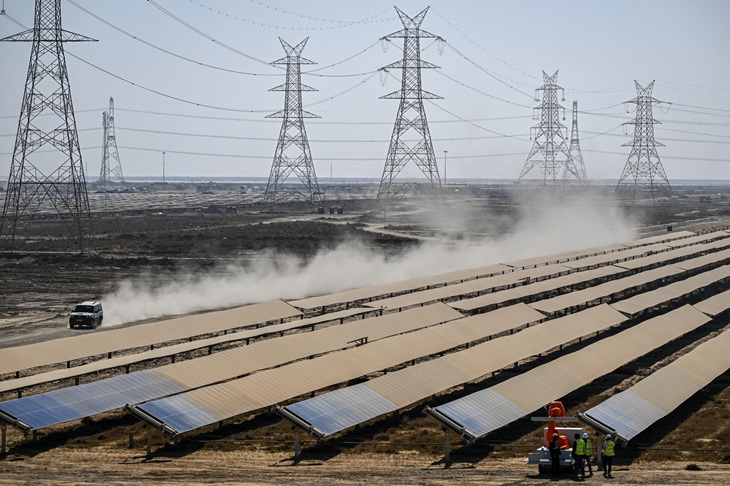
The enforced closure of numerous power generators has compromised reliability, diminished inertia, and eroded the assurance of a quality supply. Dirty power is generated by solar panels, which are susceptible to the variable intensity of sunlight. It is also produced by wind generators, which are dependent on the whims of nature, oscillating between minimal production and cyclone-level output based on location.
These conditions yield variations in voltage, fluctuations in frequency, and perilous harmonics induced by non-linear loads – all of which pose catastrophic risks for data centres.
Some of these issues currently exist, but the inertia of the generators can smooth out the bumps. The removal of these generators leaves us with a very unreliable grid, loaded with dirty power from wind and solar, with no strength to cope with the usual load variations experienced every day.
Microsoft, Amazon, Google, Apple, and numerous other corporations that are increasingly harnessing substantial computational power for artificial intelligence and cloud storage solutions for their clientele are decisively severing ties with the conventional power grid as the dirty power increases. They are advancing plans to establish their own dependable energy sources, predominantly through the utilisation of nuclear reactors. Other significant entities are contemplating the adoption of standalone Small Modular Reactors (SMRs) to ensure a reliable power supply, also opting to disconnect from the grid.
Microsoft intends to recommission one of the Three Mile Island nuclear reactors, leveraging it to provide clean energy for its operations.
Australia is experiencing a troubling exodus of major industrial facilities, particularly within industries such as glass, plastics, and aluminium. The current escalation in energy costs has reached a threshold that jeopardises the viability of sustaining reasonable profit margins and competitive consumer pricing.
A question directed at Gemini AI suggests that batteries capable of storing adequate power have yet to be developed, although their emergence appears imminent. Based on prevailing battery costs, the cumulative investment is anticipated to approach approximately $216 billion over a 60-year horizon, considering that the lifespan of these batteries is roughly 15 years.
Yes, initiatives are underway to implement costly technologies designed to substitute inertia, mitigate unreliable power, and integrate battery systems.
The overall expenditure for a system intended to sustain the Eastern grid of Australia for 60 years, inclusive of 72 hours of backup, could be between four and six trillion dollars, at least, according to AI. This figure does not encompass the supplementary poles and wires necessary to connect the significant influx of solar and wind energy, nor does it account for the Snowy 2 project.
Contributing to the huge cost is the unreported, relatively short lifespan of this equipment. Batteries last roughly 15 years, wind turbines for 25 years, and solar panels about 20 years.
In stark contrast, the investment required to construct 25 nuclear power facilities with an operational lifespan of 80 years is estimated at approximately $300 billion. These would be integrated into the existing grid, resulting in an annual asset cost of $3.75 billion amortised over 80 years, in addition to gas peaking plants to accommodate peak demand.
Gemini AI has the final word.
The raw energy from renewables is cheap. (LCOE) However, the cost of making that raw energy consistently available, reliable, and high-quality at a national scale, particularly with current storage technologies for multi-day firming, is enormously expensive in terms of upfront and recurring capital outlays. This significant system cost is what large consumers are reacting to when they look for alternative power solutions.
So, while the LCOE of renewable generation is lowest, the total system cost for a 100 per cent firmed renewable grid (with significant battery storage) is very high, and the challenges of grid performance and reliability are driving some large consumers away. This complex reality moves beyond the simple ‘cheapest’ soundbite.