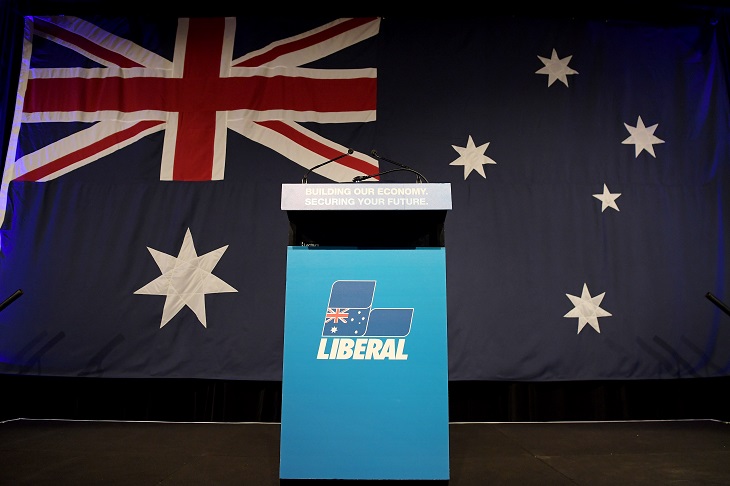
As the Liberal party licks its wounds after last weekend’s defeat, it must reckon with how far its political judgment has strayed from its founding principles.
The average punter’s takeaway after 36 days was little more than policy backflips and a dusty fuel excise cut. Considering the party’s rich history with men of Menzies’ stature, such thin gruel was unworthy of the philosophical depth it has to offer.
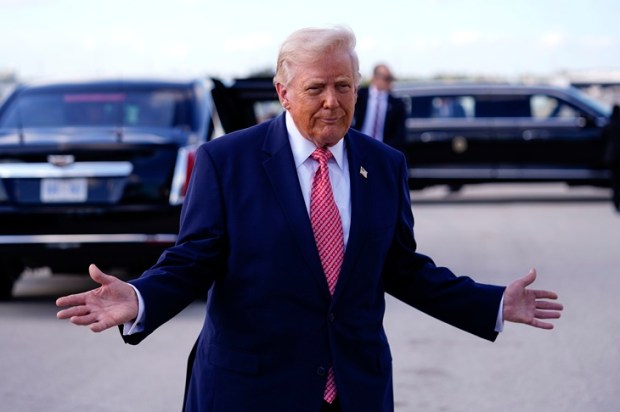
Suggestions that too much conviction would be perceived as ‘Trumpian’ seemed to plague the campaign and cow Peter Dutton. He’d worked hard to craft a ‘top bloke’ image after years of media casting him as an ogre. Regardless, advocating for fiscal responsibility, strong families, reliable energy, and a formidable defence force have as much purchase as they’ve ever had. It’s just a shame it didn’t happen.
Whoever has the honour of succeeding Dutton must keep in mind the duty to uphold these Liberal values – for those living, and those yet to be born.
A shortsightedness has crept into our political class. The culprits are focus groups, opportunism, ‘vibes’, and media bias. But eclipsing all of these is the most serious temptation – demagoguery – which masks the crumbling heart of a party which once knew what it stood for. There are two main reasons for this: the ‘broad church’ of the Liberals is now broader than it was in the 1990s, and an increasing internal pressure to focus on winning the political centre.
The Liberals’ Howard era is remembered for its impressive run of Budget surpluses under Treasurer Peter Costello. What is often forgotten however, is how challenging it was to persuade Australians to accept the harsh medicine of spending cuts that preceded them. After a $10.5 billion deficit inherited from the Keating government, Howard enacted his ‘tough but fair’ repair, stripping funding from health, education and welfare, and privatising Telstra. It was a political nightmare that would fail the feted ‘pub test’ today.
Former Deputy Prime Minister John Anderson, who was in John Howard’s Cabinet, saw this as a call to exercise leadership that would create constituencies, rather than simply appealing to them. It was an uncertain task that risked great political cost. There was no guarantee voters would tolerate austerity measures, but Howard convinced Australians to trust him, and he gave them a stronger economy on the other side, boosting his credibility for years to come.
Such principled judgments were not dependent on political consultancies. They were led by a Menzian vision to curb reckless spending and promote economic stability. In other words, they were not only consistent with the purpose of the party, but also the right thing for the country – optics be damned.
This idea of judgment was explored centuries ago in a 1774 speech by British MP Edmund Burke. Appealing to his electors in Bristol, he said:
‘Your representative owes you, not his industry only, but his judgment; and he betrays, instead of serving you, if he sacrifices it to your opinion … a flatterer you do not wish for.’
Burke sought a deep connection with the people he served and felt the gravity of acting against their wishes. He knew the superior path of representation was judgment rightly exercised in their interest, and the interests of party and country.
What we witnessed last weekend was not in the spirit of Menzies or Burke. Despite leading in the polls, a lack of confidence set in as the campaign got underway, and the Liberal team squandered the moment. Much ink has already been spilt bemoaning the poor messaging, the absence of serious policy, and an uncharismatic presence.
But this papers over the underlying cause: that elected leaders owe the people their honest judgments. Nothing can truly inspire or demonstrate a genuine calling more than taking ownership of your convictions and taking the people with you – win or lose.
Indeed, it is a sad irony that Peter Dutton had nothing to lose, but in choosing to play it safe, lost his seat anyway. While we’ll never know the counterfactual result, LNP commentators remain sure the election was winnable.
It might be considered Pollyannaish to have expected bold reforms from any government since Howard’s loss in 2007. After all, Australia has seen few lasting Prime Ministers since then, with parties consumed by factional knifings and egotism.
Now that Prime Minister Albanese has bucked the trend and won so decisively, it may be his time to shine with innovative ideas reminiscent of the early Hawke/Keating years.
In the meantime, perhaps a latent talent will soon emerge, and prosecute a case for historical Liberalism without apology. Truth is timeless, and newer generations deserve better representatives that remind us how well men like Menzies wielded it. In a time when our culture is drawn towards all manner of fiscal and spiritual impoverishment, they can’t come soon enough.
Rohan McHugh is the Media Director for Former Deputy Prime Minister John Anderson