Why have we not learnt this lesson? Has everyone forgotten the 2019 election? Or the Trump election? Or the Voice referendum? The polls (and the so-called reliable betting markets) were wrong.
Never mind. The addiction to the swings and roundabouts of different polls, written by different people, with variable skills in item-writing, for different purposes, and paid for by different masters, has stayed with us.
Just last week I had a pollster ring. I replied that I was not interested in answering their questions. When he enquired as to when would be a good time for us to ‘chat’, I attempted to sound polite while replying, ‘Never.’
I wonder how many people refuse to play their game? Agreeing to be involved in a poll is putting yourself in unknown hands for unknown reasons. This is not jaded cynicism. I have carried a healthy scepticism of surveys of many kinds ever since I learned in 1977 what a ‘good research questionnaire’ could look like, and how many do not conform. Then I read about the ‘flogging wall’ analogy which demonstrated that the more reliable you try to make a set of survey questions, the less valid they become. Oh, those heady days of trying to take statistics seriously!
Since then, we have had a plethora of gurus who had tried to ‘advance the field’ with hyper-sophisticated mathematical manipulations. In response to these kinds of developments, you have the practical wisdom of people like Stuart Ritchie from Oxford (in his 2020 Science Fictions). He wrote on the current travails of all scientific research, and noted that with humans the actual scientific method is nearly impossible, concluding that sensible correlations might sometimes tell us something, but that they should be used very, very carefully – which means, they are to be used with great humility and that those who write reports should own the low level of certainty that accompanies such endeavours (as it should, by the way, with any computer modelling into the future – yes, think climate change and the false melodramatics from that modelling).
This is what pollsters do not understand. To use Ritchie’s words, working with people in a scientific way means ‘trying to understand highly variable and highly complicated human beings … it is difficult, if not impossible, to pin down in a lab experiment… Could the sheer complexity of the task make findings in psychology particularly untrustworthy, compared to other sciences? […] There is something to this argument.’ Now, polls are not ‘scientific experiments’, but they do purport to bring some kind of truth to light. But what is brought into our media platforms is simplistic reductionism of low certainty with reference to both validity and reliability.
Yet again, we are bombarded with simplistic headlines from surveys done with highly variable and complicated human beings, who might even lie, or skew the results because some of them, like me, just refuse to comply!
What I find even more distressing is how often journalists let these untested collections of some kinds of responses drive their reporting. Here’s an idea – what about sticking with the critical issues that count, rather than the shifting sands of surveys?
We know what the main ones are, starting with the cost of energy, which should be headlining every report. We also know how critical are the other drivers of the cost of living, loss of productivity, and loss of energy and economic independence in the face of an imperialist foe (or foes). These are what the campaigners should be drilled about, time and time again.
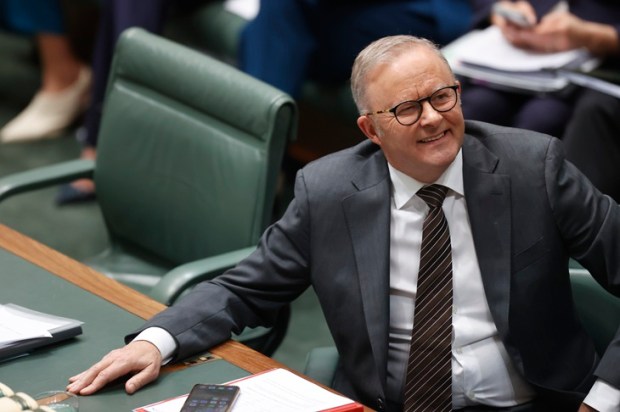
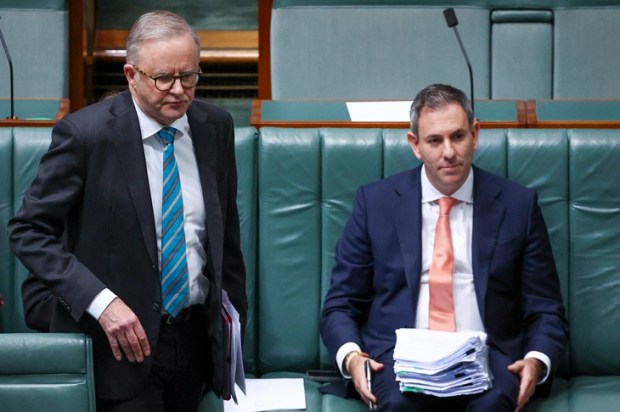
But no – we have to put up with drivel like ‘look at how well this politician is doing in his style’. I almost choke when I hear that Albo’s ‘folksy’ approach might win him the election. If you want to report that, then comment on what a sham our elections have become because of, you know, the unnecessary, hurtful, pain-inducing cost of energy and non-productive wage costs we are carrying amidst green-tape investment inhibitions that are buried by wilfully compliant journalists who ignore the realities of our economic trashing under this government.
And what I have noticed this week is that this trap is now filled with even so-called ‘conservative’ commentators. They may be conservative, but perhaps some of them need lessons in the need for humility every time numbers come from their mouths.
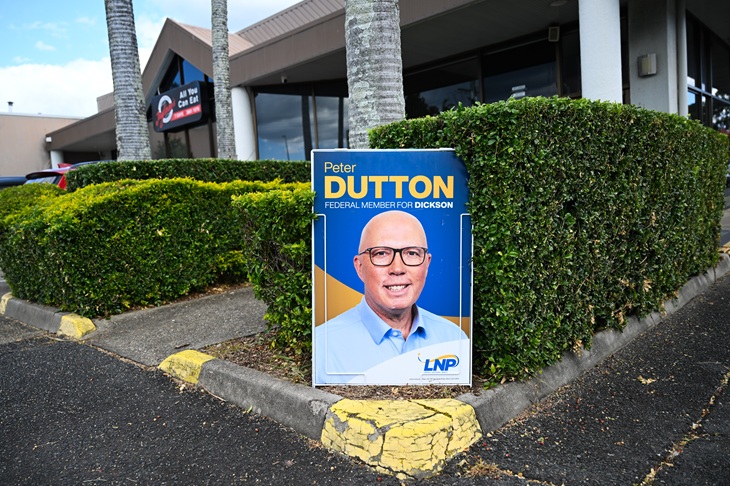
Please, stop giving Dutton advice. Every time you do, you assume Albo is winning. We do not know what surveys actually mean with reference to the real vote that will be counted on May 3. We cannot know. So stay on the main game, and call out the current Prime Minister’s duplicity. We know that he is defined by whomever he talks to last. He is that shallow, and that cunning. I read that someone called this a shift towards ‘pragmatism’.
That is a mealy-mouthed sop. It is well-worn socialist language play.
Any so-called pragmatism from our Prime Minister is for one reason, which we have seen repeatedly over the last three years as he sways like a wind-cock in the breeze. Taking at face value his words compared to his actions of late – his shifting around can be explained in one word:
Deception.