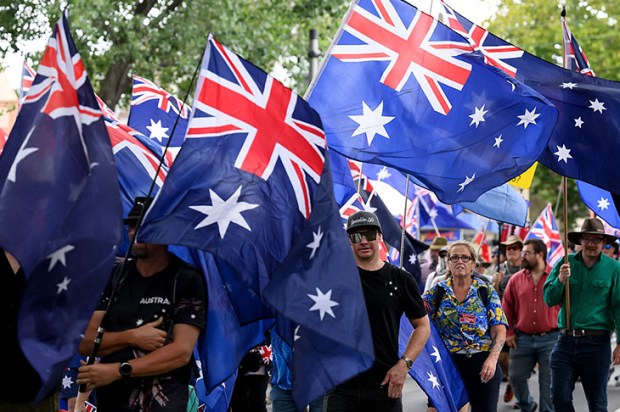
There was a time when being a ‘True Blue Aussie’ did not rest on a legal construct. Primarily it meant identifying as a proud member of a civilised, democratic, predominantly Christian, society, sharing traditional values and celebrating distinct cultural idiosyncrasies like ‘mateship’, the ‘smoko’ and a ‘fair go’.
These characteristics conferred a unique sense of belonging along with personal responsibilities, independent of government. Indeed, until the Nationality and Citizenship Act became law on Australia Day 1949, Australians were British subjects.
That Act opened the door to increased migration particularly from post-war Europe. The overriding imperative was for ‘New Australians’ to speak English and to integrate as Aussies as quickly as possible.
In 1966, the Holt government advocated the end of the White Australia policy, leaving it to Gough Whitlam to finally renounce it in 1973.
Come the Fraser government and migrants and asylum seekers were encouraged to retain their former identities. Rather than assimilate, they could choose to remain separate. Prime Minister Malcolm Fraser’s embrace of multiculturalism commenced an assault on Australia’s cultural norms, compounded by shortening the residency term for citizenship. At four years it is now one of the world’s shortest.
Generous social welfare, individual freedoms and Australians’ desire ‘to be kind’ saw immigration soar. By the time prime minister John Howard stipulated, ‘We will decide who comes to this country and the circumstances in which they come,’ it was too late. The multicultural ‘feel good’ experiment was in full swing and norms of behaviour, once taken for granted, were being challenged by imported beliefs. Howard was accused of pushing the ‘politics of fear’.
But was he?
After two hundred years of successful integration, despite cultural differences, Chinese migrants assimilated well into Australian society. Significant numbers served in both world wars. However, today’s arrivals remain divided about the merits of China’s political system and, despite the defence pact between Canberra and Washington, most say Australia should remain neutral in any military conflict involving China and the US.
Perhaps John Howard also understood that Muslim migrants find Australia’s democratic way of life fundamentally incompatible with Islamic teaching?
As Sydney cleric, Abu Ousayd, explains, verses in the Quran and Sunnah, (the primary source of Islamic law), instruct that ‘legislation belongs solely to God. When a person is involved in a democracy, whether it be in Australia or anywhere else… people become the legislator. People say and start to pass what is right and wrong. They start to say what is permissible and impermissible.’
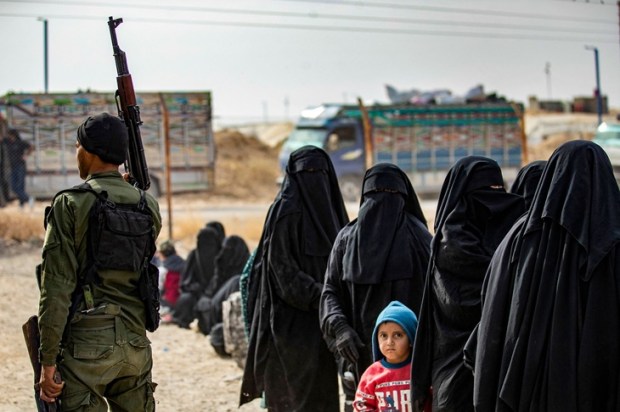
Which means Muslims who pledge loyalty to Australia’s democratic system of government, and who vote in elections, are in fundamental conflict with Islam’s teachings and, therefore, guilty of apostasy. Indeed, for many Muslim migrants, citizenship is a flag of convenience and part of ‘Hijrah’, a physical journey intended to establish Sharia-ruled enclaves in their chosen Western society.
In a recent op-ed in the UK Telegraph, former home secretary, Suella Braverman, provides evidence saying Islam is rapidly gaining influence in the United Kingdom with Sharia law the ultimate objective.
Braverman writes, ‘They started with the Jews; there were stern words of disapproval from the top but things only got worse. The Islamist cranks and left-wing extremists then took control of the streets; the police looked meekly on. They harassed teachers through the courts; our human rights and equalities laws were used against us…. We see their influence in our judiciary, our legal profession and our universities.’
Ms Braverman’s words apply equally to Australia, yet governments continue to ignore growing antisemitism and the experience of countries with long histories of Islamic immigration; like France where 46 per cent of Muslims place respect for Sharia law above French law.
It’s not Islamaphobic to point this out.
But opposition to Australia’s mass immigration policy isn’t just cultural. Its influence on housing shortages, declining per capita productivity, and a recession in living standards is concerning. However Labor and the Greens believe most economic migrants vote for them and oppose cuts.
The recent spectacle of Home Affairs Minister, Tony Burke, accelerating citizenship for nearly 13,000 migrants and, the rushed admission of 3,000 Gazans, ahead of an imminent federal election, support poll-driven motives. As does the Minister’s decision to allow 66 dangerous criminals to remain in Australia while threatening to cancel the visa of an American influencer who, momentarily, separated a baby wombat from its mother.
Sadly, political scientist Yascha Mounk’s claim that, ‘Our freedom does not occur spontaneously but is the product of a democratic, pluralistic, respectful to women, tolerant of others, culture’, is rapidly becoming a curiosity.
Multiculturalism is to blame. Rather than create a melting-pot, it has turned Australia into a society where many cultures, operating in parallel, too often conflict with traditional values. Newcomers may pledge ‘loyalty to the nation and its people, to share its democratic beliefs and, to respect its rights and liberties’, but many must wonder how that reconciles with daily acknowledgements they are on stolen Aboriginal land.
This alienating confusion plays to the fiction, popularised in schools and universities, that Australia has a wicked colonial past and that ‘white supremacy’ is our base philosophy. This narrative is rapidly gaining credibility and aligns neatly with the latest diversity, equity and inclusion fad which accentuates differences and promotes notions of ‘subconscious bias’ and ‘white privilege’. To question is racist.
Without the unifying influence of assimilation, imported enmities are surfacing in ever more menacing ways. They damage national security and social harmony and entrench an identity crisis which, unless addressed, threatens the freedom of future generations.
Our true-blue heritage may be history, but its values are preferable in so many ways. Which is why millions of people have migrated here. But, as Ms Braverman asks, ‘How can we better balance national rights and human rights, so that the latter do not undermine national sovereignty?’ It starts with John Howard’s stipulation of deciding who we want here.
Got something to add? Join the discussion and comment below.
You might disagree with half of it, but you’ll enjoy reading all of it. Try your first month for free, then just $2 a week for the remainder of your first year.