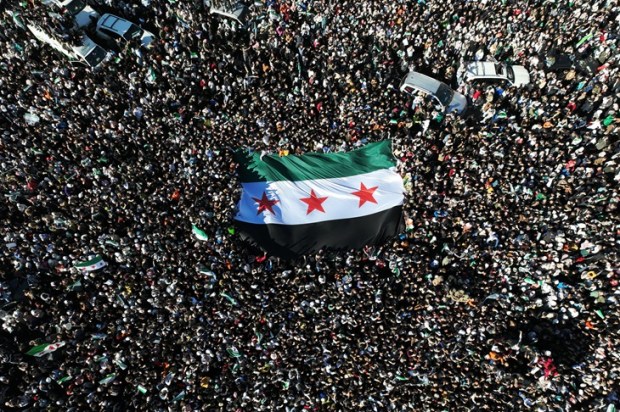

As schools and churches reopen across Syria following the toppling of the Bashar al-Assad regime, a mood of relief is peppered with the fear of ongoing Israeli attacks.
Additionally, and with the cauldron of sectarian conflict aside, fears of mass migration into Syria and other uncertainties are legitimate as rebel leaders hold talks with the US concerning sanctions and the future, Secretary of State Antony Blinken reported.
Hundreds of Syrians from Turkey – mostly from Aleppo – are pouring through the western border unsure of what they will find, but desperate to reunite dismembered families and missing relatives lost in the dungeons of Assad’s prisons. In the last few months, Syrians from Lebanon entered Syria as they fled Israel’s intense operation on Hezbollah.
The reverberations of the new government run by Abu Mohammad al-Jolani are already unfolding far beyond the Middle East. Germany recently paused all asylum claims for Syrian refugees, and its far-right political party, the ultra-nationalist Alternative For Germany (AFD), is issuing newly galvanised calls for Syrian refugees to leave Germany (which is presently home to 1 million Syrian refugees).
Britain, France, and the Netherlands, following Germany’s lead, have cancelled asylum requests for Syrian refugees.
Other European nations, already impacted by immigration since the Syrian civil war, are likely to feel emboldened amid the ranks of nationalist or ultra-nationalist populist movements. The fear is that more xenophobia and anti-immigrant sentiment will develop.
Meanwhile, for Turkish President Recep Tayyip Erdoğan, the recent events in Syria are also a political silver lining. Turkey is unstable with cumulative inflation standing at almost 50 per cent. Completing his second term as President, Erdoğan is likely to seek a change in Turkey’s Constitution to allow him a third term.
As a distraction, Turkey appears to be using its rising political capital in Syria where Erdoğan seems to have beaten the retreat of both Iran and Russia. This is a welcome foil to turn the Turkish electorate, keeping focus away from the domestic issues plaguing the country.
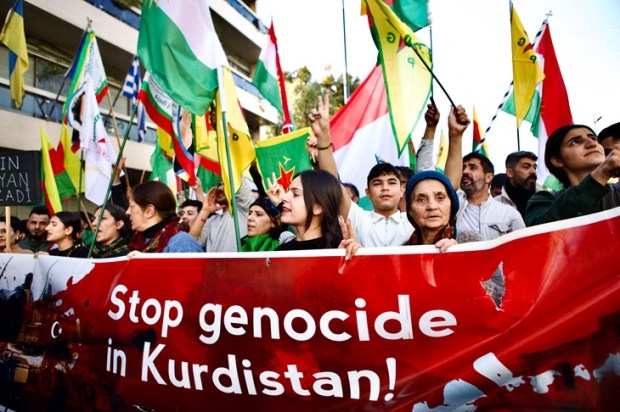
Any region of Syria with guaranteed Kurdish semi-autonomous or autonomous rule would benefit the stability of the new Syria, the minorities that inhabit Syria, and the surrounding region (including the stability of Israel).
Any autonomous Kurdish area – which includes contiguous borders with Iraqi Kurdistan – would also benefit the stability of Northern Iraq and help decrease conflict in the broader region. Christians safeguarded by the Kurds in Northeast Syria are now awaiting their fate – and the answer as to whether Hayat Tahrir al-Sham, or HTS, truly are jihadists turned-secular pluralist democrats. Rather than take the chance, the West – including the US, Europe, the United Nations, and other international axes of power – must support the Kurds.
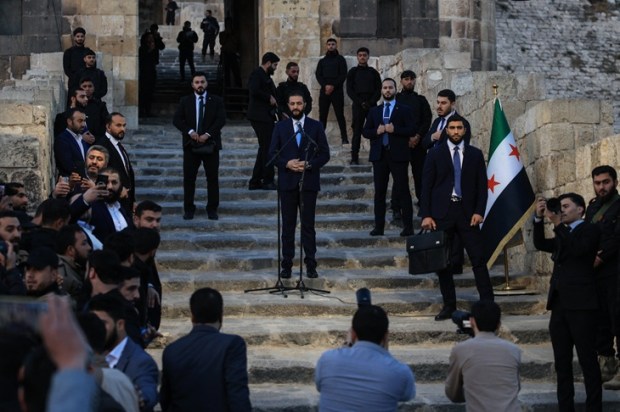
Predictably and cunningly, HTS is now rebranding itself as a moderate Syrian national governing body but was until recently recognised as rebranded Jamat Al Nusra which was formerly Al Qaeda of Syria.
The speech that Al Jolani – now referring to himself as President Ahmed of Syria – delivered recently from the pulpit within the auspicious Umayyad Mosque – was nostalgic of the proclamation that Al Baghdadi Caliph of the ISIS Caliphate in Iraq and Syria made when introducing himself to the world, also at a pulpit, also in a mosque in Mosul. The symmetry is chilling.
Though Assad’s base of the Alawite minority (with Shia origin) had become disenchanted with Assad (despite years of loyalty to the brutal dictator), they have openly celebrated his fall in recent days. Yet there remain real fears that this community, which is centred mostly on the Western Coastal region of Syria, might face violent retribution from Sunni Islamist rebels including the HTS.
Any sectarian strife could lead to a massive efflux of Iraqi Shia militia from Iraq and into the new Syrian conflicts. Indeed, the very formalised Shia forces of the Hashd Al Shaabi govern every checkpoint in Federal Iraq. These are checkpoints I have crossed through from Iraqi Kurdistan into the Christian enclave of Ninenveh in Federal Iraq in 2019.
Hashd Al Shaabi, one of Iran’s last remaining proxy assets, is better armed, independently financed, and more powerful than the Iraqi army itself.
According to my contacts in Iraqi Kurdistan, these forces are already aligning on the Iraqi Syrian border ready to go to war if sectarian conflict breaks out. They would side with the Shias in Syria and fight intensely against the Sunni (Salafi-jihadist) Islamist HTS. Any sectarian war could also lead to an enormous influx of foreign fighters internationally. With the years of arms pouring into the Russia/Ukraine conflict, and the active arming of factions by international powers, Syria is saturated with black market weaponry.
Turkey, recognising the strengthening of the Kurdish autonomous region in Iraq and sensing the hardening resolve of the Kurdish administration in Northeast Syria, is intensely focused on aggressively pursuing its own interests. Those interests apparently centre on deterring and dismantling Kurdish influence and seizing territory from the Kurds in Syria to weaken their stance at any future negotiation.
Many purport that diminishing Turkish influence over Syria will be to the benefit of the region and reduce the likelihood of expanding internal conflict.
Israel has already explicitly aligned itself publicly with the importance of an intact Kurdish region, in public statements both by the Israeli Foreign Minister and the Israeli military. Israel refers to the stability of the Northeast Syrian governance of the Kurds.
‘The attacks on the Kurds, as we saw yesterday in Manbij, must stop. There must be a commitment and actions by the international community to protect the Kurds, who fought bravely against ISIS. We have spoken with the US administration and other countries on this matter,’ Israeli Foreign Minister Gideon Sa’ar told reporters recently.
Cooperation between the Kurds and Israel has long been positive, dating back to the 20th Century. There seems little reason to assume this would not continue. But other than Israeli diplomatic statements and Israel’s appeal to the United States to stand by the Kurds, it is not clear how Israel might otherwise defend the Kurds.
Pluralistic non-Arabs – whether Israelis or Kurds – are the best inoculation against the return of Iranian-financed Islamism, the rise of international foreign fighters, and the expanding footprint of what may become an Islamist Caliphate. The Druze of Syria have already recognised this, choosing Israeli governance over what they anticipate Islamist HTS will emerge to be.
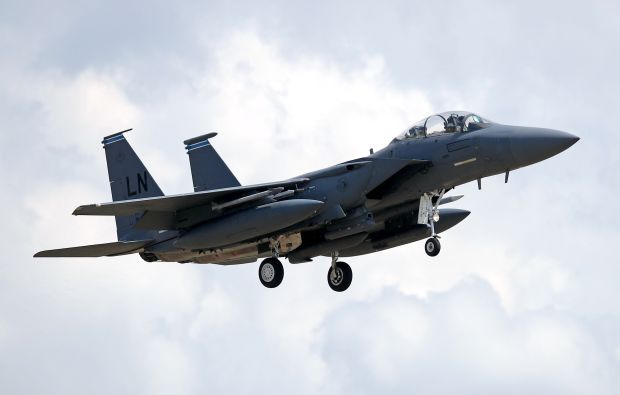
The United States would be highly advised to support the autonomy of the Kurds in Syria with a more emphatic operation, not merely projection, of US power. This would be by augmenting the regional American footprint through special forces, munitions, and full-scale diplomatic efforts to contain Ankara’s ambitions and buttress the Kurds.
There is no time to waste.
Qanta A A Ahmed, Senior Fellow, Independent Women’s Forum; Life Member, Council on Foreign Relations X @MissDiagnosis