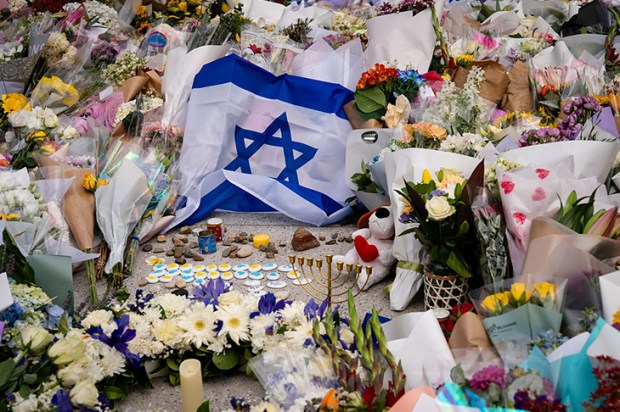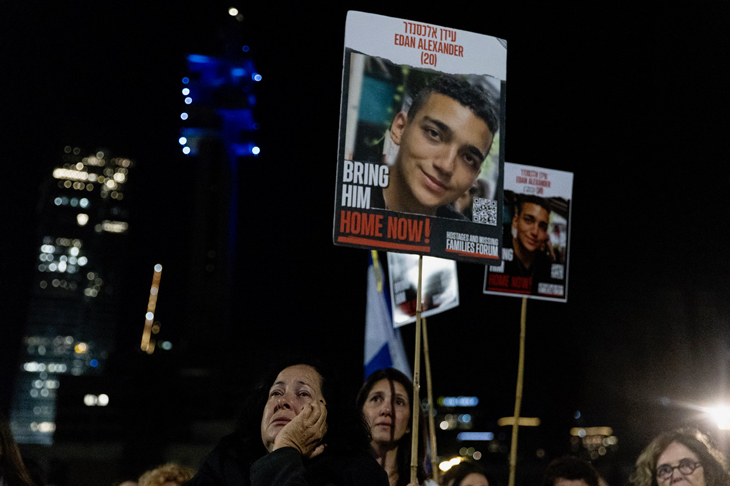
Edan Alexander is a 20-year-old American citizen. Barely an adult, he was kidnapped to Gaza on October 7th by barbarians on a rampage. For over 420 days he has been held in brutal captivity. For over 420 days his parents, Yael and Adi, have been trapped in their own living hell.
This week Hamas released a torture video of Edan, distraught and begging to come home. It was intended to provoke.
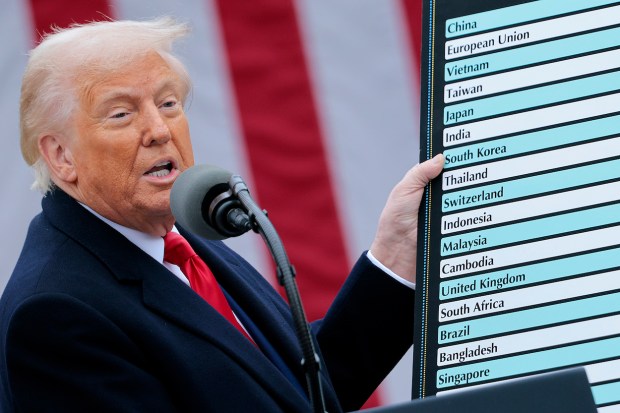
President-elect Donald Trump responded in no uncertain terms: ‘If the hostages are not released prior to January 20, 2025, the date that I proudly assume Office as President of the United States, there will be ALL HELL TO PAY in the Middle East, and for those in charge who perpetrated these atrocities against Humanity. Those responsible will be hit harder than anybody has been hit in the long and storied History of the United States of America. RELEASE THE HOSTAGES NOW!’
It’s said that history never repeats but it does rhyme. On 4 November, 1979, over 50 Americans were taken hostage in the US embassy in Iran. They were held in captivity for 444 days and released minutes after Ronald Reagan was sworn in as President of the United States on 20 January, 1981.
Early in the crisis, President Jimmy Carter sought advice from Herb Cohen, a professional negotiator, on how to persuade Iran to release the hostages. Cohen advised that Iran would not adjust its position unless it believed the US could give Iran something it wants or do something harmful to Iran’s interests, and that it just well might. He said Iran needed to be convinced that the risks of harm would only increase the longer Iran held out and that Iran would not bargain until it calculated that the disadvantages of keeping the hostages far outweighed the benefits.
Cohen recommended taking tough positions with follow-through, systematically and incrementally increasing pressure on the regime, including a series of two dozen sanctions to be imposed one after the other, one every five days.
His advice fell on deaf ears. Instead, there were concessions and accommodations, passivity and reactivity, publicly ruling out tough options or saying there were no options at all. Cohen described this as ‘a policy of patience without pressure, which was perceived as paralysis’. Iran saw weakness and that it was negotiating with an anxious buyer. This only encouraged it to hold out longer. After a few months, a frustrated Cohen gave up and went back to his day job. He later wrote that, ‘the Administration’s overall handling of this matter has even given ineptitude a bad name.’
In a television interview in 1980, Cohen predicted the date and time the US embassy hostages would be released. He outlined his reasoning in a written memorandum to Ronald Reagan a few weeks before the 1980 presidential election. Reagan’s campaign team had asked Cohen for background analysis on the hostage crisis and strategic advice on how to facilitate the hostages’ release. (The full advice is published in Cohen’s 2003 book Negotiate This!)
Cohen believed Iran would hold out as late as possible before the 5 November election when it figured it would be able to extort the maximum price from an administration desperate for a pre-election result. However, for various reasons, he believed it was already impossible for Iran and the US to reach a deal in the remaining weeks. Once 5 November passed, the bargaining power would switch and Iran would become a desperate seller particularly if there would soon be a new president planning a very different approach. Should Reagan win the election, Cohen reasoned, his inauguration as President would become the next deadline for Iran to do a deal. Reagan did win and Iran released the hostages a few minutes after he was sworn in as President, seven minutes after Cohen predicted.
Cohen advised Reagan to publicly signal that, as President, he would adopt a tough and radical departure from existing policies and also to maintain and boost Iran’s perception of Reagan as a shoot-first-ask-questions-later cowboy, who is ‘unpredictable and potentially dangerous’ and means what he says.
When asked a few weeks before his inauguration what terms he would offer Iran, Reagan replied that he did not believe in paying ransom for people who have been kidnapped by barbarians.
Trump’s statement leaves no doubt that 20 January, 2025 is a deadline for the barbarians holding Edan Alexander in captivity, but not just for them. Notice that Trump didn’t name Gaza in his statement, but the Middle East; he didn’t warn Hamas, but those responsible and those in charge. His message should signal to all in the region who have financed and enabled and justified and sheltered and emboldened the barbarity of 7 October.
Got something to add? Join the discussion and comment below.
You might disagree with half of it, but you’ll enjoy reading all of it. Try your first month for free, then just $2 a week for the remainder of your first year.