
From the early days of federal politics in Australia, conservatives have been split over issues such as free trade versus protection and support or opposition to conscription. The ‘broad church’ is to the Liberal Party what ‘solidarity’ is to Labor.
The uniting principle of the Liberal Party’s broad church has been opposition to socialism.
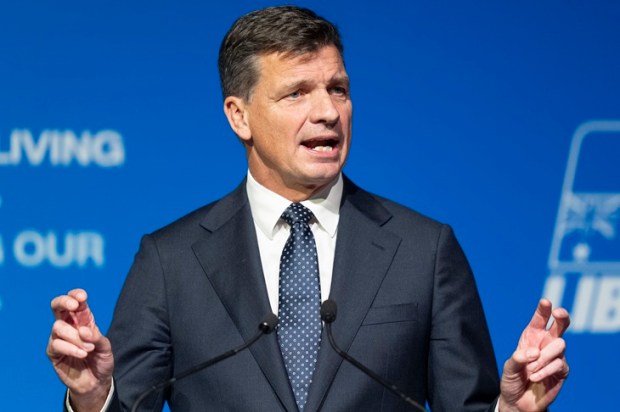
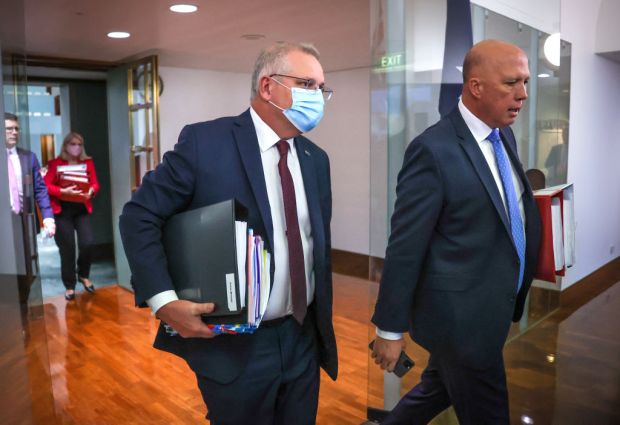
But in NSW recently, the Liberals missed the deadline for confirming local government candidates. This led Mr Dutton to appoint party elder Brian Loughnane to suggest a way forward. The result is that, from September 12 until after the federal election, a federal takeover of the NSW Liberals will occur.
And it may well have happened just in time.
Like the synagogue that Jesus cleared of the merchants and money-changers, the broad church in NSW has become a ‘den’ of incompetence. The broad church is not necessarily a bad thing, but it has fallen into disrepute in NSW in recent times.
Within the broad church, the battle of ideas has been the feature that distinguishes Australian conservatives from the groupthink of Labor. But lately, the battle for the NSW Liberals has been less about ideas and more about moving too far to the left.
And it’s not just in NSW. With Gerard Rennick becoming the fourth federal member to quit the Coalition since the 2022 election, the broad church appears to be experiencing a schism that won’t help rid Australia of the worst government in Australian history.
Rennick was effectively forced out of the Liberal National Party of Queensland (LNP) when preselectors moved him down to an unwinnable fourth spot on the LNP Senate ticket. Rather than run as an independent, Rennick has indicated that he will form the Gerard Rennick People First Party.
Fracturing the party in this way is the antithesis of its origins.
The Liberal Party of Australia was founded by Sir Robert Menzies in 1944, uniting numerous anti-socialist parties. The party evolved through the ‘fusion’ of the free traders and the protectionists that formed a series of parties beginning with the Commonwealth Liberal Party in 1909, through Billy Hughes’ Nationalist Party in 1917, and then the United Australia Party in 1931.
At the opening of the second convention in Albury NSW to finalise the structure of the Liberal Party, Menzies remarked:
‘Never in my life have I been so alarmed as now at the growing threat to all that is good in our beloved country.’
In coalition with (what is now) the National Party, the Liberal Party has been the most successful political party in Australian history.
It has always been a broad church, a concept best articulated by Liberal Party elder, John Howard:
‘The Liberal Party is a broad church. You sometimes have to get the builders in to put in the extra pew on both sides of the aisle to make sure that everybody is accommodated.’
Yet the Coalition’s historical divisions are always lurking in the background. In the post-war era, several former members have left the Coalition to form their own parties. These include Don Chipp, Pauline Hanson, Bob Katter, Nick Xenophon, Cory Bernardi, Clive Palmer, and Dai Le.
In the 21st Century, the Liberal Party has been divided by factions. Although these are less strictly codified than Labor’s factions, the Liberal factions tend to be based around personalities. During Scott Morrison’s tenure, the factions included the National Right, the Moderates, and the Centre-Right.
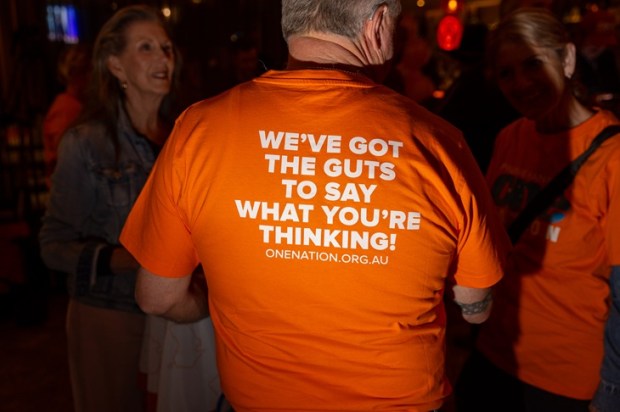
The destructive force of factionalism was most obvious during the early signs of the demise of the Queensland Division of the Liberal Party in the late 1990s. Long-serving Senator David MacGibbon, like Gerard Rennick today, was dropped to the unwinnable position on the Senate ticket. By the early 2000s, the Queensland Liberals were too busy fighting each other and won only 3 seats at the state election in 2001, the same number of seats as One Nation.
The NSW Liberals have been following the Queensland Division’s terminal trajectory and Mr Dutton is right to intervene now. At least in NSW, the local elections debacle has provided an opportunity to fix things before the division hijacked Mr Dutton’s very real chance of winning government next year.
The lesson is that factionalism doesn’t pay.
In the meantime, conservatives find our country once again threatened by socialist ideology in the form of identity politics and the Internationale’s penchant for weakness towards national security:
‘No more deluded by reaction On tyrants only we’ll make war The soldiers too will take strike action They’ll break ranks and fight no more.’
In an era where Woke tropes dominate schools, universities, workplaces, and even churches, there is a growing undercurrent of voters who are fed-up with identity politics and all its liberty-consuming cognitive dissonance.
People are sick of walking on eggshells around self-entitled, high-conflict people who are being supported by the Wokerati, or what Kevin Donnelly warned us about in 1992 as ‘political correctness’.
The biggest problem for conservatives is marketing their solutions to economic and social problems that rely on creating conditions that allow individuals to thrive.
Labor’s policy smorgasbord plays right into the hands of high-conflict people, promising non-responsibility using other people’s money.
According to the High Conflict Institute, high conflict people:
‘Blame others, engage in all-or-nothing thinking, avoid responsibility, display unmanaged or intense emotions, and use threats or other extreme behaviours.’
Sound familiar? It is where ‘cancel culture’ comes from.
These are the people Labor’s Left and the Greens play to, and the NSW Liberal Party’s Moderates have been flirting with them to try and garner votes. This has been a major mistake by the NSW Liberals.
Poignantly, veteran journalist Chris Uhlmann recently asked the question:
‘What is the Liberal Party for?’ With Uhlmann adding, ‘There are no easy answers … maybe it is time to dust off the liberal foundation stones and highlight the timeless ideas of individual freedom and personal choice.’
Indeed, the massive victory over the Voice to Parliament referendum provides the best guidance for winning the next federal election.
A former Labor staffer turned columnist incorrectly, in my opinion, suggested that ‘history doesn’t always repeat’ when he wrote of Dutton during the Voice campaign:
‘Dutton’s counter-intuitive counter-offensive was to announce his party would oppose a policy that the majority of Australians support… It has already cost the party a frontbencher and a former Indigenous Affairs Minister.’
The rest really is history. And it did repeat when the Country Liberal Party stood for law and order and defeated the Northern Territory Labor government in a landslide victory at the recent polls.
The Liberal Party has plenty of room for a broad church, but it must refocus on its long-term base. Instead of trying to capture the high-conflict people of the left, the party must enchant Aussie battlers and ordinary workers to its cause.
For these are the contemporary forgotten people of Australia.
The Liberal Party can build more pews on either side of the aisle. But what it must not do is pretend that the high-conflict people of the left will ever attend church. They won’t.
The ‘broad church’ needn’t be abandoned but factionalism combined with incompetence in the party’s administration is a sure-fire way to lose members.
Mr Dutton’s timely and decisive action has cleansed the temple of incompetence. Whether it has made enough room to entice the parishioners back to the NSW Liberals remains to be seen.