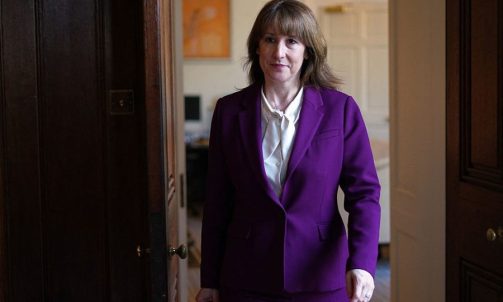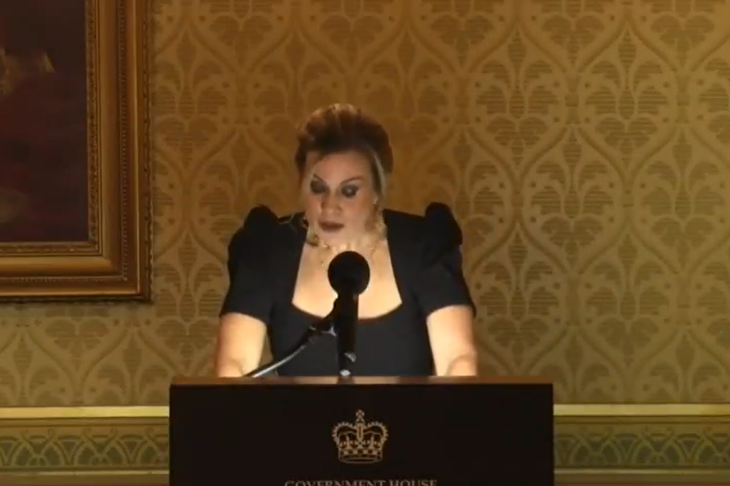
A new video of a talk by eSafety csar Julie Inman Grant is circulating on social media, revealing what many believe to be anti-conservative political bias. It has sparked fresh calls for her to be removed from the role and the eSafety Commission abolished.
Julie Inman Grant was headlining a Royal Society of NSW dinner last Thursday night at Government House in Sydney on the invitation of Governor Margaret Beazley. The Society shared the video online over the weekend here:
(Warning: the audio is atrociousness.)
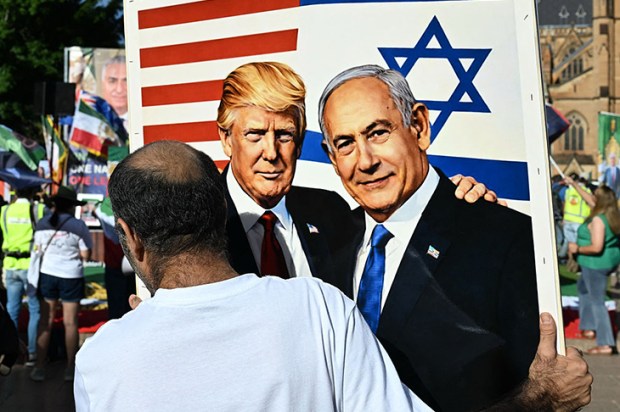
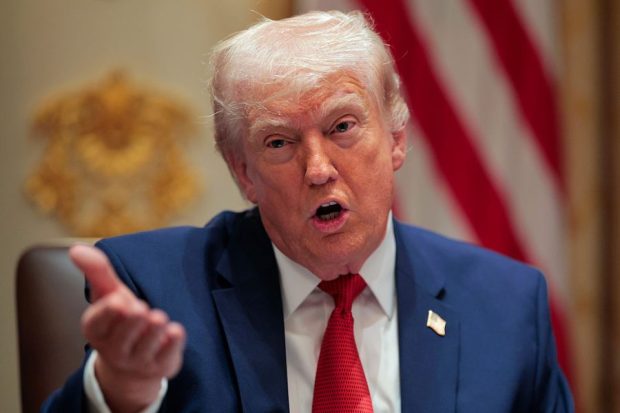
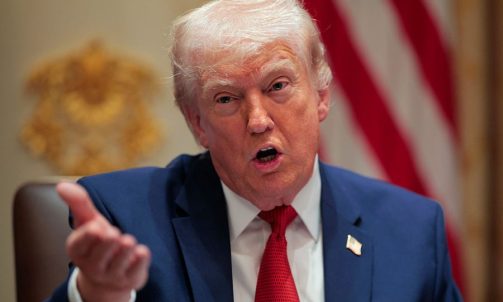
‘During his presidency Donald Trump not only savagely abused foes online with impunity, but was identified as a major super-spreader of mis- and dis-information,’ Inman Grant opined. ‘However, his online audience was so sizable, and his content went so viral, that none of the major platforms suspended him for repeated policy violations, making excuses for vaguely worded “exceptions for public figures”.’
No matter your views on President Trump, comments like these suggest a political bias in the office of the eSafety Commission. I’ve taken to criticising the eSafety Commissioner’s approach to digital censorship on my weekly news show The Other Side in the past.
This latest speech has exposed a favourable approach to Big Government interventionism. Let’s closely analyse the above quote…
‘Savagely abused’? According to who? ‘With impunity’? How do you know that? ‘Super spreader’? According to left-leaning big-tech employees, or a politically balanced sample of the broader community?
And the grand-daddy of them all: ‘mis and dis-information’. Who defines misinformation? And there-in lies the $64 million question at the heart of any sensible, honest debate on censorship. One that is glaringly omitted from the eSafety Commissioner’s speech.
It’s the omissions that I find most troubling. And they get even worse. There appears to be, at least in my opinion, a complete absence of any similar concern about the US media and tech giants’ collective suppression of the Hunter Biden laptop story prior to the 2020 Presidential election – a decision that, without doubt, influenced the election outcome – and which was an affront to the core democratic principle of a free press. Explicit statements that a laptop is a fake, when it is not, do not fall under the umbrella of misinformation, it seems, because it is never brought up as an example.
Let’s put aside the eSafety Commissioner’s troubling lack of awareness of the need for radical political neutrality in her role. Let’s also briefly put aside that she rarely ever speaks about the need to protect freedom of speech and freedom of expression from over-zealous censors. (These signs are alone enough for the Albanese government, and certainly, the alternative Dutton government, to re-think her critical position in our nation’s free flow of information.)
What’s most concerning is that the Commissioner seems to be oblivious to the idea that the light of truth might eventually win out – that by permitting conspiracy theory nuts on all sides of politics to thrash it out uncensored, their foolishness will become self-evident to all. We have had a taste of this in the lunatic illogic of some of the more extreme Trump assassination attempt conspiracy theories from both the fringe left and right this past week.
This is not a perfect idea, by any means. There’s a very strong pro-censorship argument dating back to the time of Plato and Socrates that fools need the wise ‘philosopher kings’ to guide their thinking. But in liberal representative democracies, we’re supposed to be fully aware of the risks of appointing kings to gatekeep information, and very slow to push the censorship button.
The Commissioner began her Thursday night speech with ample career self-promotion, establishing her connections with Microsoft in its earliest days, the WEF and its annual Davos meetings (her attendance at which is now funded by Australian taxpayers), and her presence at the embryonic stage of tech development at the end of the 1990s.
‘I know this time well having worked at what I call “tech policy ground zero” in 1996 as a young lobbyist,’ she told the crowd. ‘Being the 1990s, I had big ideals, big shoulder-pads, and even bigger hair and eventually found myself working for an unassuming guy named Bill at a little software company called Microsoft.’
She then went on to – rightly – outline the threats presented by misinformation and disinformation and the power of artificial intelligence. And this is where the real threat to free speech lies from bureaucrats and government bureaucracies. Her diagnosis of the problem is spot on. It’s her solution that is terrifying.
We have seen similar comments from censorial departments all around the world who fall back on broad statements with which most audiences and officials will rightly nod along. Censors can present themselves as ‘angelic white knights saving the little children from harm’ rather than devilish manipulators of a healthy democracy.
Who could disagree about the risk to our kids from dopamine-driven algorithms and cyberbullying? Or that algorithms prefer the more extreme political commentators over sensible centrists and lock people into unhealthy echo chambers of gradually increasing extremism?
The latter problem is not new to modern technology, by the way. It was the same in the newspaper age, the talk-radio age, and the cable news era, long before the advent of Twitter and TikTok. And governments love to control media and have historically censored politically in the name of ‘keeping us safe’ for centuries. It’s the pace and power that’s new.
But it’s the lack of caution and lack of any passion for the critical Western ideal of free speech, that is the most terrifying thing about an official in a role with enormous power.
In any case, it is far more incumbent on Peter Dutton – and his fellow centre-right sane members of the Liberal Party – to immediately, loudly, and clearly stand up against the trend to greater big-government online censorship.
This is a political battle – the potential for internet and social media censorship AI tools being forever deeply encoded with the biases of those who sit on the political left, is a huge opportunity for Anthony Albanese and friends to game the system once and for all.
It’s crazy enough sitting by while your political opponents fund a state radio, TV, and online content propaganda network to push their own ideology, to the tune of $1.2 billion, without so much as a peep of protest. It’s completely suicidal to allow the left to also dominate all the new commercial channels of information flow, vie ‘nice-sounding’ political censorship.
The threat to our kids and our public discourse and free expression posed by the eSafety cohort may be real, serious and scary. But the threat to the Liberal Party – and especially its more conservative-leaning centre-right factions and MPs like Dutton – is truly existential.
Damian Coory is a former senior broadcast journalist, media and communications expert and host of the weekly online Australian news commentary show The Other Side on YouTube and X @OtherSideAus