The federal government’s Modern Slavery Act 2018 was introduced to require larger entities to report suspected modern slavery risks to their operations and supply chains and the actions taken to address them.
In May 2023, a statutory review into the Act’s effectiveness by Professor John McMillan outlined thirty recommendations to reform it. The Act had already been amended to provide for the appointment of an Anti-Slavery Commissioner.
Professor McMillan’s intention was to align the Act with overseas regulatory trends putting emphasis on enhanced human rights, due diligence and, supply chain transparency. Penalties were recommended for non-compliance along with lowering the corporate reporting threshold to $50 million from $100 million of consolidated revenue. Other recommendations included a proposal to establish a formal public complaints mechanism.
While there is no globally agreed definition of ‘modern slavery’, the term is used to cover a broad range of exploitative practices. Oddly, it does not include reference to child labour.
When it comes to large businesses, ensuring supply-chain transparency can be challenging. External suppliers may run into the thousands of smaller businesses, potentially involving millions of workers. If suppliers’ identities are not true to label, discovering the ultimate source can be difficult.
For example, furniture manufacturers may claim that the timber used is from sustainable forests and harvested by reputable organisations when, in fact, it is illegally logged by slave labour. Authentication can be difficult.
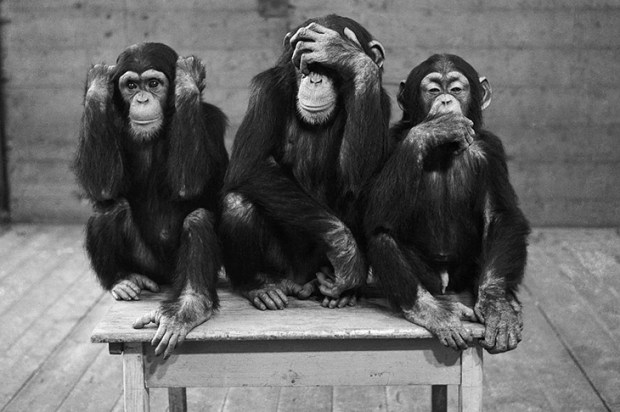
On the other hand, some jurisdictions are universally known for employing slave labour. Yet, because suppliers have a near monopoly, whether it be critical minerals or other products, or, because of price advantage, or, power politics, a sanctimonious, double-standards world turns blind eyes.
For example, the Democratic Republic of Congo (DRC) is endowed with exceptional natural resources including 75 per cent of the world’s cobalt. Despite its natural endowment, the DRC is among the five poorest nations in the world. An estimated 75 per cent of Congolese people live on less than $3.25 a day.
Indeed, a long history of conflict, political upheaval and authoritarian rule have led to grave and ongoing humanitarian crises.
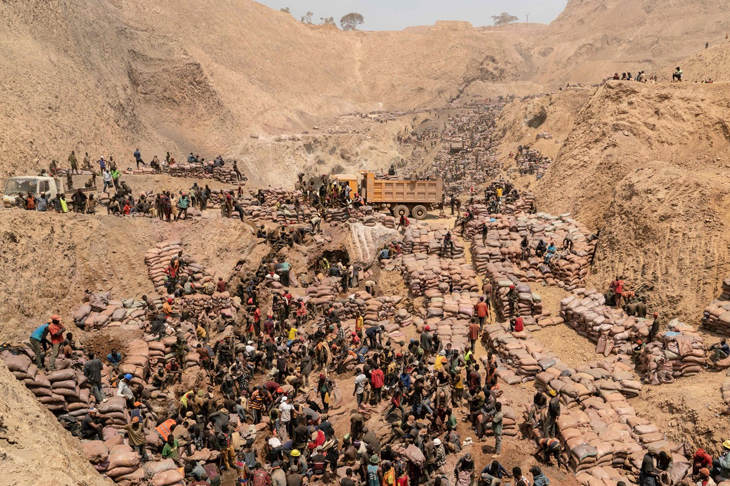
Today, the country is on the verge of anarchy making conditions conducive for the exploitation of people of all ages and genders. Indeed, of the 255,000 Congolese cobalt miners, it is estimated there are 40,000 children, some as young as six, who are ruthlessly exploited to work in toxic pits under brutal, often violent, conditions. Women miners are subjected to sexual abuse. All are overseen by armed militia. It is slavery of the worst kind.
Production from these mines accounts for around 20 per cent of the country’s total cobalt output. Most of it goes to Chinese battery manufacturers who use it in the production of lithium-ion batteries, a necessary ingredient in smartphones, tablets, laptops and electric vehicles.
An Amnesty International research report, in collaboration with African Resources Watch, traced how traders buy cobalt from these illegal mines and sell it on to firms like Congo Dongfang Mining, a wholly-owned subsidiary of Chinese mineral giant, Zhejiang Huayou Cobalt Limited.
Of course, slavery doesn’t phase Chinese companies. After all, the Chinese government operates 380 slave labour camps in the Xinjiang, Uighur Autonomous Region and in Gansu province. Here, Muslim minorities and their children are forced to manufacture batteries, textiles and solar panels. Here, females have their hair shaved on admission, which is then used to make wigs for a global market of which China has an eighty-per-cent share. Children living in these camps are mobilised to pick cotton and forced to meet daily quotas. Camp workers live under constant surveillance and must work extreme hours. Reliable reports tell of torture, abuse and sexual violence.
More recently Christians are being detained in secretive, mobile ‘transformation’ facilities and sent to internment camps to make them renounce their faith. The official purpose for all these camps is either ‘re-education’, ‘poverty alleviation’, or ‘to prevent terrorism’.
Regardless, practices are on such a scale and involve such levels of abuse that they clearly qualify as crimes against humanity and genocide.
While Sinophiles argue that, over time, building commercial bridges with a growing China will lead to more democratic government, more freedoms and greater geopolitical cooperation, it is a naive view which completely misunderstands the mindset and intentions of President Xi Jinping and the Chinese Communist party.
Xi Jinping is as an old-fashioned Marxist-Leninist and has no time for personal freedoms. He sees financial independence as a threat to the Chinese Communist party. To him, empowerment of individuals is a ‘bourgeoise fallacy’ and free speech, equality under the law and other human rights must be ‘controlled’ or ‘delayed’.
Indeed, through multiple purges he has put his beliefs into practice and made it clear that no one is safe. By expanding his authority and through increased central planning, he has ensured politically, socially and economically, the Chinese people do what he says.
In this regard, the contrast between the DRC (the Congo) and the PRC (China) could not be more stark. The DRC is a failed state where anything goes. The PRC is a totalitarian state which deliberately sponsors modern slavery and sits behind a facade of righteousness.
For Beijing, Western huffing and puffing count for nothing. After all, more than eighty United Nations member countries support China’s position, saying they oppose interference in other countries’ internal affairs in the name of human rights.
Even the so-called leader of the ‘free world’, US President Joe Biden, seems resigned. When asked about China’s genocide of Uighur Muslims he meekly conceded that, ‘Culturally, there are different norms that each country and their leaders are expected to follow.’
Sadly, this is the hypocritical world we live in. Only the West outlaws modern slavery. Only the West takes emissions reduction seriously. It can achieve neither on its own. And, ironically, slavery is hostage to Western climate policies.
Some day the West may wake up to the fact that the road to hell is paved with good intentions.
Got something to add? Join the discussion and comment below.
You might disagree with half of it, but you’ll enjoy reading all of it. Try your first month for free, then just $2 a week for the remainder of your first year.