The initial stages of cleantech in Australia were filled with enthusiasm and good intentions, steered by visionary entrepreneurs and venture capitalists, who were poised to provide the remedy to address climate change. While the significance of renewable technologies is now indisputable, it is crucial to recognise the hurdles and constraints they face, coupled with the cost of the monumental task of transitioning to Net Zero.
In 2021 the ANU and the Crawford School for Public Policy estimated that the price tag for achieving Net Zero emissions in Australia by 2050 would be $5 trillion. Most recently, the Commonwealth Bank’s 2023 Climate Report projected that Australia will need to allocate an annual budget of $100 billion over the next 27 years to attain the Net Zero target – a total reaching $3 trillion.
These figures exclude a multitude of variables encompassing the competition for critical minerals, the fierce contest for control over supply chains, the global race for capital, high-interest rates and cost of living pressures, challenges in manufacturing capacity, the expansion and fortification of transmission grids and infrastructure, shifts in public attitudes, and a myriad of other influential factors.
The urgency for Australian policymakers to reconsider their strategies in 2024 is paramount, as more voters question the ongoing painful costs of emission reduction.
To balance the financial implications for taxpayers in emission reduction efforts and the fulfilment of our Net Zero commitments, a decarbonisation plan that encompasses all available technologies is an essential initial stride, demanding meticulous and impartial independent cost modelling drawing insights from comparable nations.
Regrettably, from my perspective, our government has not yet presented a measurable, impartial, and comprehensive energy plan. The current short-term strategy, aiming for Net Zero by 2050 through 100 per cent reliance on renewable sources, lacks a pragmatic approach and a precise cost estimation. It also overlooks valuable opportunities for exploring alternative decarbonisation initiatives, denying us the chance to glean insights from global experiences and steer clear of potential pitfalls.
To begin, it’s disheartening to observe the over-reliance on a single report, the CSIRO’s GenCost, as though it holds the definitive answers for our energy strategy. Reports should ideally serve as informative tools rather than rigid policy dictators.
The recent updates in GenCost emphasise renewables as the most cost-effective energy source, dismissing nuclear as excessively expensive based on estimates from a hypothetical reactor, rather than actual representative reactor costs. This raises questions about the validity of the comparisons made.
A fair analysis should have considered the escalated costs associated with various renewable sources, including PV solar, onshore and offshore wind, battery storage, and transmission projects. System-wide life cycle considerations, such as the financial implications of their short life and capacity over-build requirements, have been either understated or neglected. For instance, GenCost’s projections for future energy storage, a critical element for stabilising intermittent renewables, appear speculative and likely underestimated. This is particularly notable given the dynamic nature of climate and weather patterns.
From an engineering standpoint, the complete replacement of proven, energy-dense coal generation with less reliable energy-dense sources from wind and solar, without adequate support from high energy-density generation is a major concern. Baseload power is crucial for maintaining a stable grid, ensuring a constant and sufficient electricity supply even during periods of low consumption.
Adding to the complexity, the report hasn’t sufficiently considered the human or environmental costs associated with their advice, such as the system-wide impacts of mining and minerals processing during the life cycle of renewables. Objective advice on these critical aspects must be provided with due diligence and impartiality.
Another deficiency in the current Net Zero plan is in the realm of geopolitical security, which heavily relies on China as a major supplier. China controls over 80 per cent of the global market share in solar manufacturing capacity and exercises considerable influence in the extraction and processing of rare earth and critical minerals worldwide. Beijing strategically wields this market dominance in progressively coercive ways: between 2009 and 2020, China escalated restrictions on such exports on nine occasions – more frequently than any other supplier, underscoring the extent of its influence. (Source: ASPI Opinion).
This dominance highlights a conspicuous gap in Australia’s national integration between industrial and energy policies, representing a missed opportunity to foster new industries and safeguard critical processes and manufacturing sectors within Australia.
The existing plan demands a more comprehensive and strategic approach, engaging in deeper consultations with electricity and energy experts, collaborating with international agencies, fostering partnerships with other like-minded jurisdictions, actively involving industry and communities and implementing a thorough cost modelling.
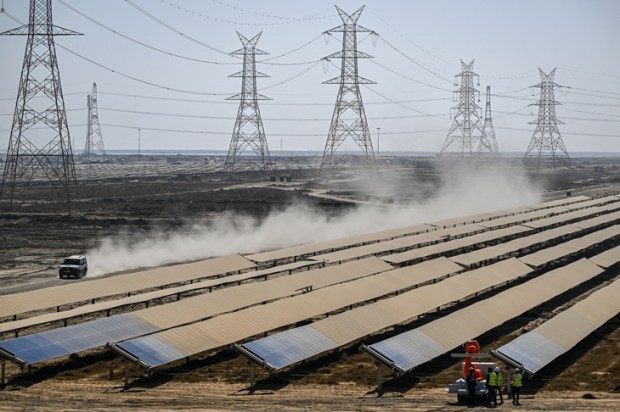
Finally, consultations with environmental agencies are imperative. This underscores a crucial aspect that the current GenCost report seems to overlook entirely – the environmental impact of renewables. For instance, when comparing land requirements, nuclear power demands only 1/2,000th as much land as wind and 1/400th as much land as solar. According to US government data, a 1,000-megawatt wind farm necessitates 360 times more land than a nuclear facility of similar capacity, while a solar plant requires 75 times more area.
The International Energy Agency estimated that for every megawatt of capacity, offshore wind needs a staggering 15.5 tonnes of critical minerals. Onshore wind needs about 10 tonnes per megawatt, followed by solar photovoltaics (PV) at about 7 tonnes per megawatt.
Understanding all factors and addressing these deficiencies should be integral to our decarbonisation efforts, with a paramount focus on safeguarding both Australia’s energy security and the environment.
There is still an opportunity for our policymakers to articulate a more comprehensive vision and an improved plan. Let’s hope they hear the message and read the signs.
Cristina Talacko is the CEO of Coalition for Conservation, an environmental charity working with centre-right politicians on energy and climate policy.