Of what can we be certain regarding the two Digital ID Bills opened by our federal government to public comment last month?
We can be certain that the federal government appears frantic to vote it through. Since a Senate vote on November 30, 2023, established a Parliamentary Inquiry with submissions due 19 January, and with the Wayback web archive recording its first facsimile of a public submissions page on December 16, the miniscule time frame and clash with the Christmas/New Year holiday season would seem to only stifle meaningful input.
What is also certain is that there is a genuine need to verify people’s identities, given horror scenarios in the past where single individuals with multiple fraudulent identities have milked the Australian welfare system. This should concern us all collectively. Conversely, at the individual level, criminals regularly steal personal data to illegally obtain bank loans and make purchases using a victim’s bank details and information. Our most poignant examples of data theft have been the Optus and Medicare security breaches. Curiously the latter appears lost on our federal politicians, who promise an impregnable Digital ID system. Medicare data was likewise government-secured.
In all of this, there is a crucial recognition that requires explication – that the government’s collective need for iron-clad identity control mechanisms is rather being publicly sold as an individual end-user convenience where messy paperwork checks are obviated under the new system. But such cheery marketing of time-saving convenience comes with a thoroughly unacceptable price – an overwhelming likelihood of almost every human right and freedom being bulldozed as this centralised control system succumbs to its own internal imperatives.
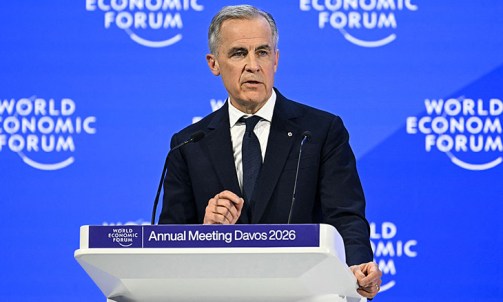
Digital ID has been the passion of the world’s richest men and women, who as members of the World Economic Forum number about three thousand. It does not appear to have ever arisen from grassroots citizens clamouring for more government control. The World Economic Forum’s webpage ‘How digital identity can improve lives in a post-Covid world’ displays an orderly graphic with their vision for Digital ID as the futuristic key to unlock each individual’s access to international travel, banking, government and medical services … and even social media. But a logical implication is that the same hand that giveth these things might also taketh away.
This might best be illustrated by New York City Mayor Eric Adam’s May announcement that they would be tracking each household’s carbon footprint, monitoring food consumption, and putting caps on red meat served in public institutions. With the World Economic Forum pressing for governments to adopt Central Bank Digital Currency, the control system would become complete, where similar caps on buying red meat could be imposed on credit cards by government fiat.
The federal government is painfully aware of this criticism and is bending over backwards to assure us that their legislation has safeguards to protect our freedoms. Built into the legislation are clauses ensuring that human choice is respected, that Digital ID is not mandatory and that alternative non-digital ID systems must remain in place. Those promises are made, of course, in the wake of the Covid debacle, where all our legislated freedoms were swept away on the whim of a Premier or Chief Health Officer.
Furthermore, claims that the current MyGovID system is not mandatory for large swathes of Australians are simply false. Company directors were given absolutely no choice in the matter, and those who deal with federal government services like Centrelink have been given little other practical choice. The rapidity with which company directors were compelled into the system is a cautionary tale on how quickly Australian freedoms could be removed.
So here lies the central problem for these Digital ID Bills. If personal convenience is sovereign, there are viable decentralised, blockchain-enabled systems already being built that will offer everything the government’s system promises without the inexorable drift into the haunting nightmare of 1984.
Government-controlled Digital ID will inevitably work best as an all-ends-in system, where control is peak-effective when enabled to compare and analyse the totality of the population. Digital ID enthusiasts have long repeated that their systems will leave no person behind, but it is precisely that need for totality that breeds totalitarianism – the very threat the new centralised Digital ID Bills pose. It is a price so draconian as to be unthinkable, except, it seems, for our politicians.
Too often forgotten is that benevolent governments also wield police forces. Never forget the spectre of Dan Andrews’ very real police brutality towards citizens who merely wanted to publicly highlight what are now immutable truths – that the mandated vaccines were totally ineffective and were anything but safe.
Here precisely is the problem with such a centralised government control mechanism – it has a brute force behind it that citizens can never withstand. If governments can snatch our constitutional and UN-declared freedoms on a whim, why would we trust their blithe promises of ongoing choice and freedom around Digital ID? With the very fabric of universal rights and constitutional freedoms at stake, why is this legislation not being put to a Referendum where we make the decision, not they?
So back to the first question – of what can we be certain regarding the Digital ID Bills? It is frightfully important that a sober assessment is made of where Western governments sit in 2023 on the issues of freedoms and rights.
Most alarming is that Western governments appear as handmaidens to international organisations such as the World Economic Forum and its proposed Great Reset. Common people clearly see that if they, in 2030, own nothing and the Forum’s rich own everything, they will be neither happy nor free. Loss of property ownership is a recipe for totalitarian control. The fact that the same body’s Young Global Leaders program has trained so many world leaders in their image is warning enough.
The threat of government seizing control of privately owned assets has already been visibly demonstrated in 2022 with Trudeau’s government freezing the bank accounts of those supporting a human right called protest. This is the reality we now live in. Likewise, governments the world over have been working in secret since May 2022 to give sovereign control of pandemics over to the failed World Health Organisation which helped coordinate the mandated and failed vaccines. The hidden world regulations summarily dismiss almost every human right related to arbitrary detention, freedom to travel if well, expressing opinions and peaceful assembly. With all G20 countries signed on to a global vaccination passport, again for abysmally dangerous vaccines, what trust could be left in government?
Then with global applause for China’s totalitarian social credit score, where citizens are deprived of travel for their political beliefs, coming from the world’s rich and its political class, a totalitarian future appears a certainty. How can we be sure? The present government is still chafing at the bit, seeking to introduce the full government suppression of free speech.
The Australian Digital ID Bills have to go.