
It is an interesting, if not depressing exercise to look at what the notoriously woke Victorian Association for the Teaching of English (VATE) is recommending that young adults read.
The YA Book Stack podcast, hosted by VATE’s Education Officer, Emma Jenkins is an ‘in-conversation series highlighting new and diverse voices and texts for students in the middle years.’ The line up of authors reveals that VATE appears to be fixated on just two things: who is sleeping with who, and what colour their skin is. VATE, together with the interviewees, are determined that 12–16-year-olds should be as interested and engaged in these superficialities as they are.
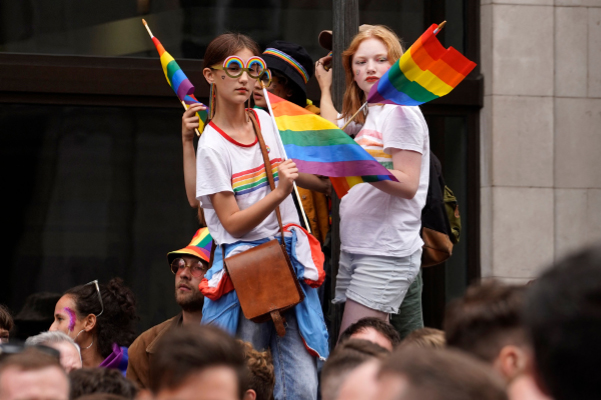
As one would expect, LGBTQIA+ themes are overrepresented. In the list we find Will Kostakis’ We Could Be Something, which is a gay love story between ‘two young men, each on their own journey of discovery’. Then there’s Holden Sheppherd’s The Brink, which covers the full gambit of ‘mental health, masculinity, family, friendships, sexuality and love’ and ‘same sex attracted people.’ The Boy from the Mish by Gary Lonesborough follows the adventures of a queer Indigenous boy, while Anna Whateley’s protagonist in Peta Lyre’s Rating Normal is a neurodivergent sixteen-year-old who falls in love with another girl whilst on a skiing trip.
For a bit of variety, VATE interviews Mall Nunn, whose Sugar Town Queens is set in post-apartheid South Africa and revolves around, you guessed it, female empowerment and racism. Meanwhile, racism, feminism and privilege are the main themes in Leanne Hall’s The Gaps, while Sydney- based Muslim author Rawah Arja’s has written a novel about racism and prejudice in The F Team.
Both the voices and the texts in this podcast are about as far from diverse as they could possibly be. They are narrow, unadventurous, entirely predictable, and desperately dull. The horse is long dead, but it is still being flogged.
As Speccie columnist Conor Ross noted, VATE is stacked to the rafters with teachers who delight in the demise of the canon, because ‘it is often their view that the form of traditional literature, as well as the content, is contaminated by the slew of likely -isms, racism, sexism, colonialism, et cetera.’ For them, the great literature of the Western canon has nothing to offer to anyone.
But they are so wrong. It has everything to offer to everyone. The ideas and themes treated in great literature are universal, not particular. They have endured and will continue to endure for generations because of their universal appeal. Before it went all ‘anti-Racist Shakespeare’, the Globe Theatre in London was able to put on Shakespeare’s plays to a full house in 37 languages, including Maori, Urdu and Swahili.
All school students should be exposed to great literature, because the great books speak to each and every one of us about our human condition. They speak to us about being rich, being poor, being happy and sad.
The books we devour as children and in our teens form us. They shape our world, give us insight, and teach us to use our imaginations. The total dependence on a thoroughly modern invention—identity politics—to analyse texts means all this precious insight and experience is lost. This enormous loss results in serious problems and raises serious questions.
We cannot weed out bad ideas and develop the good if we insist on restricting our thinking to the unsophisticated classifications of race, gender and class. Society cannot continue to progress if we choose to observe the world through such narrow and limited prisms. This monomania and obsession with identity politics is impoverishing rather than enriching the students, who will hardly be motivated to read any of these books, if all they are going to hear in the classroom is the same old tropes of gender and race.