‘Victoria joins NSW in saying no to “Coalkeeper,” ran the headline in Renew Economy in September 2021. ‘Coalkeeper’ was the disparaging name that Big Renewables and their political champions gave to a proposal to pay fossil fuel generators not just for the energy that they supplied but the critical backup they provided to highly subsidised renewables. Without that backup, Australians face blackouts and businesses face being pressured to load shed to help keep the lights on.
The plan was devised by the Energy Security Board (ESB) and backed by the then-federal Minister for Energy and Emissions Reduction Angus Taylor. The proposed mechanism was a capacity market to provide a stream of income to power companies that guarantee to provide energy which can backup renewables.
Capacity markets are commonplace in energy markets but the fact that the companies providing the backup were coal or gas-fired power stations infuriated the renewable-obsessed state governments of NSW and Victoria.
In September 2021 NSW Minister for Energy Matt Kean claimed there was no need for a capacity market or to ensure the continued operation of fossil-fuelled backup. In response to a call by the UN for wealthy countries to phase out coal by 2030, Kean said ending coal-fired generation by 2030 was entirely feasible. It was quite a boast given that NSW has the biggest coal-fired fleet in Australia, with more than 10GW of capacity. Kean put his faith in his legislated renewable energy plan – the biggest in the nation’s history – with five renewable energy zones to provide 12GW of renewable energy and 2GW of energy storage. He was also counting on the federally-backed Snowy 2.0 pumped-hydro project. By offering generous contracts guaranteeing that the state would purchase energy, NSW received expressions of interest to produce 34 GW of energy in New England and 27 GW in the Central West Orana zone.
Victorian energy minister Lily D’Ambrosio followed Kean’s lead. She claimed she wasn’t opposed to a capacity mechanism provided there were ‘no payments to incumbent fossil fuels generators’. This is absurd given that fossil fuel generators are the only energy suppliers in Victoria capable of backing up a grid supplied by 95 per cent renewable energy – the Victorian target for 2035.
In December 2022, a headline in Renew Economy gloated ‘Coalkeeper killed off as Labor states embrace Matt Kean’s auction and underwriting plan’. ‘Coalkeeper is dead,’ wrote Queensland energy minister Mick de Brenni whose state owns more coal-fired power stations than any other entity in Australia and has committed to closing them all by 2035.
But it’s one thing to legislate targets. It’s another thing for them to deliver reliable power in sufficient quantity. Renew Economy reported the gloomy news this week. Just 188MW of new capacity was approved in July and 1.2GW this year. That’s less than half the amount needed to reach Labor’s target of 82 per cent renewables by 2030 to fill the gap created by closing coal plants.
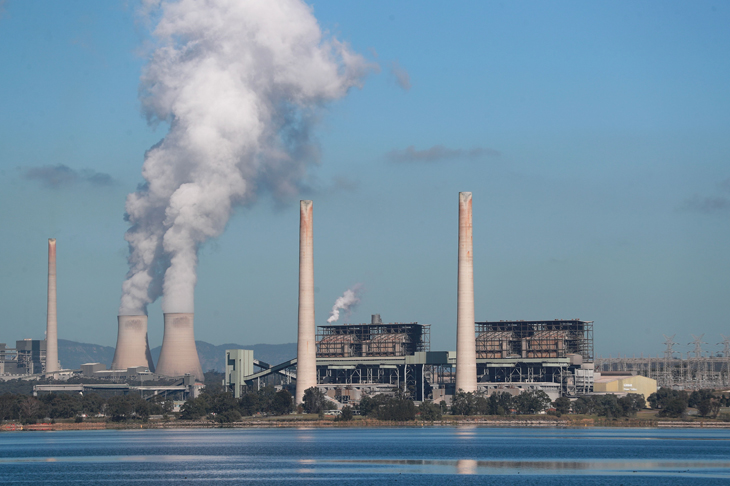
D’Ambrosio has been mugged by reality. She was forced to do a deal with AGL to keep open the Loy Yang A coal-fired power station which supplies a third of the state’s electricity until 2035. It was scheduled to close in 2048 but announced in February 2022 that it would close between 2040 and 2045. D’Ambrosio refused to disclose the cost of the deal. She also declined to disclose the cost of subsidies to keep open the Portland aluminium smelter – with power from Loy Yang – until 2035.
When AGL announced last September that the plant would close in 2035, federal Environment Minister Tanya Plibersek said, ‘The reason that this is happening is because the cheapest form of energy in Australia and globally now is renewable energy.’ In reality, it is because renewable energy is the most heavily subsidised and fossil fuels the most heavily penalised. In addition, the energy shortages created by renewables create greater profits.
Each year, the CSIRO and AEMO work with the industry on the NextGen report which gives an updated cost estimate for large-scale electricity generation. It supposedly shows that wind and solar are the cheapest forms of energy, however the report substantially overestimates the low capacity factor of renewables and underestimates the cost of additional transmission, battery and pumped hydro storage, land, and backup.
We can get an idea of the gap by comparing federal Labor’s estimate of the cost of its 2030 renewable electricity target of 82 per cent which it claimed was $78 billion before the last election whereas Australia’s former chief scientist Robin Batterham put it this year at $1.5 trillion.
NextGen also overestimates the cost of nuclear energy which it says is more expensive than wind and solar. Compare Ontario, which gets around almost 60 per cent of its electricity from nuclear power, with South Australia which has the highest level of wind and solar in Australia. The cost of electricity in South Australia is more than three times higher than in Ontario.
In the NSW election in March, Kean suffered a 12 per cent swing against him in the primary vote and the government lost office so he didn’t have to face the embarrassment of negotiating with Origin to keep the Eraring power station open. It was originally slated to close in 2032 but last year its retirement was bought forward to 2025 because it was deemed unprofitable.
An independent report commissioned by the new NSW Labor government recommended the state keep Eraring open with the establishment of a mechanism to manage the orderly retirement of fossil fuel generators. That sounds like the establishment of a capacity market. Last year AEMO, which was managing the auctioning of Kean’s renewable energy contracts, warned that NSW would experience shortfalls in electricity if Eraring was retired in 2025.
Kean said in December 2020 that building new coal-fired plants was like going back to Blockbuster video after getting Netflix. That hasn’t worried China. Chinese imports of coal from Australia surged to their highest levels in three years in July after bans imposed in 2020 were lifted on 18 May. It approved the construction of an additional 106 gigawatts of coal-fired power in 2022, four times higher than in 2021.
Unlike in Australia, these projects are being built in a matter of months. For the foreseeable future, it seems we are all Coalkeepers now.
Got something to add? Join the discussion and comment below.
You might disagree with half of it, but you’ll enjoy reading all of it. Try your first month for free, then just $2 a week for the remainder of your first year.