Driving from Charles De Gaulle airport into central Paris one can believe the plane had diverted to Manila.
Along the 30 kilometres of highway, towering weeds flourish. Piles of rubbish are strewn all around and almost no hard surface escapes graffiti shouting coded messages or calls to action. Overpasses and weeds provide shelter for the many, mainly African, homeless people. The contrast between this squalor and the beautifully preserved grandeur of seventeenth- and eighteenth-century central Paris couldn’t be more stark.
Without these architectural reminders it would be easy to forget France was once the envy of the world, a time when kings, queens and nobility lived conspicuously privileged lives, depending on the working class to pay the taxes which supported them.
Even in the early days of the present Fifth Republic, France was a force to be reckoned with. It was renowned for Europe’s fastest trains. It co-created the Concorde supersonic passenger plane and it dominated the then newly established European Economic Community, headquartered in Strasbourg, even bullying the Germans into accepting the euro. At one stage, the French president virtually spoke for all Europe.
Predictably, as the dead hand of socialism made its presence felt, taxes increased, (now one of the highest tax burdens in the world) and growth, innovation and productivity slowed. Public debt will soon cross the €3 trillion threshold (around 114 per cent of GDP). Labour laws and uncontrolled migration have led to stubbornly high (7.2 per cent) unemployment. Almost 60 per cent of French GDP is state spending. The recent decision to ram through an increase in the pensionable age reflects concern the government is running out of other people’s money.
The Fifth Republic’s constitution gives the executive extraordinary power to overrule the parliament, to pass laws without a vote and, to treat the rest of France as a colony. It confirms in the minds of many that President Emmanuel Macron is a jumped-up little ex-banker posing as a king.
Adding to French woes, the pursuit of zero emissions has seen French energy prices climb 25 per cent, prompting the Greens to complain that ‘instead of ambitious cost-of-living compensation, you’ve given us crumbs’. ‘We wanted an ecological transition, you’ve given us more carbon. You are making an historical mistake, our society is suffering….’
An historical mistake it may be, but doubling down on failed ‘equity’ agendas continues to benefit the rich, weakens the poor and will ultimately spell the end of the middle classes.
It is tempting to quote Jean-Baptiste Karr’s famous aphorism, ‘Plus ça change, plus c’est la même chose’ (the more things change, the more they stay the same), except for one intractable difference. France is bedevilled with growing cultural and religious tensions.
Even the once-sacred motto ‘Liberté, égalité, fraternité’, which is ritually drilled into primary school children and appears on coins, public buildings and monuments, is now being depicted as non-inclusive. Which means repeating is not necessarily believing. Moreover, according to Amnesty International, the French government’s rhetoric on free speech is not enough to conceal its own shameless hypocrisy. Amnesty claims thousands of people are convicted every year for ‘contempt of public officials’.
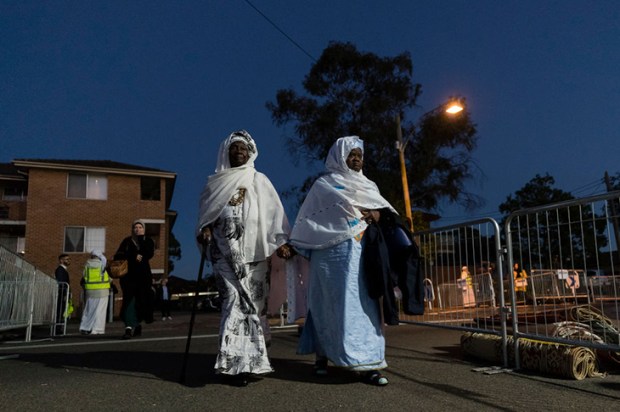
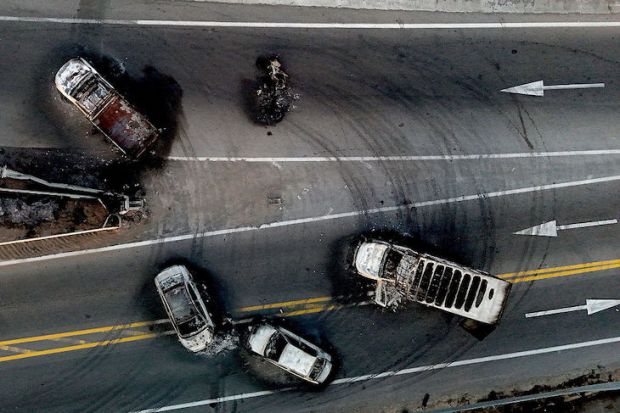
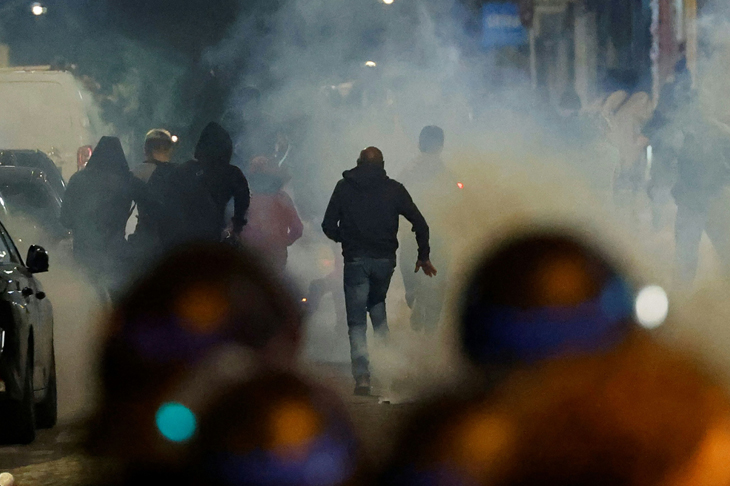
The recent, apparently needless, police shooting of a young Algerian man, led to five nights of violent protests in major cities. Yet it says something about prevailing public sentiment and the over-representation of North Africans in crime statistics, that the policeman charged with the offence received more than five times the funds for his legal defence that the deceased’s family received in public support.
This is unlikely to be an isolated incident and festering resentments and suppressed frustration are likely, at some point, to threaten the Fifth Republic’s survival. Relying on the frequent deployment of 45,000 police has its limitations.
France is a long way away, but a case of measles is the same wherever you see it. And it is inescapable that Australia is now presenting with many of the French symptoms. They may be less severe, but the underlying condition is unmistakable and progressing rapidly.
While Australia is in better fiscal shape than France, that’s no reason to be smug. France has fully embraced nuclear energy, whereas Australia’s amateurish approach leaves it dangerously exposed to destructive supply and price shocks.
Like France and without regard for longer-term social consequences, Australia has encouraged increasing waves of unskilled and undocumented migrants. While earlier waves were expected to integrate, over time, cultural segregation has been encouraged and politicised under the benign banner of ‘multiculturalism’.
Less homogeneity has meant traditional values and previously accepted moments of national pride are increasingly open to question and misinterpretation, including charges of white supremacy. The government’s decision to push for institutionalised racism and division by enshrining racially based privileges in the constitution, supports this narrative.
Little wonder symbols of national unity are rapidly disappearing. Rather than learning to be proud of their heritage, our children are being indoctrinated to feel eternally guilty. As feelings substitute for education Australian and French standards are materially deteriorating, a serious long-term impediment to growth and social stability.
Meanwhile, Canberra is breeding its own version of Parisian elite. Ever more detached from public sentiment and fundamental democratic principles, and fresh from suppressing alternative views and enforcing strict public obedience during Covid, it treats ordinary Australians like ignorant colonials. Proposed legislation will make it illegal to write or even speak out on any subject that is thought to be ‘harmful’. Big Brother, or, increasingly Big Sister these days, knows best.
In January 2015, Stephane Charbonnier, the editor of the French satirical magazine, Charlie Hebdo, along with eleven colleagues, was murdered in his Paris headquarters by jihadist gunmen. A champion of free speech Charbonnier had said, ‘I’d rather die standing than live on my knees’. Shocked by the slaughter, 40 world leaders and millions globally, defiantly declared, ‘Je suis Charlie’ (l am Charlie).
Just eight and a half years on, it seems they are having second thoughts.
Got something to add? Join the discussion and comment below.
You might disagree with half of it, but you’ll enjoy reading all of it. Try your first month for free, then just $2 a week for the remainder of your first year.