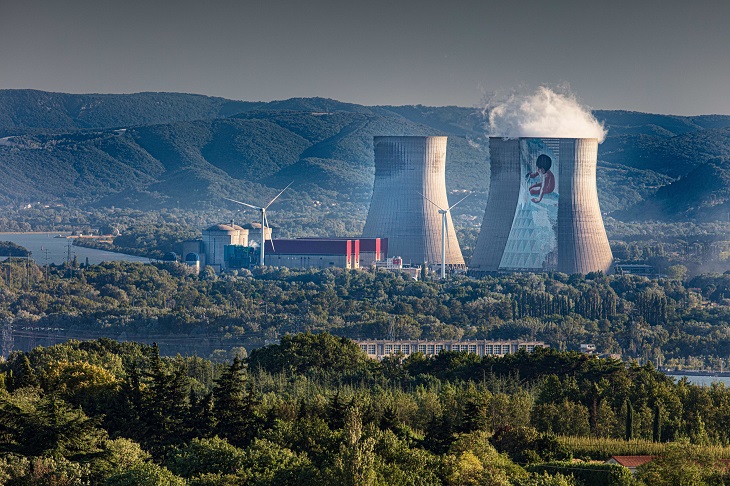
After embarking on a clean energy tour to the US and Canada, I came back convinced that nuclear and renewables are the yin and yang that can play complementary roles in a hybrid system, as the two main options for low carbon energy.
Both nuclear and renewables generate energy that produce no greenhouse gas emissions, reduce air pollution, diversify the energy supply, and reduce dependence on imported fuels.
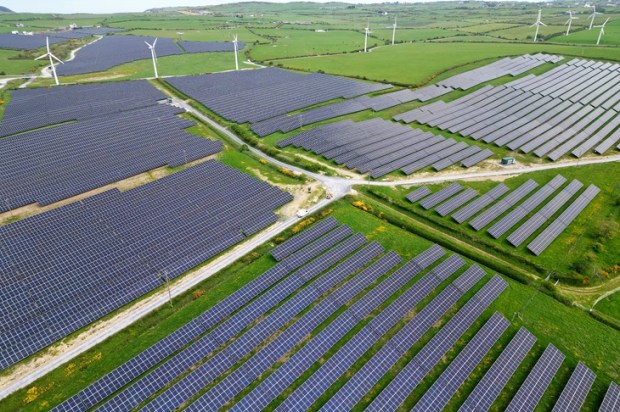
Due to Australia’s natural abundance of sunshine and wind, there’s widespread political, institutional, and corporate support to underwrite technologies, projects, and investment in the renewables sector.
Nuclear does not share the same luck.
For starters, there is Section 140A (1) of the Environment Protection and Biodiversity Act 1999 stating:
The Minister must not approve an action consisting of or involving the construction or operation of any of the following nuclear installations:
a) a nuclear fuel fabrication plant; b) a nuclear power plant; c) an enrichment plant; d) a reprocessing facility.
Without repealing s140A(1)(b), no new nuclear technology can ever be developed in Australia, no matter how advantageous it would be to secure our energy supply, reduce carbon emissions and provide firming capacity for more renewables in the grid. Currently, there is no prospect of possible deployment in the vast array of Australia’s energy applications.
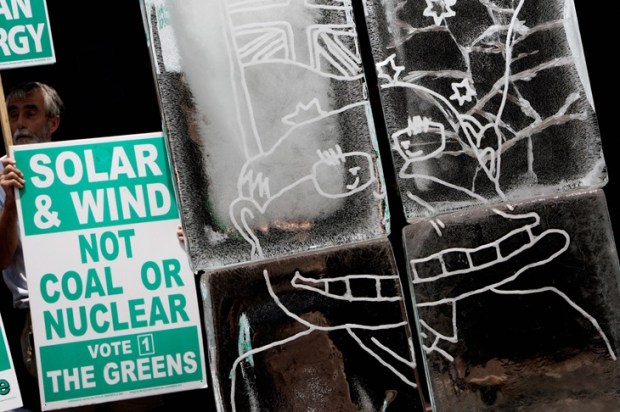
If we attempt to make sense of the reasons behind the nuclear prohibition, we might find that there aren’t any plausible ones, other than the fact that in 1998, public debate was flamed by the anti-nuclear movement, centred on the replacement of the Lucas Heights reactor.
But at that time, there was no need for nuclear in Australia: energy was not only affordable, but also abundant as we had lots of coal.
Things have changed. Coal power stations are retiring earlier than predicted.
From an environmental perspective, gas is not the preferred baseload replacement, hydrogen is yet to be produced and commercialised in its green form, batteries are still expensive, and the renewables industry is faced with various downsides:
- Reliance on rare earth minerals processed overseas;
- Dependency on China for local production of solar panels and batteries;
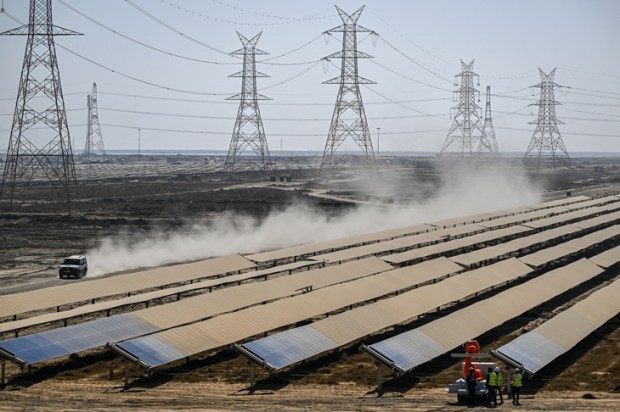
- Exposure to climate change risks: renewable technologies are highly dependent on climate-related factors, and we have been seeing more variable rain and sun;
- Recycling challenges and short shelf life of solar panels and wind turbines;
- Massive public investment required for the construction of transmission infrastructure to connect renewables to the current grid.
But even if the renewables industry was able to fix all the above, we should not be putting all eggs in one basket: the US and Canada are providing billions of dollars in direct funding to renewables but also to small modular reactors (SMRs) to ensure their energy mix is diverse and reliable.
At this stage you might be wondering why an environmentalist is suggesting nuclear energy as an option. The truth is I had very little knowledge of nuclear energy before and used to share the same poor public perception that many Australians still do, associating it with the disasters of the past.
By the same token, I know that nuclear is one of the cleanest forms of energy.
I decided to get out of my comfort zone to learn more about it and be able to make an informed decision, joining a delegation led by Shadow Minister for Climate Change and Energy Ted O’Brien MP last month.
After meeting various left and right-leaning politicians, think tanks, industry, international energy agencies, investors, and community leaders, these are some of the lessons I learnt from the Americans and Canadians:
- There is overwhelming support and bipartisan acceptance that nuclear energy must be a big part of zero-carbon energy systems of the future.
- Their governments are placing very large bets to build the first wave of advanced and small modular reactors. SMRs will provide electricity to remote communities, mining operations, industrial process heat, hydrogen generation, marine shipping, and even as back up for disaster relief.
- Order books are filling up fast. It’s not only Canada and the US who are ordering SMRs: Poland, Czech Republic, Romania, and Estonia have all progressed plans to build Western reactor technology in their respective countries.
- The US is repurposing their coal plant sites with SMRs. Nuclear energy is uniquely positioned to redirect workers from the retired fossil fuel industry to the nuclear power plant, preserving steady power generation.
- There is significant private capital being directed towards nuclear across the entire value chain and there are real investment decisions backing SMRs. The economics of advanced nuclear is seen as feasible and advantageous, not just for electricity generation but also for distribution as SMRs are Plug and Play and can be connected to any network.
- Energy security is taken seriously, and it includes grid resilience, fuel price and availability, technology supply chains monopolised by non-allies, vulnerability to unusual weather events, and ensuring the energy security of allies.
- A decision to enter the nuclear fuel supply chain is strategic. Australia has some of the largest deposits of Uranium in the globe and the technological sophistication to enter any part of the fuel supply chain, with enrichment being the most difficult and expensive part.
- Australia’s concerns about safety and waste are not widely shared in the US and Canada. States and communities that host nuclear power stations are not concerned about radiation doses received through normal operation and perceive the likelihood of a nuclear accident to be very low. These communities typically have the highest level of knowledge as nuclear workers come from within their communities.
- Advanced nuclear technology is safe. The proven advanced passive safety system of SMRs prevent nuclear accidents and leakages, and the new types of fuel like TRISO cannot melt in a reactor and can withstand extreme temperatures.
- Spent fuel is not a pressing issue since it has been stored without a single incident for many decades in both countries, and Canada is making good progress towards selecting a location for its deep geological repository.
- Australia is viewed as a natural and preferred nuclear energy partner that could move faster and more competently than nearly any other non-nuclear nation given our existing expertise and regulatory structures, strong legal system, and high-quality technical workforce. Australia is seen as the natural nuclear gateway to Southeast Asia and the Pacific Islands combined with our capacity to be a nuclear skills, services, and components hub.
- Australia’s commitment to the Aukus and nuclear submarines requires Australia to build local expertise and a local nuclear operation to service the submarines.
- The nuclear processes can be used beyond energy and also in medicine as nuclear isotopes are needed in radiology and other areas.
I’ve certainly changed my mind about nuclear. While the globe keeps warming and the clock is ticking, we should not let the ghosts of the past prevent us from having a discussion about nuclear being part of the energy mix to reduce risk and provide a base load moving into the future. Nuclear energy could be Australia’s lowest cost zero emission baseload power source that addresses reliability and secure electricity supplies, supporting more renewables in the grid.
Cristina Talacko is the CEO of Coalition for Conservation, an environmental charity working with centre-right politicians on energy and climate policy.