What a box of contradictions Christmas is. There’s the quest for presents – which can get urgent and exhilarated in the case of kids who haven’t laid down with stringent exactitude what it is that they want – but there can also be the feeling of intense fulfilment that you’ve got it right and that it really is more blessed to give rather than receive as if we were all Christians under the skin. Well, perhaps we are. You could do a lot worse at the moment if you want a touch of grand colour and spectacle that happens to tally with our Judeo-Christian tradition than go and see the new revamped production of Joseph and his Amazing Technicolour Dreamcoat at Melbourne’s Regent. It’s sumptuous, its snazzy and it delivers one of the most beautiful Bible stories in a musical idiom that is designed to make children thrill to it. Joseph is very early Andrew Lloyd-Webber and it has the sheen of innocence on it – with Tim Rice delivering some of his niftiest lyrics – and this production does it proud. Paulini is marvellous as the narrator and the kids who abound have a quasi-magical rapport with her which is thrillingly realised. And Euan Fitzrovic Doidge is a superb Joseph with a musicality precisely on par with his histrionic brightness and natural charm. This is a musical which will delight the kids and make room in their heads for theatre all the rest of their days and that in itself is a true Christmas blessing. Is it the case that the great AFL star Shane Crawford doesn’t know what to do with himself as Pharaoh? Well, he certainly can’t channel Elvis which was part of the orginal intention – and a hell of a lot of musical theatre people could make a fair fist of that Caruso voice with its uncanny and irresistable sweetness – but at least Crawford looks a bit like a god and the lameness of the casting may even add to the festiveness of the occasion when the most famous person on stage is the least professional. The last shall be first and all that.
Of course the spirit of Christmas, that familiar compound ghost, can bowl you over unexpectedly. A chance hearing of ‘Silent Night’ or ‘Away in a Manger’ may bring back that sense of the preciousness of the world and, of course, Carols by Candlelight does that programmatically just as Handel’s Messiah which Sir Andrew Davis has been doing with his old orchestra, the Melbourne Symphony Orchestra, does it with a stupendous majesty. Interesting too that the great texts from the Hebrew bible, the Old Testament, make the Jewish and the Christian aspects of culture seem to imply each other. T.S. Eliot, that eminent high churchman, told Ezra Pound not to insult his religion ‘which includes the Jewish religion’.
The high church Anglicans and the Micks get their literal premonition of the coming of the Christ Child at Midnight Mass and the idea of the shepherds led by the angels singing ‘Glory be to God on high and peace to people of good will’ is a beautiful one. We honour it in some of the classics of our popular culture like Miracle on 34th Street or that lovely Frank Capra film It’s a Wonderful Life just as we honour it at some zenith of the highest art with Bach’s Christmas Oratorio or with Leonardo’s Virgin on the Rocks or the great Raphael Madonnas or the ravishing Botticelli images of the Mother of God with her Child.
There is an old medieval poem Alec Guinness made a recording of ‘I sing of a maiden that is makeless’ (which means matchless). ‘He came all so still there his mother lay / as dew in April that falleth on the spray.’ It’s as if the language itself had thrown this lyric up, as if Christmas were part of the DNA of the world.
Of course everything else has to be encompassed, the gobbling of vast quantities of food, the tossing down of gallons of grog, the full catastrophe. Part of the unavoidable intensity of Christmas with its vast capacity to create family rows of the kind James Joyce captured in A Portrait of the Artist as a Young Man means that we have to back away from all that cult of comfort and joy.
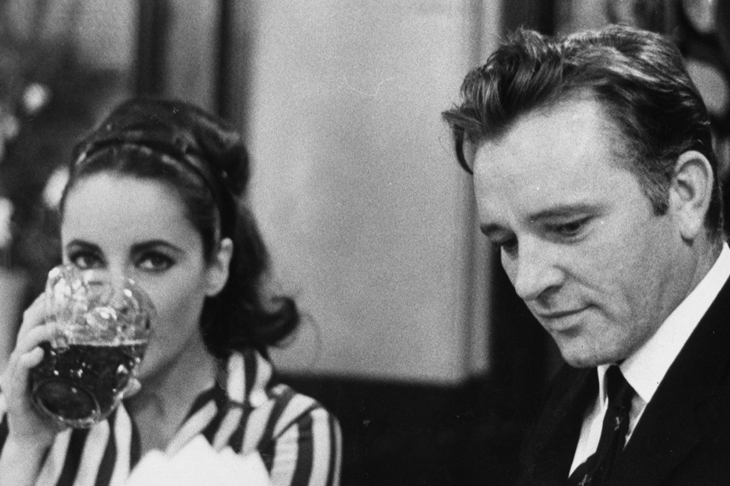
The other day that fabled diamond that Richard Burton gave to Elizabeth Taylor was again in the news and back in the 1960s people would dash off after Christmas to see that histrionic duo perform their rituals of riotous comic abuse rambunctiously in Zeffirelli’s Taming of the Shrew or with the sharpest tragicomedy in Who’s Afraid of Virginia Woolf?.
Boxing Day returns us to a world of bustling secularism just as the Twelve Days of Christmas which end with 6 January, the feast of the Epiphany, the coming of the three wise men, is a time to relax and for people to get over their hangovers and the backlash of whatever family horrors may have come crashing down like stones. People go to the pictures. One tip – and it’s a film that starts on Boxing Day though the Nova in Carlton has been previewing it with a free shot of Irish whiskey – is the new film by Martin McDonagh, The Banshees of Inisherin, by that extraordinary dramatic and filmic talent, the man who not only wrote The Beauty Queen of Leenane stage trilogy but wrote and directed Three Billboards Outside Ebbing, Missouri for which Frances McDormand and Sam Rockwell won Oscars and the classic In Bruges. The Banshees of Inisherin surpasses both of these and reunites Colin Farrell and Brendan Gleeson in a drama so stark and a comedy so black that it staggers the spectator.
Many people over the Christmas break will be looking at books: Nick Cave in dialogue with Sean O’Hagan telling him he believes in God because it’s counterfactual. The moving book about Bryce Courtenay by his widow Christine, Murakami talking about writing novels and McEwan writing one. It’s a nearly impossible time to work and a lot of people read thrillers and sports books. By the time twelfth night comes we’re resolved to face what 2023 will bring.
Got something to add? Join the discussion and comment below.
You might disagree with half of it, but you’ll enjoy reading all of it. Try your first month for free, then just $2 a week for the remainder of your first year.