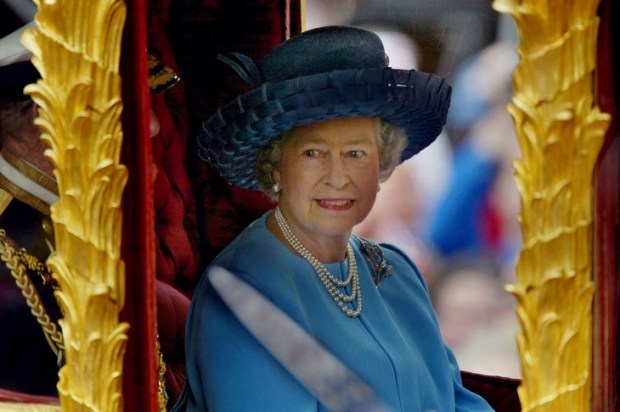
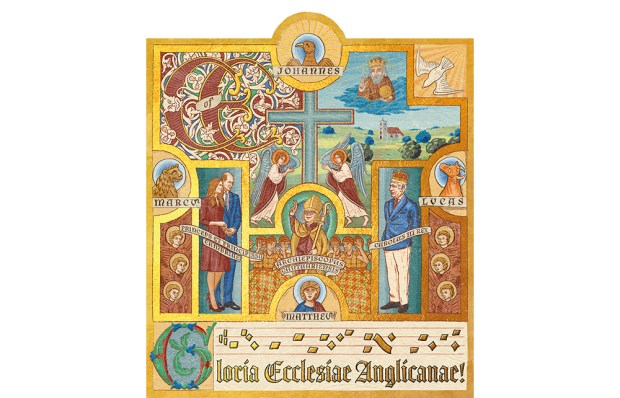
The Queen is dead. Long live the King.
These are the words that must be uttered upon the death of a sovereign. They represent the principle that there is no break in the sovereign power, which passes immediately to the heir upon death, along with the guardianship of our constitutional form of democratic government.
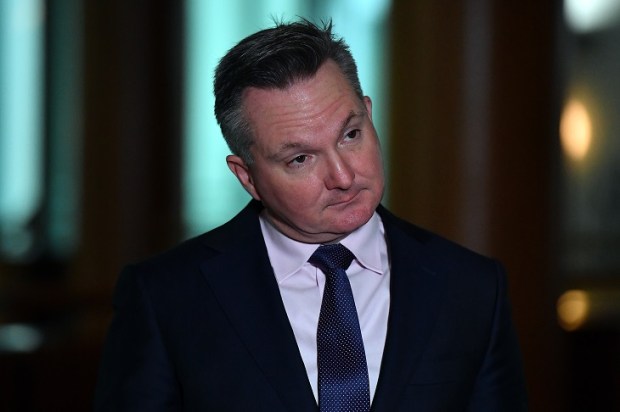
It is this form of government and its guarantees of freedom that led many migrants, like my forebears, to choose to come to Australia to make a better life for themselves and for their children.
My father still proudly has the Bible that was presented to him at his naturalisation ceremony, with a picture of Her Majesty Queen Elizabeth II on the inside cover. Rule of law, freedom, opportunity. That is what Australia, and its system of government, embodied in the Queen, represented to him.
The standard for Queen Elizabeth II’s 70 year reign, the longest of any English monarch, was set on her 21st birthday. Given on April 21, 1947, when the then Princess Elizabeth was with her parents, King George VI and Queen Elizabeth (later the Queen Mother) and younger sister (Princess Margaret) on a tour of South Africa. In a speech broadcast via radio from Cape Town, the Princess dedicated her life to the service of her country and all her peoples with these words:
‘I declare before you all that my whole life whether it be long or short shall be devoted to your service and the service of our great imperial family to which we all belong.’
The Queen remained faithful throughout her life to that solemn pledge given five years before she ascended the throne suddenly at the age of 25. During her reign Her Majesty had 15 British Prime Ministers (inviting the last, Liz Truss, to form a government only two days ago), 16 Australian Prime Ministers, saw 14 US Presidents, and served as head of state to 14 nations in the Commonwealth. It is unlikely any of us will ever see anything as enduring.
As former Prime Minister, Tony Abbott, wrote in his tribute:
‘We have lost an exemplar of duty, honour, and faithfulness but deep thanks for her life should mingle with numbness and sadness at this loss.
‘Nine tenths of the world’s people have known no other Queen. We can but hope the world might see her like again but none of us ever will.
“It is so typical of this remarkable woman that she was discharging her duty ‘till her last day on this earth.’
Just like her great-grandmother Queen Victoria’s reign, Queen Elizabeth’s was one of constant change. Throughout it, Queen Elizabeth acknowledged that change and kept consistent with public expectations. As one example, mentioned by Sean Jacobs in his piece, witness her decision in 1992 to pay income tax, against the wishes of her then Prime Minister, John (later Sir John) Major.
That year, the fortieth of her reign, was one the Queen herself described as her ‘Annus Horribilis’, following the scandals that surrounded her children – the ending of the marriages of Princess Anne, Prince Andrew, and Prince Charles, and the devastating fire at Windsor Castle. In the speech in which she used those words, given at a reception hosted by the City of London, the Queen accepted criticism but argued that it should be tempered with gentleness, good humour, and understanding. These are the values that underpinned her life and her reign. The Queen bore her great responsibility so humbly and so well. What is more, at the same time, while able to understand correctly the public mood, never indulged in political interference.
Therein lies another lesson from the Queen’s leadership: while not an institution that is beyond reproach, the Crown should always be above politics. It is the great strength of our constitutional monarchy, along with its continuity going back 1,000 years. Just think, Elizabeth was never meant to be Queen. Her uncle, Edward VIII, put self-fulfilment (‘the woman I love’) ahead of duty. However, without the monarchy, we would never have had Edward’s brother, George VI, an excellent King, and then his daughter Elizabeth II. We dispense with it at our peril.
And so we look to King Charles III. Just as there were comparisons made between Queen Elizabeth II and Queen Victoria, comparisons may also be made between Charles and Queen Victoria’s son, Edward VII. Edward VII, while Prince of Wales, was not immune from scandal. Feckless, a notorious womaniser and gambler, it was long thought he was not fit to be king. Indeed, Queen Victoria kept him away from many official duties. However, upon ascending the throne, he proved to be an able monarch, playing a part in the re-organisation of the British Navy, fostering good relations with European countries, especially France, and his reign, called the Edwardian era, saw many changes in technology and society, including the first flight by the Wright brothers in 1903 and the introduction of the age pension in 1909.
Time will tell whether Charles will resist the temptations he has recently displayed to indulge in political affairs.
The sentence immediately following the then 21-year-old Princess Elizabeth’s dedication to service in 1947 was this:
‘But I shall not have strength to carry out this resolution alone unless you join in it with me, as I now invite you to do: I know that your support will be unfailingly given.’
The Queen had great affection for her people, and that affection was returned. When Her Majesty came to Perth for the Commonwealth Heads of Government Meeting in 2011, I shall never forget the number of people – overwhelmingly young families and their children, lining St Georges Terrace, seven and eight deep in some places, to give, unfailingly, their affection to a very inspirational lady who is an indelible part, not only of their lives, but of history.
We honour the life of Queen Elizabeth II, the oldest, longest serving and most revered monarch, perhaps the greatest of monarchs, and give our grateful thanks for her life of unstinting duty and service.
God Save The Queen!