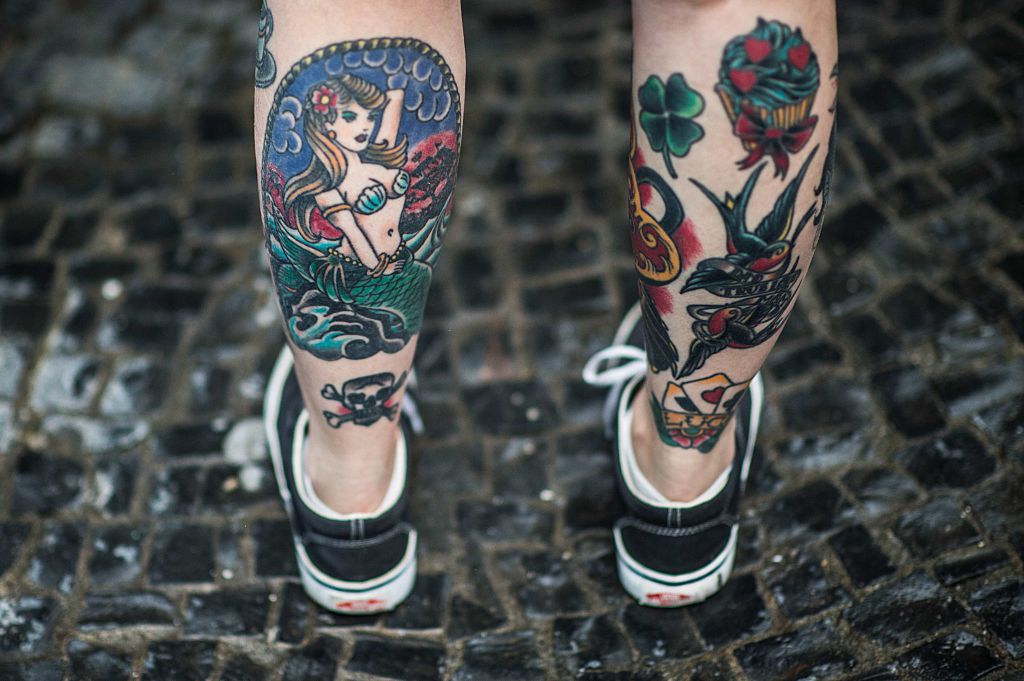
 The presence of body art is more prominent today than it has ever been before. What explains this new desire for personal artistic license that runs across so many generations? Why has our society unexpectedly abandoned its near-unanimous condemnation of those who possessed tattoos to suddenly embrace this new age of ink?
People from all walks of life, of all ages, are now turning the vivid products of their imaginations into something permanent, not with the classic artist’s tools but with a primed needle pumping permanent ink into the skin. What was once considered socially a sin and taboo for any individual to outwardly display on their body in public in years gone by, is now deemed a fashionable statement, an expression of one’s creative self.
There are a plethora of reasons why people choose in this day and age to get tattoos. The most traditional are cultural, such as Maori tattooing. Many younger people simply find it expressive and appealing. Others use tattoo designs to commemorate an event, the memory of a loved one or even have their family’s or partner’s names tattooed.
We should not forget the chthonic and perilous aspect of the tattoo realm. Inked skin is still embraced by all types of questionable characters who mark their bodies with sinister symbols of scorn for the law and social mores. The tattoo parlours that have spread from red light districts into the suburbs are all too often linked with criminals.
To some outside this world, the ‘bad boy’ associations are what gives tattoos their allure. But, thanks to our all seemingly inclusive ‘Generation Ink’, the bad boys are not alone. Nerds, dweebs and geeks have all embraced their own styles of body art.
While tattoo bearers once chose their markings to display their outsider credentials, the freshly inked just use them for display.
There’s the ‘sleeve’, tattoos from the shoulder to the wrist, or its less-audacious cousin of tattoos from the elbow down, exhibited by individuals who work in the music industry, hair salons and – of course – the hipster hang-outs, the cafés, bars and nightclubs. What is so genuinely sad with this extreme form of tattooing is its ‘look at me’ mentality, the intense inner craving for attention and, presumably, respect.
Then there’s the ‘Tramp Stamp’, the hopefully provocative imprint discreetly placed on female flesh with the aim of enticing and transfixing wandering eyes and a torrent of discussion amongst admiring men.
Perhaps the proudly stamped tramps could learn a lesson from Rousseau and his line “Let us be more simple and less vain.”
Industry sources say close to 15 per cent of Australians now have a tattoo, 15.4 per cent of all males and 13.6 per cent of women. Forty per cent of these acquired their first tattoo when the were 26 or over and a full tenth were over 40.
Why do they do it? We are all aware of the vast volume of material documenting the sense of insecurity that plagues modern society.
A similar sensation runs through the work of Kirby Farrell, a professor at the University of Massachusetts and researcher of the psychology of the tattoo.
“While rationales can be varied as the designs, all tattoos modify self-esteem as well as bodies,” he has written. “Like cosmetics, tattoos are prosthetic, since like an artificial limb they make up for something felt to be missing or inadequate.”
Kirby talks of the false and misleading idea tattoos will afford individuals genuine feelings of rebirth and youthfulness. “Tattoos promise to make you attractive,” he says, “as if you have a personal force akin to gravity. Notice me.”
The tattoo is the mark of our inadequacy and so overwhelming is that sentiment that tattoos are not just acceptable, but commonplace.