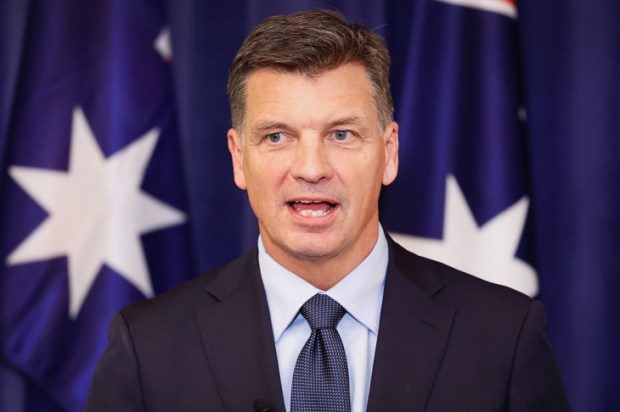
‘And so this is Christmas, and what have you done?’ A question, originally set to an agreeably festive tune by one John Winston Lennon, that plagues most of us at this time of year. But perhaps, in 2014, none feel its piquancy so much as Prime Minister Anthony John Abbott.
In terms of technical achievements, it has been a bumper year for the Coalition. Julia Gillard measured her time in office by how much legislation she managed to pump through, in what was very much the triumph of quantity over quality. For Tony Abbott and his team, despite a mischievous Senate, he can lie back and wiggle his toes in the sand comforted by the fact that the boats have stopped (even a year ago did any journalist really ever imagining writing that simple phrase?), the carbon and mining taxes have disappeared in a puff of smoke and a successful G20 was had by all.
Yet, despite these undoubtedly worthy achievements a nagging malaise haunts his government, and that malaise is called the opinion polls. Week upon week, we learn our nation would opt (alarmingly) for a Shorten-Plibersek government over the current one if given the chance. It’s not only Mr Abbott who must be scratching his head and asking why.
Being Christmas, it is worth considering the moral perspective. Putting aside the self-evident (and largely irrelevant) broken promises regarding cuts to the ABC and so on, there is a moral vacuum. Not at the heart of the Coalition’s policies themselves – they are mostly fine – but in the presentation of them. Whether in selling much-needed university reforms, the wobbly attempt to introduce GP co-payments, or many of the other budget ‘nasties’, the relevant ministers have failed to frame their economic case in persuasive, credible moral terms. Put simply, the language of ‘this is the right thing to do for our children’ or ‘this is the proper path from a moral point of view’ is not heard often enough from our conservative leaders. The moral self-confidence with which a Thatcher, Reagan or Howard would press their case is absent. For decades, ‘moral virtue’ – or the language thereof – has been hijacked and exploited relentlessly by the Left, claiming ownership of meaningless words such as ‘fair’ and ‘sustainable’ which produce a false air of moral superiority. Yet could there be anything more immoral than an opposition who refuse to acknowledge the need for fiscal restraint?
In this issue, James Allan looks at the war between ‘wicked’ and ‘stupid’, whilst Parnell McGuinness seeks out the ‘real’ Tony Abbott. Both deplore the inability of the government to claim the moral high ground, whilst Elle Hardy shows how successfully moral ‘panic’ can be exploited by leftist bureacrats.
If the Coalition genuinely believes that what they are doing is for an ‘higher purpose’, in order to create a better educated, healthier, happier, more prosperous, more productive and thus a more benevolent society, then they need to say so. Loudly, clearly, and with (jingling) bells and whistles.
Narrow Road to Southbank
Held under the splendiferous stained-glass ceiling of the National Gallery of Victoria (an oxymoron, shurely?), the PM’s Literary Awards was a dazzling event, designed, in the words of Minister for the Yarts (and Speccie contributor) George Brandis ‘to celebrate the great wealth of literary talent… and our vibrant literary culture.’ Pleasingly, Speccie writing talent loomed large, with Nick Cater shortlisted for The Lucky Culture in non-fiction, and Speccie book reviewer Hal G.P. Colebatch walking off with a gong for his superb read Australia’s Secret War: How unionists sabotaged our troops in World War II.
Highlights of the night included Hal’s magnificent speech, in which you could hear a pin drop as he recited the litany of evil perpetrated by certain trades unions during our nation’s darkest days. That the setting for the event was Melbourne, where the CFMEU are already doing their best to sabotage free enterprise in the wake of Labor’s recent victory, was not lost on many in the audience.
Lowlight of the evening – there was only one – was the ‘asylum seeker’ posturing of a certain kids’ books author. Childish is the word that sprang to mind. Otherwise, those who wished to use their moment in the spotlight to make a political point did so with good grace and dignity, including the possum-clad Aunty Di (‘Welcome to Country’), and Richard Flanagan, whose magnificent speech and generous donation to indigenous education capped off a superb evening. Our heartiest congratulations to winners, runners-up, organisers and broadcasters alike.
Got something to add? Join the discussion and comment below.
You might disagree with half of it, but you’ll enjoy reading all of it. Try your first month for free, then just $2 a week for the remainder of your first year.