My two sons, aged 16 and 14, are at the wonderful stage where, in the sharp-humoured traditions of Australian larrikinism, they love to pick apart my parental authority. I feel like the Seinfeld character Babu Bhatt, the hapless Pakistani restaurateur complaining of how, ‘All they do is mock me: always mocking, mocking, mocking.’ En route to Europe in December for an educational Grand Tour of Italy, Athens, Berlin and Paris, we stopped over in Singapore. On our first night, overlooking the strikingly Westernised skyline, I asked the younger one, Isaac, if he could relate to the neon sign reading ‘Income’. His plan in life is to leave home at 30, having become a history professor with a big red beard and a doctorate on 20th century militarisation. An income seems as distant as the sign itself. ‘Well dad, I don’t see any signs out there saying Australian Prime Minister’, he replied, without mercy, ‘You lost your election to an old bald midget – so get wrecked.’
As the Tour’s Bear Leader, my favourite saying was to tell the recalcitrant teenagers, ‘We haven’t come half way around the world for you to play on those electronic devices in a hotel room.’ It reminded me of the story of Lyndon Johnson travelling with his family to the 1960 Democrat Convention in Los Angeles. After losing his bid to be the party’s presidential nominee, LBJ agreed to be John F. Kennedy’s running mate. Then he tried to get his family together to appear on stage with the Kennedys to present a united front before the delegates. When one of his daughters arrived late from a sightseeing trip, Johnson remonstrated: ‘We didn’t come here to see Disneyland’. ‘I know’, she replied, ‘But we didn’t come here to see you run for Vice President either’.Once I told this story to the boys, the impact of my ‘half way around the world’ line was lost forever. It was degraded with an obvious retort: ‘Yeah, dad, we didn’t come half way around the world to ride on buses and trains – you should have been in government for 12 years by now, with us travelling around in limousines and Donald Trump’s jet.’ There was no answer to that.
Everywhere we went, if people were talking politics, they were talking about Trump. An Athenian café owner told me, ‘He’s a big, big mouth but this is what we need: a President honest about the Iraq War and not wanting to run the world from Washington.’ On a bus from Siena to Florence, a Jakarta-based Australian lamented the failure of the Obama Administration to act against the Saudi-funded spread of Wahhabi-fundamentalist Islam across the globe. “People don’t understand how bad it’s becoming in Asia’, he said, ‘Jakarta’s Mayor is on trial for blasphemy over a minor matter in the Koran. With America gaining greater energy independence, maybe now they can do something about the Saudis.’ Among the many hopes for Trump’s presidency, this is near the top of my list.
Rome remains a great walking city – although I should be careful with this kind of praise. I once heard Mike Rann, formerly the Premier of SA (Subsidised Australia), describe Adelaide the same way at an ALP fundraiser, circa 2004. Bob Carr was the next speaker, wryly noting, ‘If Adelaide is a great walking city it must be for sleepwalking.’
By the taxi driver test, the EU is in deep trouble. Far from harmonising economic outcomes, the monetary union has perpetuated longstanding grievances.The Germans resent having to subsidise Italy and Spain, while the Italians and Spanish resent the way in which the German-dominated Euro has overvalued their currency – a drag on competitiveness. A Tuscan cabbie complained of how, ‘Through the European Union, Merkel has been able to achieve what Hitler tried and failed to do in World War II’.Politically, this is a devastating line – a harbinger of further disruption to the European ideal.
As long as humans record their history, the most famous German will be Adolf Hitler. The shame of Nazism cannot be absolved in two or three generations. It lives on in the German psyche. Having created so many refugees after World War II, German voters have been relatively supportive of the Merkel Government’s intake of over a million asylum seekers in 2015/16. By chance, our hotel in Berlin was within walking distance of Breitscheidplatz – the site three nights earlier of a terrorist attack on Christmas markets by an Isis-inspired Tunisian asylum seeker, Anis Amri. By Australian standards, Merkel’s policy is madness. And the way in which Amri – a known criminal from his time in Italy – was allowed to stay in Germany seemed even madder. While most commentators are predicting an anti-immigration backlash in this year’s German election, I’m reluctant to write off Merkel. This country is different. Hitler’s legacy makes it doubly difficult for Right-wing populist movements to gain traction.
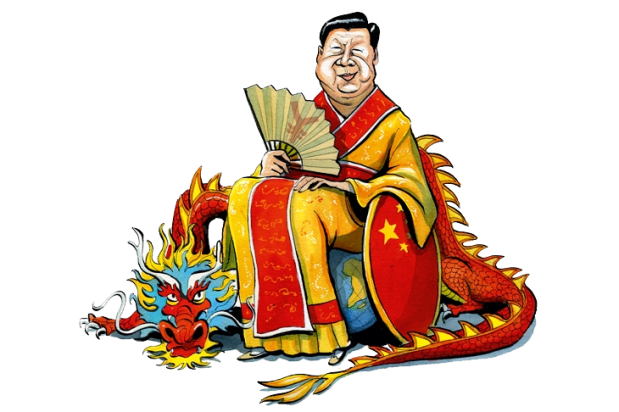
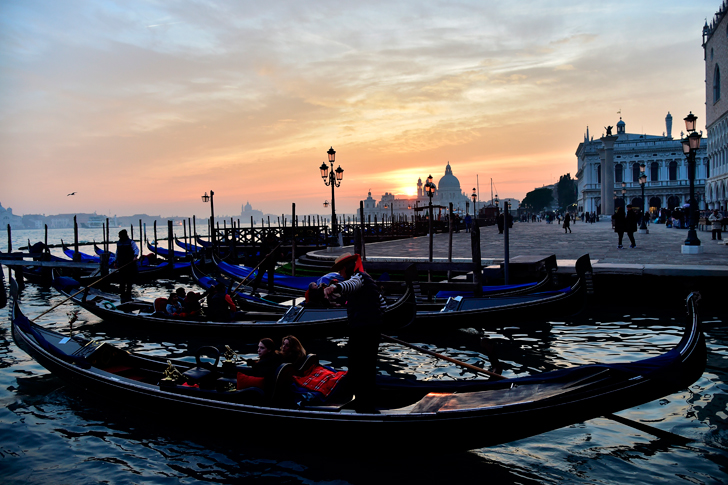
I hadn’t been in Europe for 17 years. Other than tighter security measures, the most notable change on the tourism trail was the vast number of Chinese visitors – a welcome sign of the Middle Kingdom’s rising middle class. In Venice, the locals are pushing back against increased tourism. I encountered a grumbling Venetian on the Grand Canal, directing most of his angst at the Chinese. He said in the summer there was no room left to walk on the footpaths. I pointed out: ‘When Marco Polo discovered China, this place became the world’s greatest trading centre, so didn’t you expect one day for the Chinese to discover Marco Polo’s home town in return?’ There was no answer to that.
Got something to add? Join the discussion and comment below.
You might disagree with half of it, but you’ll enjoy reading all of it. Try your first month for free, then just $2 a week for the remainder of your first year.