You know something has gone awry when Labor’s Captain Sensible, former defence minister Joel Fitzgibbon, calls for an intervention against his party’s direction.
Fitzgibbon has called for the shameful processes and delay in the prosecution of Ben Roberts-Smith to be improved.
It is perfectly possible to hold that view without having any opinion about Roberts-Smith’s guilt or innocence. The law must take its course, so we say. But in doing so we can query whether the institutions through which this spectacle has taken its course were fit for purpose.
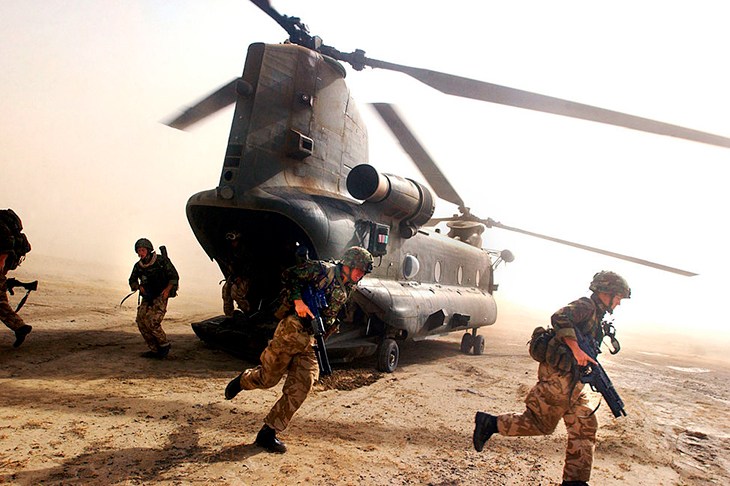
Roberts-Smith, Australia’s most decorated living soldier, faces five charges of the war crime of murder arising from events in Afghanistan between 2009 and 2012. By the time a jury hears the case, the events will be about two decades old.
Many people, serving members and veterans included, take the view that what goes on tour stays on tour. They shake their heads and regard that as the end of the matter.
But it cannot be. Not if we believe soldiers are not mere animals, and should be held to account under the law of war. The real problem is not that what went on tour should have stayed on tour. The real issue is that the whole shebang should have been addressed on tour. That is what military justice is for.
There is a constitutional reason why liberal democracies maintain separate systems of military justice. An army is not another workplace, nor is a battlefield another crime scene. Military justice is designed to enforce discipline, including the laws of armed conflict, where and when discipline matters. Commanders are responsible for their soldiers, evidence is fresh, operational circumstances are understood, and wrongdoing can be investigated at the coalface. In other words, justice is meted out in full context.
Yet in Afghanistan, the system failed right at that point.
When I first examined the Commonwealth Criminal Code provisions implementing the 1998 Rome Statute, I was shocked by the offences Australia had incorporated into domestic criminal law. Alongside genocide and crimes against humanity sat an extensive catalogue of war crimes, including murder, unlawful confinement, cruel treatment and outrages upon personal dignity. How did we arrive at a system in which Australian soldiers could face civilian prosecution for battlefield conduct many years after the event, rather than effective military justice at the time?
Australia ratified the Rome Statute in 2002, accepting the jurisdiction of the International Criminal Court as a court of last resort. But once we did that we exposed ourselves to calls for justice from outside the battlefield in civilian contexts, years after the events. There is a place for journalists, campaigners and independent investigators in exposing military wrongdoing. But with inquiries, civilian lawyers, and polarised debate, events once known only to soldiers on operations become the subject of years of public controversy. This has been happening in the United Kingdom too. It’s a disaster – here and there – for defence morale.
Paul Brereton’s Afghanistan Inquiry Report is a far more nuanced document than people give it credit for. Brereton examined allegations of misconduct while recognising the extraordinary demands placed upon Australia’s special forces. Those soldiers were repeatedly deployed into a prolonged counterinsurgency for which their particular capabilities were highly useful. Our government wanted results, and the SAS delivered them under exceptionally difficult circumstances – but the force was stretched beyond what its systems of command, supervision and accountability could adequately sustain.
The subsequent Afghanistan Inquiry Implementation Oversight Panel went further in examining the responsibility of senior defence leadership for the overuse of special forces and the institutional conditions in which misconduct could develop. The official findings are uncomfortable. Reporting systems were unreliable. Commanders accepted accounts of operations without sufficient scrutiny. Deviations from professional standards were tolerated. Oversight mechanisms existed but were too often ineffective. In summary, institutionally, senior brass looked the other way.
Long story short, Brereton found no credible evidence that senior commanders knew directly of particular alleged war crimes. That’s why none of them are now in the box. But it is very clear that this does not absolve those senior officers from institutional responsibility.
Why were these highly trained SAS soldiers deployed so relentlessly? Why did commanders not intervene when clear warning signs appeared? Why did the military justice system fail to investigate at the signs of wrongdoing and suspicion at the time? We don’t have the answers to these questions.
So now the entire country is tied in knots over a spectacle with no equivalent, amid political polarisation and legitimate questions. The failure was institutional; the spectacle, and the bitterness it has generated, now belong to all of us. It is a national embarrassment.
These are just some of the unsettling aspects of the Roberts-Smith and the Oliver Schulz prosecutions. What is more, the criminal proceedings against Roberts-Smith involve witnesses who have received immunities despite acknowledging their own involvement in alleged killings. For good reason, accomplice evidence is avoided in civilian justice – and almost unheard of in military justice. Veterans despise this feature of the criminal case – especially when they know that senior brass bear some institutional responsibility for the drama.
There is also the retrospective amendment parliament made to the definition of hors de combat. The amendment broadened the statutory wording and was made applicable to conduct dating back to 2002. Whether it materially affects the Roberts-Smith charges is uncertain. But retrospectively changing statutory provisions relevant to proceedings on foot is another reason for serious discomfort.
It is little wonder that Roberts-Smith took the extraordinary step of a two-hour interview with Ben Fordham. Any criminal lawyer would usually advise against it. But the spectacle itself – and the millions he must now raise to defend himself – is an indication of how far this affair has travelled from the battlefield where it should have been dealt with years ago.
None of this means soldiers should escape responsibility for war crimes; quite the opposite. But the constitutional purpose of military justice is to ensure that discipline is enforced when and where it matters, not reconstructed decades later by institutions not designed to deal with it in its proper context.
Not everything that goes on tour should always stay on tour. But in all cases it is best that obvious problems that emerge while on tour should be addressed on tour. In Afghanistan that didn’t happen, and that is why we’re in such a pickle over all of this right now.
Got something to add? Join the discussion and comment below.
You might disagree with half of it, but you’ll enjoy reading all of it. Try your first month for free, then just $2 a week for the remainder of your first year.