Affable, unflappable and imposing (he was a 6ft 2in ex-Olympian), the late King Harald of Norway was also blessed with good luck for much of his life. The first notable dose of good fortune occurred at the age of three, when his mother managed to spirit him and his sisters out of their home country hours before the Nazi invasion – and away to safety in the US.
He returned to a nation so devoted to its monarchy that the children of post-war Norway pooled their pocket money to help buy his grandfather, King Haakon, a royal yacht. The Norge remains in service to this day, funded by an uncomplaining nation.
Compare that with Britain’s royal family, who had to wave farewell to their yacht Britannia back in 1997 after a long and toxic political squabble.
It is a reminder of the many ways in which, of all the world’s monarchies, Norway perhaps most closely resembles our own; and of why the House of Windsor has so often cast an envious glance across the North Sea. Following the death of King Harald at the age of 89 last week, however, it is royalists in Norway who now look wistfully across at the UK.
Like King Charles, Harald reigned in an age when monarchy had to earn the respect it once took for granted
Harald V sat midway between Elizabeth II and Charles III. Like our late queen, he was a great-grandchild of Edward VII. Like her, his world view was shaped by war.
Like King Charles – who hailed Harald as a ‘dear cousin’ and ‘towering’ figure – he had strong Danish lineage (both could claim direct descent from King Christian IX). Like King Charles, Harald reigned in an age when monarchy had to earn the respect it could once take for granted. Both men would have to overcome traditionalist opposition when it came to marriage.
In the absence of a Norwegian nobility, young Harald had been expected to wed a European princess, yet fate introduced him to Sonja Haraldsen, daughter of an Oslo textile dealer. His father, who became King Olav V in 1957, disapproved but Harald was not for turning. Three years at Oxford, where he rowed for Balliol College, had instilled a sense of independence.
Sonja was similarly strong-willed, as I learned when I interviewed the couple in Oslo shortly before their 1994 state visit to the UK. She had travelled to Britain as a language student in the 1950s and told me she enjoyed it so much that she got a job as a barmaid at the Eagle in Cambridge (where Crick and Watson had just announced the discovery of DNA). ‘I remember celebrating my 21st birthday there,’ Queen Sonja told me. ‘I didn’t want to go home because I wanted to learn the language. There I was sitting with a lamb chop all by myself.’
A year later she did return home and met Harald at a party. Their romance endured ten years of opposition before Harald got his way, having warned his father that he would remain a bachelor unless he was allowed to marry Sonja. That would have meant the end of the monarchy. Though Norway had been a kingdom from the 9th to the 19th centuries, it fell under the Swedish crown until a referendum was held in 1905 and the people of Norway demanded a new monarchy of their own. They had turned to the Danish House of Glucksburg to furnish them with a monarch – and Prince Carl of Denmark stepped up as King Haakon VII. It meant that Harald was the only heir to a young monarchy – under the male-only law of succession, his sisters were private citizens. It was a case of letting Harald follow his heart or face a republic. The crown prince and the ex-barmaid were finally married in 1968.
I wondered whether Norway’s relative classlessness had been another piece of good fortune for Harald. ‘Absolutely,’ he told me. ‘There is an economic class structure but nothing more.’
He was the first to admit that being monarch of a small nation is much easier than reigning over a large one, let alone 14 other realms, like King Charles.
‘Each individual has more of a feeling of knowing you personally,’ he told me. ‘I think we have an easier task in coming into contact with the people because our population is half the size of London.’
We mulled over what it was that made the region so predisposed to the system of constitutional monarchy. King Harald was modest in this regard: ‘Usually, people say stability is created by the monarchy, but I think it’s a two-way system. Stability creates a base for the monarchy and the monarchy creates a base for stability. That may be one of the reasons for so many northern European monarchies. These countries are fairly stable.’
Harald came to the throne in 1991 just as his second cousin Elizabeth was about to experience her annus horribilis and the misery of the 1990s. Norway’s king continued his run of luck. Three years into the job, he was welcoming the world to his small nation as he opened the Lillehammer Olympics.
Another stroke of good fortune had been the discovery of vast reserves of oil and gas in the Norwegian North Sea. Whereas Britain swiftly chomped its way through its oil money, Norway decided to invest its dividends just as Harald was taking charge. Its national wealth fund is now the world’s largest – a nest egg worth $2 trillion, which covers over 20 per cent of all annual government expenditure without touching the capital.
It meant that Harald’s subjects were never exposed to serious hardship during his reign. Nor, unlike Lilibet, would he have to preside over an EU entry or exit, since Norway has chosen neither. He was also blessed with an easy charm (having first met him at his palace in Oslo, my next encounter with him was in a beer tent during Cowes Week).
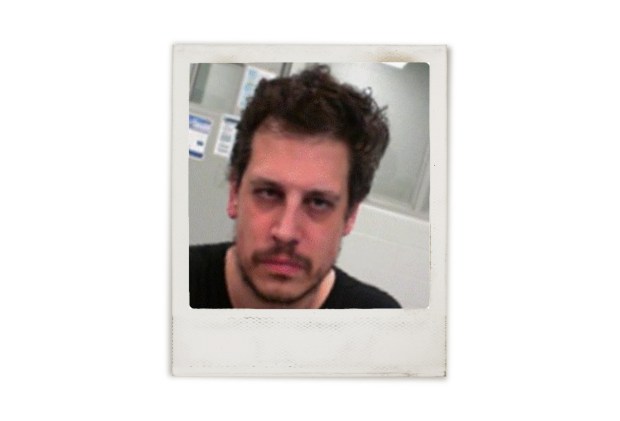
Yet luck is not hereditary. Norway’s new King, Haakon VIII, comes to the throne with some serious challenges. His wife, the new Queen Mette-Marit, has suffered severe health problems and had a lung transplant just ten weeks ago. Her past friendship with Jeffrey Epstein has exploded into the public domain with the publication of hundreds of cosily intimate email exchanges long after Epstein’s 2008 conviction for sex offences. (She has since claimed she was ‘manipulated’ by the paedophile financier.) And her son by a previous partner, a convicted gangster, has been convicted of multiple counts of rape (he remains under house arrest while he appeals). It is a scandal to dwarf even that of Andrew Mountbatten-Windsor given its proximity to the throne.
And if Britain thinks it has a ‘slimmed-down monarchy’, Norway’s is almost skeletal. The new King’s only sibling, Princess Martha Louise, could hardly be less like our own Princess Anne. Having had three children by her first husband, who died by suicide in 2019, she is now married to Durek Verrett, a bisexual American shaman who claims to be a reptilian reincarnation of a pharaoh. The couple attribute all criticism to ‘racism’ because Verrett is black. It helps to put the Windsors’ own problems with American spouses and claims of racism into some sort of perspective.
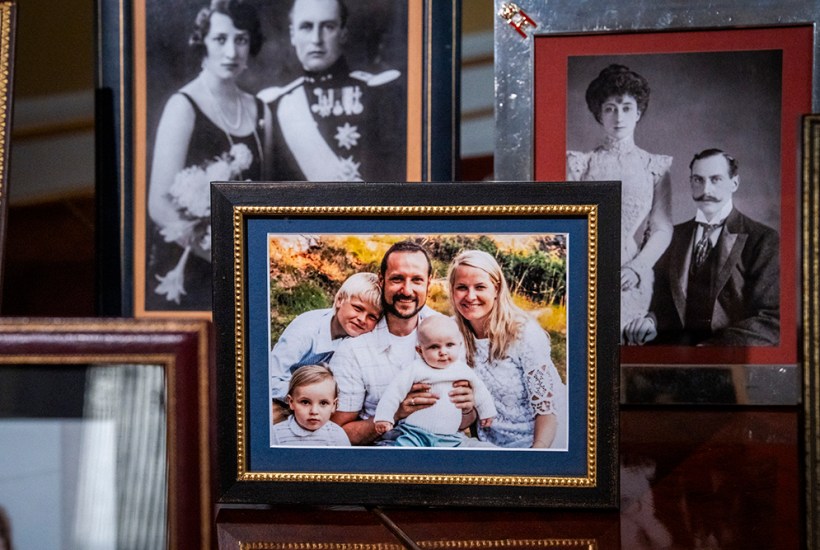
For now, the new King has vowed to reign like his father and has chosen (Norwegian monarchs have a choice) the same motto: ‘All for Norway.’ Whether the sentiment is reciprocated remains to be seen, but support for the monarchy has actually risen since Harald’s death, up from 54 per cent in February to 72 per cent this week. Whatever doubts people may have about their new Queen, there is deep affection for the couple’s daughter, Crown Princess Ingrid Alexandra, 22. She has already completed her military service and is now studying international relations in Australia.
As we saw in 2022, the death of a constitutional monarch is a moment when people suddenly dwell on a system to which they might have given little thought from one week to the next. And the alternative then quickly comes into focus.
If King Haakon is not to enjoy his father’s good luck, he can at least call upon cousin Charles for wise advice.
Got something to add? Join the discussion and comment below.
You might disagree with half of it, but you’ll enjoy reading all of it. Try your first month for free, then just $2 a week for the remainder of your first year.