I served on the staff of Alf Rattigan’s Tariff Board, the Productivity Commission’s ancestor, in the years it began pulling down the tariff wall. So it is with something close to filial grief that I report the institution’s defection. In its interim report on GST distribution, the Commission now recommends the most incentive-destroying fiscal arrangement in the federation’s toolkit, and calls it a return to ‘core purpose’. Rattigan’s Board spent decades explaining why paying producers to be uncompetitive impoverishes a nation. His heirs have produced 124 pages explaining why we should pay governments to be unproductive.
Strip away the liturgical vocabulary of ‘relativities’ and ‘assessed fiscal capacity’ and the Commission’s preferred recommendation is simple: return to the pre-2018 regime of full horizontal fiscal equalisation, under which GST revenue flows not to the citizens and businesses whose transactions generated it, but to whichever jurisdiction the Commonwealth Grants Commission certifies as neediest. From each state according to its ability; to each according to its need. Karl Marx could not have drafted the terms of reference more faithfully.
The Commission’s lodestar is that every Australian should enjoy services of a similar standard wherever they live. A seductive phrase – and a totalitarian one, in miniature. It is equality of outcomes imposed through the tax system, with no concern for the people who paid the tax. Nowhere is any weight given to the elementary proposition that revenue raised from the enterprise of Western Australians, or of western Sydney tradesmen, belongs first to a compact with them: that governments which foster wealth creation should keep the fruits of it, and governments which strangle or squander it should feel the consequences.
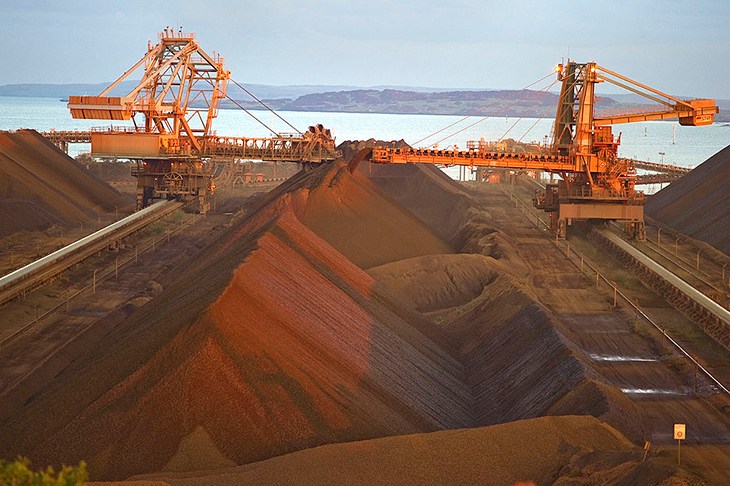
Consider what full equalisation actually did to the one state that got things spectacularly right. The boom was not geological luck alone. Pilbara iron ore is worthless until somebody builds the harbours, dredges the channels, powers and waters the boom towns, writes the State Agreements and stares down the green lawfare – all of which Western Australia did, at colossal expense and risk, while other states busied themselves banning the industries that might have made them rich. The state owns and operates Port Hedland, the largest bulk export port on earth, and spent $300 million on the Utah Point common-user berth so junior miners could export at all. Its own Treasury put the cost of supporting the North West Shelf alone at $8 billion. The miners laid their own railways, certainly – but under agreements the state wrote, tenure it granted, approvals it cleared. And to service a boom-swollen population, WA’s net debt climbed from roughly zero in 2008 to some $35 billion; even the hostile Langoulant inquiry conceded the government ‘had no choice but to borrow to build the infrastructure to meet that demand’. Some was wasted – every boom breeds an unfilled aquarium – but the bulk built the plumbing of the nation’s export engine.
WA’s reward? Its GST relativity collapsed towards zero. The state that shouldered the debt and the risk was to be stripped of virtually its entire entitlement and equalised down to the level of jurisdictions that built nothing, risked nothing and banned much. The 2018 floor was rushed, imperfect and nakedly political. But it grasped what the Commission’s framework cannot: a formula that confiscates the proceeds of success is not ‘neutral’. It is a tax on getting things right – and, inevitably, a subsidy for getting things wrong.
The Commission half-knows this. Buried in the report is the concession that ‘dominant-state effects’ in the mining assessment ‘can weaken policy neutrality’. Its remedy? The Treasurer should direct the Grants Commission to fiddle the formula. More discretion, more complexity, more fine-tuning of a machine whose basic engineering is the problem. Rattigan would have recognised it instantly: the tariff compensation racket in fiscal drag.
And what of the recipients? A question for the treasurers of Tasmania and the Northern Territory: would you rather the mining boom had never happened? The honest answer is no. The boom filled the pool from which your top-ups are ladled. Every royalty dollar Western Australia sweated for enlarged the cheque you received for earning nothing. That is the moral core of full equalisation: the unproductive hold an annuity over the productive, and the annuity grows with the very success the formula punishes. The Commission has designed a scheme whose perverse ideal is a federation in which no state ever enriches the nation – for the moment one does, the machinery exists solely to relieve it of the proceeds.
Worse still, the annuity rewards the persistence of misery. The Northern Territory collects roughly $5 billion in GST against a population share of about $1 billion. That excess is not an Aboriginal advancement program; it is the fiscal bloodstream of the Territory government, paid because the Territory is assessed to have extraordinary needs. Follow the incentive: if those needs ever fell – if remote communities became safer, healthier, better schooled – the grant would fall with them. A Territory government that succeeded morally would fail fiscally. Nobody intends this. But incentives do not require intent – something the old Commission grasped better than anyone in Canberra, and the new one seemingly not at all.
None of this is a brief for every 2018 parameter. Pegging WA’s floor to the stronger of NSW and Victoria was a political flourish, and the $6 billion annual bill to Commonwealth taxpayers deserves scrutiny. But the answer to a badly designed floor is a better one: a sizeable minimum – say 80 per cent – of the revenue a state generates returned to the people who generated it, audited transitional assistance for genuine need, and an end to the pretence that a needs formula is a development policy. Sixty years of equalisation have not converted a single mendicant into a contributor. That is not a coincidence. It is the design.
The Productivity Commission was invented to tell governments uncomfortable truths about incentives. The truth is that full equalisation equalises downward: it taxes effort, pensions off stagnation, and conscripts the citizens who generate the revenue to underwrite the governments that generate the least. Rattigan’s Board would have called it what it is – protection, in fiscal form – and recommended its abolition, with the revenue returned to those who earned it. His successors call it their core purpose. That tells you how far the temple has fallen.
Got something to add? Join the discussion and comment below.
Peter Swan AO is emeritus professor of finance at the UNSW-Sydney Business School
You might disagree with half of it, but you’ll enjoy reading all of it. Try your first month for free, then just $2 a week for the remainder of your first year.