During the first Cold War, an estimated fifty ‘hot little wars’ flared across the globe – proxy conflicts, insurgencies and border clashes where the superpowers funnelled arms, advisors and ideology into local fires while avoiding direct Armageddon, although the 1962 Cuban missile crisis was close. Korea, Vietnam, Afghanistan, Angola, Nicaragua and dozens of lesser known killing fields served as the bloody arenas in which the United States and the Soviet Union tested resolve, technologies and narratives without ever fully committing their own armies against each other in total war. Those conflicts shaped the second half of the twentieth century, redrew maps, toppled governments and left millions dead, yet they were always framed as secondary to the great nuclear stand-off.
Now this new Cold War is taking place as much in Australia as it is on the other side of world, as external powers fuel internal forces to undermine belief in ourselves. As soon as possible, Australia must ditch its obsession importing those who hate us, while mobilising every source of power and security at our disposal. Because while war’s visible face is rubble and graves, its deeper logic is coercive persuasion. Destroying an army or city is the hammer; reshaping the enemy’s will, government, or society is the anvil. Cold or hot, war is not about destroying things, it is about changing people.
The foundational lesson from the first Cold War was how to manage rivalry through proxies and pressure points without direct conflict in a long-term strategy of firm, vigilant containment. This was first explained in 1946, by the late George Kennan, US diplomat in Moscow and author of the ‘Long Telegram’. Today we live in the second Cold War – a period of renewed and intensifying great-power rivalry. This time primarily between a still dominant but anxious US and a weak bunch of allies on one side, and a revisionist axis of China, Russia, Iran and their partners on the other. Weaving a web across the grey zones of this contest are multi-national organised crime networks and the Islamist global insurgency.
The contest is no longer bipolar but multipolar, without front or back, networked by supply chains, cyber domains, financial systems and information flows that did not exist in the 1950s. Yet the fundamental pattern repeats: great powers compete through clients, proxies and limited wars rather than risk direct confrontation that could escalate to nuclear exchange. Hot little wars are one of the greatest tests of constraint for leaders, whose decisions risk wider more serious consequences.
From Myanmar and the South China Sea, to the Sahel and the Horn of Africa, and now the Strait of Hormuz, each of these little wars, and some not so little such as the Russia-Ukraine conflict, reveal new faultlines, and provide testing grounds for weapons, technology and doctrines, while reshaping global alliances. Australia is an active participant in the new Cold War and fortunate Russian President Vladimir Putin is acting with restraint, given our defence forces are training Ukraine soldiers to be better at ‘killing Russians’ out of a Polish base.
As with the first Cold War, the stakes are immense and the outcome unpredictable. What is evident is that these new hot little wars are redrawing energy routes, accelerating military innovation, driving mass migration and forcing nations to choose sides in a fracturing world. Even the US raid capturing Venezuelan President Maduro was about removing a bigger enemy’s piece off the board. At the same time others are realising how vulnerable they are because of decades of underinvestment in defence capabilities and a cult-like obsession with climate change. The US is also being exposed to the limits of what allies and friends are prepared to do, even when it comes to saving themselves. Some allies such as the United Kingdom, are becoming unrecognisable and an example of what losing looks like in this new Cold War. Appreciating these realities is essential to grasping the trajectory of our century and the consequences of failure. For the price to retake ground once lost, may be too high for the public to accept.
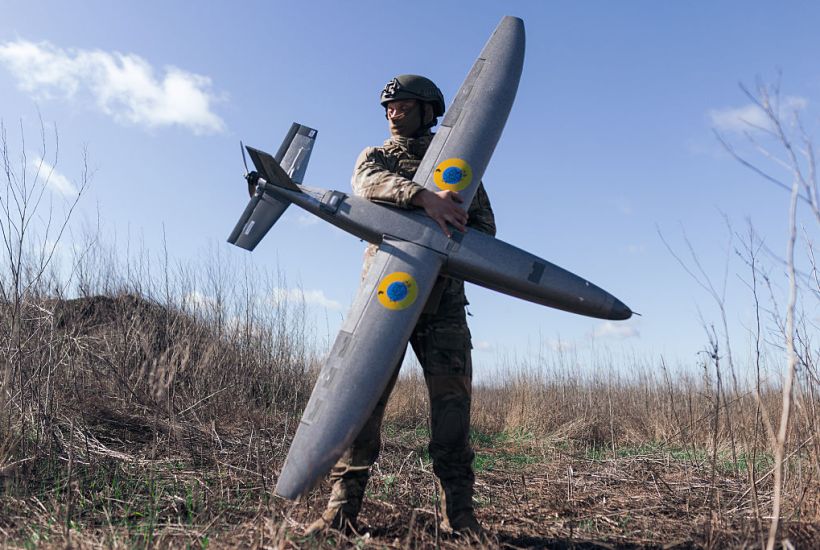
Australia must take four critical actions without delay. First, it must ruthlessly prioritise credible deterrence through accelerated Aukus delivery and immediate ‘fight tonight’ capabilities. Nuclear-powered submarines are strategic insurance, but Australia needs deployable long-range strike systems, integrated air and missile defence, and hardened northern bases now. Just look at the Russia-Ukraine war. Drones (especially ‘first person view’ kamikaze/loitering munitions) are now overtaking artillery for inflicting the highest number of Russian casualties on many fronts in 2026. The execution of Australia’s 2026 strategy must be faster and better resourced. Defence spending should climb toward 3-to-5 per cent of GDP, funded by reprioritisation such as a total overhaul of the NDIS.
Second, we must deepen operational ‘teeth’ in the Quad, Aukus Pillar II, and Pacific partnerships while building economic resilience. Recent defence pacts with India, Japan, Fiji, and others are welcome, but they must evolve into habitual joint operations, shared maritime awareness, and rapid crisis response. Diversify critical minerals processing and supply chains away from over-reliance on any single partner by engaging South East Asia more assertively.
Third, forge national resilience through sovereign capabilities, ditching net zero, releasing nuclear energy from its ideological chokehold, and doubling down on artificial intelligence technology. This also includes hardening critical infrastructure against hybrid threats and building greater collaboration between the private sector and defence innovation. Our freedom to decide depends on a total commitment to power and security.
And fourth, Australia must totally and utterly reject the attempt by internal actors funded and abetted by external sources to inject our country with anti-Western forces. This means dumping mass immigration immediately, especially from places where people hate us, defunding Islamist organisations, schools and institutions and returning classic Western history, as well as Stem subjects, to our classrooms. If you think this has nothing to do with security, name a single culturally weak nation that successfully defended itself against the strong.
Unfortunately, as the late Sir Halford Mackinder (British geo-political expert and explorer) explained, democracies rarely act until forced. Multiply this by how deeply our society has been penetrated and co-opted, divided by the fickleness of our political class, and we have the risk factors for a long-term struggle in this new Cold War. Yet the hot little wars of the twenty-first century are not distant abstractions; they are flashing lights on the dashboard of Australia that cannot be ignored.
Got something to add? Join the discussion and comment below.
You might disagree with half of it, but you’ll enjoy reading all of it. Try your first month for free, then just $2 a week for the remainder of your first year.