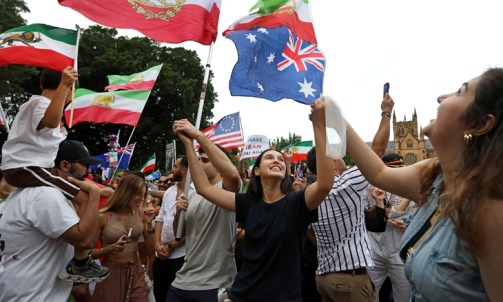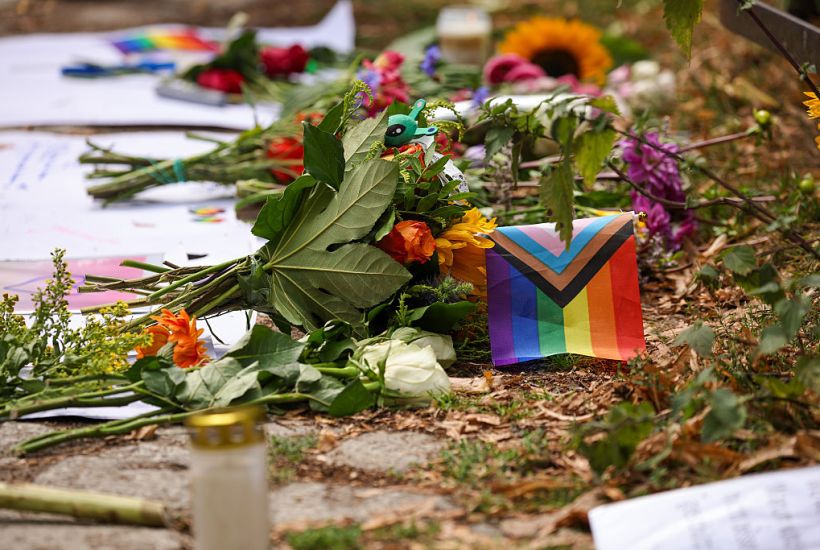
The annual Christopher Street Day, as Pride parades are known in Germany, has been a fixture of Berlin’s cultural calendar since 1979. Yet what was supposed to be Germany’s largest event for gay, lesbian and other sexual minorities ended on Saturday night in panic and bloodshed.
Many deaths could have been prevented, had the German government chosen to put the interests of its citizens above those of foreign nationals
Shortly before 10 p.m., a man drove a white van into the crowds gathered to enjoy the event. He then jumped out of the vehicle and attacked people with what was described as a machete-like blade. One woman was killed and 29 injured. Three remain in a life-threatening condition. The celebration was immediately cancelled, with the hundreds of thousands of attendees told to evacuate and return home.
Police have identified a 21-year old suspect, Abdul Ballout, who they say had several prior criminal convictions and was known to be associated with Islamists in Berlin. A nationwide manhunt with thousands of officers was launched, which led to police finding his hideout on Sunday evening. When Ballout charged the police with his bladed weapon, he was fired on by Berlin’s SEK, the German firearms police. Despite resuscitation efforts, he died at the scene.
The police have said that Ballout previously tried to join the Islamic State terror group in Lebanon in 2025. On his return he was arrested and imprisoned in a youth detention centre before being released in May 2026 and told to take part in a deradicalisation programme. He had gone to two sessions, with the third due to take place on Monday. The interior minister Alexander Dobrindt has announced that it is being treated as an ‘Islamist terror attack’.
The script that follows such attacks quickly followed. Chancellor Friedrich Merz called it ‘an attack on our society’. The Mayor of Berlin Kai Wegner said it was ‘an attack on our free and open-minded society’. The flags at city hall in Berlin will be flown at half-mast.
Equally inevitably, some in the German media were quick to try and steer the conversation away from any uncomfortable questions. On the NTV television channel, one journalist said that the greatest threat to sexual minorities came from the far-right. Berlin’s public television station RBB agreed, attacking the far-right as well. Many German gay people disagree, with an increasing number voting for the anti-immigration Alternative for Germany (AfD) party precisely because they fear attacks such as this. The German television actor Marcus Mittermeier went further. In a social media post which he subsequently deleted, he suggested that the attack would benefit the AfD in next month’s state election in Saxony-Anhalt.
Similar crimes have become an uncomfortably regular part of German life. Just under two weeks ago, 22-year-old student Marius Dick was stabbed to death without provocation by an Afghan man. The same day, another Afghan with a knife attacked people at a train station in Ruhpolding, Bavaria, with schoolchildren fleeing in panic.
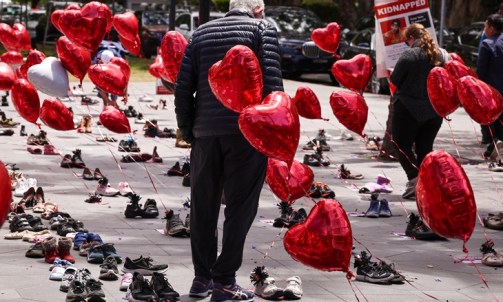
The list of victims of migrant crimes in Germany has grown so long that it has given rise to its own remembrance rituals. Sven Kyrath’s 17-year-old daughter Anne Marie died when she was stabbed 27 times by a Palestinian asylum seeker. He now joins the families of 150 other victims in organising memorial marches, determined that their names should not be forgotten. He and the other organisers have invited Chancellor Merz to attend, so far without success.
Many of those deaths could have been prevented, had the German government chosen to put the interests of its citizens above those of foreign nationals. Generous asylum laws and a large welfare state have attracted millions to the country. A lack of political will prevents the deportation of most of those whose asylum claims are refused, with many being granted ‘toleration’ status – an admission that the state won’t really try to remove them. The criminal law is equally toothless, at least until a murder takes place. Meanwhile, in German prisons, foreign nationals now make up 45 per cent of inmates.
Ballout was born in Germany in 2004, two years after his Lebanese mother was naturalised. That was a result of a change in the law in 2000, which made it easier for foreign nationals to obtain citizenship. It also guaranteed citizenship for any child born in Germany as long as one migrant parent had permanent residency or five years of legal residence.
Although Ballout was 20 when he tried to join Islamic State, he was tried under Germany’s youth offender laws, which are weaker. As a result his sentence of one year and ten months in prison was commuted to probation and deradicalisation counselling. So despite a long criminal record including assault and extortion, as well as terror links, he was left free to walk Berlin’s streets.
A stricter asylum policy and, more importantly, the enforcement of Germany’s existing laws would almost certainly have prevented at least some of these deaths. Instead of politicians offering their condolences, they should act to make sure that dangerous people are removed or imprisoned. If they don’t, the AfD will continue to rise in the polls, no matter how often they are called fascist. For many Germans, it’s increasingly a question of life and death.